
Technology

How to Choose the Best Internet Bundle Provider?

When choosing an internet service provider (ISP), you need one that offers quick steps and reasonable estimates. You also need to know if the ISP is known for its customer support, and it generally helps if the provider offers additional benefits like free setup, no-contract alternatives, and unlimited information. 

Home Security + Internet

Get a complete home security solution from Internet Bundle. Get the best in-home WiFi combined with a total internet home security bundle.

For most businesses and even homes, home security, TV, and internet access are just as important as their other utilities. Most businesses use internet access for everything from customer communication (email, VOIP, etc) to credit card processing.

Depending on where you live, you may have to choose between a few different providers that work in your area. We’ll guide you through the way to select the best ISP for your requirements. 


1. Discover Internet services in your area. 

The first stage in choosing an internet service is to find out what is available in your area. You can quickly find this out by entering your zip code into the search form below. 

Our zip code application collects all the internet service information from your area in one place to make choosing a supplier easier. Few every odd supplier is accessible in every space, so this gives you a more accurate preview of what internet types are accessible, what speeds you can get, and at what cost. 


2. Look at the plans, ratings, and rates


You need an internet bundle plan that gives you sufficient rates, reliable help, and a sufficient information limit for the month, all at a value you can manage. 


All internet services have their own claims to fame, and it helps to select one that matches what you need most. Here are the most important points you should consider: 


  • Plans and estimates 

  • Speeds 

  • Set-up and equipment costs 

  • Customer loyalty ratings 

  • Information coverage and overage fees 


Some providers offer ultra-fast speeds, while others have more direct rates that are easier on the wallet. Numerous providers enforce information covers that limit how much internet you can utilize each month – however, some offer unlimited information. 


You can also sometimes discover plans that have no yearly contract prerequisites. We recommend that over an arrangement with a contract, as you can then stop at any time without paying contract-allowable fees (ETFs). 


As our overview of customer loyalty makes clear, providers change as issues allow, while maintaining the same quality and customer service. In addition, of course, there are regular advancements and limitations, including setup costs.


3. Look For Advancements, Limits, And Bundle Offers. 


Once you’ve looked up what each of the providers in your space can offer, at that point you should investigate any expected limits or advancements you can get by joining. Also, check out Internet Bundle package deals if you want to combine your Internet access with a TV or phone plan. 


Major Internet services like Xfinity and AT&T often offer rewards for new customers in the form of VISA® gift cards or free memberships to real-time features. In addition, it is sometimes possible to get discounts on setup or equipment costs if you use qualified plans. 


4. Consider how much Internet speed you need. 


Now is the ideal time to figure out how much speed you need. You need an internet plan with sufficient download and transfer rates to do all your regular Wi-Fi tasks with ease. You need fast Internet – but you don’t have to worry about it being basically too fast, or you’ll probably pay a lot for a transfer speed you won’t use. 


Use our How Much Speed Do You Need? tool to find out what kind of speed you have at home or in your business. You should simply answer a few questions, and we’ll give you a suggestion. 


How Much Speed Do You Need 

Web speed What you can do 

0-5 Mbps Checking email, reading news, streaming in HD on a single device. 

6-40 Mbit/s Stream in HD on 2-4 devices, play web-based games, run 1-2 brilliant devices 

41-100 Mbps Stream in 4K on 2-4 devices, play web-based games with multiple players, instantly download large data sets, run 3-5 brilliant devices 

101-500 Mbps streaming in 4K on 5+ devices, instantly downloading huge datasets, running various brilliant devices 

501-1,000+ Mbps streaming in 4K on 10+ devices, doing everything on many devices without interruption 

There are a few questions you should ask yourself when assessing your speed needs: 


How often do you stream movies and TV? 


Real-time 1080p video requires about 5 Mbps to run well, while 4K requires download speeds of about 25 Mbps – if not faster. 


How many people are constantly streaming and downloading on their devices in your home? 


You’ll need faster rates if multiple people are using your Wi-Fi. A reliable guideline is 25 Mbps per person – so if you’re in a family with three other people, 100 Mbps is ideal for effortlessly streaming, gaming, working, and going to Zoom meetings.

7 Hidden Features of Google Pixel You Need to Know and Try

Google’s Pixel lineup includes a plethora of impressive features, but some are easier to find and activate than others. The nicest bonuses are hidden just under the surface. This list examines the most intriguing.

Whether you’ve just received a new Pixel for Christmas or just want to learn more about your phone, these features are guaranteed to improve your user experience.

Note for this tutorial, we used a Pixel 4a running the latest version of Android 11.

1. Know what’s at stake

Your Google Pixel comes with a similar feature to Shazam. It’s called “Reading In Progress” and you can enable it by going to “Settings -> Display -> Lock Screen ->Reading”. Then, enable the “Show songs on lock screen” feature. From there, you can also add a Play In Progress shortcut on your home screen to easily access your listening history.

Now, whenever music is played nearby, the Pixel will be able to pick up and identify sound waves and then show you which track is playing on your lock screen. Very convenient!

2. Add captions to any audio

Another useful tool on your Pixel is that it can add live subtitles to any audio played on your phone. To enable this option, go to “Settings -> Accessibility -> Live Captioning”. Enable the “Live Caption” option.

To test this, open a YouTube video on your device and tap play. You should start seeing the captions appear underneath. You can resize or reposition the legend area on the screen according to your needs. Note that at the moment, the feature only works for English audio, but Google indicates that other languages will be added in the near future.

Under Live Caption, you’ll find additional options, for example, captioning calls. This service provides live subtitles when you are on the phone with someone. It’s enabled by default, although your Pixel asks you if you want subtitles every time you get a call, unless you tell you otherwise. If you don’t want to, you can disable the feature from here.

3. Turn off notifications when you put your phone down

Need to focus on something and don’t want distractions? The Pixel offers a simple solution to get some peace and quiet. Turn on the “Flip in Chut” option to trigger a Do Not Disturb mode, which silences notifications and other distractions whenever your phone is facing down on a flat surface.

To do this, go to “Settings -> System -> Gestures”. Then, find and tap on the “Flip to Shh” option. Enable the option to enable Do Not Disturb mode. Google says you will feel a very subtle vibration when the mode is turned on.
Do Not Disturb is part of Google’s digital wellness, so if you need more help minimizing distractions while you work, you can take a look at the other options that are part of the package by visiting “Settings -> Digital Wellness and Parental Controls.”

4. View notifications using your fingerprint

If you often use your phone with one hand, you’ll love this trick. It allows you to view notifications without having to swipe your finger from the top of the screen. Instead, you can slide your fingerprint sensor to the back of the phone, which is much more comfortable when you don’t have both hands free.

First, enable the function. You can do this by going to “Settings -> System -> Gestures -> Swipe fingerprint for notifications.” Enable the feature from there.

To view your notifications, swipe down on the sensor. Otherwise, if you want to close them, swipe up.

5. Take advantage of the built-in VPN

Connecting to unsecured Wi-Fi networks is a pretty dangerous deal, but Pixel owners have put in place a set of tools that can protect them from these inconveniences.

The phone includes a feature that allows automatic connection to public Wi-Fi hotspots, which, when enabled, simultaneously pair with a Google-run VPN. To find it, go to “Settings -> Network and Internet -> Wi-Fi -> Wi-Fi Preferences”. Enable “Connect to open networks” to automatically connect to high-quality public networks.

Once you do, Google sends the Wi-Fi Assistant to inform you that, in order to protect your privacy on public Wi-Fi, your data will be transmitted via a secure VPN, courtesy of Google. Press the “OK” button to finally activate the function.
The option is available on all Pixel and Nexus devices running Android 5.1 and higher. According to Google, it is currently available in some countries, including the United States, Canada, Denmark, the Faroe Islands, Finland, Iceland, Mexico, Norway, Sweden, and the United Kingdom.

For those who use Google Fi, Wi-Fi Assistant is also available in Austria, Belgium, France, Germany, Greece, Ireland, Italy, the Netherlands, Portugal, Spain, and Switzerland.

6. Create custom themes and more

Google allows Pixel users to customize their devices in different ways. For example, you can easily create custom themes. To get started, go to “Settings -> View -> Styles & Wallpapers” or long-press the home screen and tap “Styles & Wallpapers” in the menu that appears. Here you can choose from the many styles available or create your own by pressing the Custom button. Choose your fonts and select the type of icon pack you want to have, then finish by selecting the highlight color and shape of the icons.

Another interesting thing you can do is to use a “Come Alive” wallpaper. These are interactive wallpapers that subtly move and respond to your movements via the Motion Sense feature. You can apply one from “Styles and wallpapers -> Wallpapers”. Find the Come Alive section and choose your favorite from what is available. You’ll need a newer Pixel to be able to use this feature.
7. Be prepared in case of an emergency

Pixel’s new models come with an app called Preinstalled Security. This service allows you to set an emergency contact that will be allowed to access your phone without having to unlock it. You can also add vital information in the app, such as allergies you may suffer from, the medications you are taking, or whether you are an organ donor.

You can also enable automatic accident detection, a feature that alerts emergency responders, as well as your contacts, that you have been in an accident. At the moment, the option only works for owners of the Pixel 3 (and higher) who live in the US, UK, and Australia.

If you’re looking for additional apps to install on your Pixel, you can check out our list of the best Android file managers to help you organize everything or check out the best weather apps that provide complete forecasts at your fingertips.

Voice assistants are very popular all around the globe. In India, most people use google assistant, and they ask “google Mera Naam kya hai” with google assistant. And then he hears his name from a google assistant.

WHY IS USER FLOW SO IMPORTANT TO WEB DESIGN?

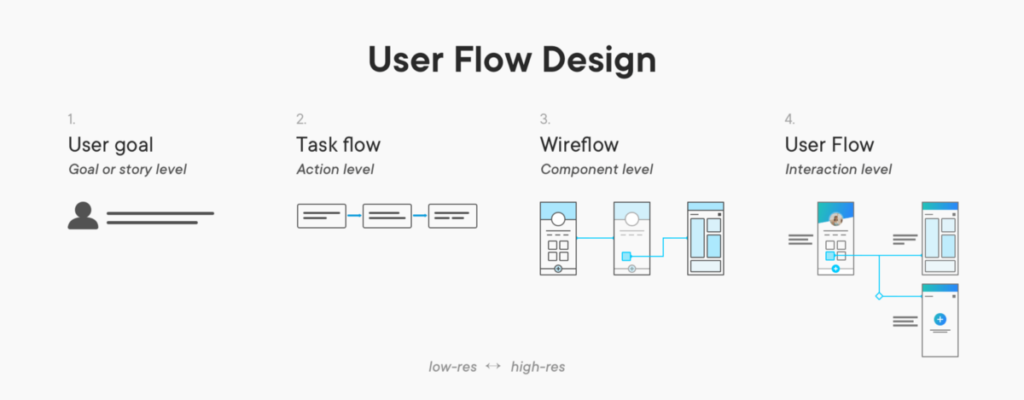
Is visiting your site a pleasant experience for users? User Flow is the means a guest takes to get from Point A to Point B. Flow differs from one webpage to another, contingent upon the objective of the site. The more clear it is to the client where to go straightaway, the smoother the progression of the plan. The Website Design Companies in Chandigarh strive hard to offer the best web experience to their clients. And this is a real task.

Something interesting you probably won’t know about is that there are various degrees of possible journeys on your site. The top part is those components that stumble into the upper segment of your route. Thus, a nurturing site may have an upper way stream of Home – > Babies – > About. Although, there are layers beneath the top layer, also. Under Babies, you may have Sleep, Eating and Health. Maximum sites have different layers.

You may figure elements in the top way would be the most famous. Yet one research tracked down the most mainstream decision was the second option in the third segment of a drop-down menu. About 70% of their guests went straightforwardly to that spot. Where clients go first fluctuates by site and classes, yet knowing which one your guests lean toward can help you feature well-known spaces of your site. It modifies your progressive system in a like manner.

There are numerous reasons why investing such a lot of energy in client flow is advantageous for The Website Design Companies in Chandigarh

1. Know User Preferences 

Start with multivariate testing. Rather than leading tests on each minuscule change, in turn, you can test numerous elements at once and see which client flow configuration turns out best for your site. Effectively distinguish how various elements work together on your site. Save time so you can improve your client stream very quickly. You can even try different placements with a various position on the page for your paths to see which one client react best to. The better you comprehend your objectives, the more instinctive your client stream will be.

2. Put out Achievable Goals

Client flow assists you with seeing how individuals travel through your site. If you wish to likely change them from visitors to supporters, you need each movement to lead them toward pursuing a list. Contemplating user flow diagrams guarantees they end up on an information exchange page regardless of where they head from the landing page. Put objectives and back them up with user research. This clears that you are not just guessing the path your users might take.

3. Work on Your Design 

Client stream additionally permits you to improve on the general plan of a page. The more clear you make it where clients ought to go and what they ought to do, the better the general client experience (UX). Focusing on how individuals travel through your webpage disposes of a great deal of the messiness most sites gather over the long haul. Presently you do not need to make a street to every element on your site. You just need to make a way to your objective for the site. Whatever else can go further down the list of navigational decisions.

4. Separate Large Buyer Journeys 

If you offer complex items or need to share a great deal of data before converting your consumers, you may have a long buyer journey. User flow allows you to make numerous ways to a similar ultimate objective and separate a bigger square into little chunks. When you understand the response of your typical audience behaviours, it’s a lot simpler to design out the course they may take through your site. Make practical estimations about which links they’ll pick as they travel through your site and afterwards point them toward that path with arrows, features and different highlights that point the way.

5. Focus on User Experience 

Use wire flows (like wireframes) right off the bat in the planning cycle. This allows you to thoroughly consider the client experience. How simple is it to move to the following point in the journey? Is the way clear for the client? Are the catches and connections large enough for a cell phone? Stop along at each point in the work process and sort out how simple it is for your site guest to explore. Get contribution from your client on the plan, since they know their customers best. Study competitors locales to perceive what kind of client flow they use. With a wire flow format, changes are not difficult to make before you get into the planning segment of the cycle.

6. Present the Right Info

Conveying the right data at the ideal time makes a superior encounter for site guests. If you avoid providing the details, the customer needs right now, you are losing them. Thoroughly consider the right second to request to close the sale or for them to sign up. Ensure you drill down your extraordinary offer (UVP) in each progression of the way. Use facts, testimonials, portfolios. Keep suggestions to take action (CTAs) clear and move the client through your site easily, staying away from friction at whatever point possible. 

Plan from User Perspective 

Client streams help you plan from the mentality of the purchaser. A decent purchaser way allows you to address their issues along with each progression of the journey and brings down your bounce rate. With a touch of training and examination of your site, you’ll discover your changes, and end up with profoundly qualified leads who are genuinely intrigued by what you have to bring to the table. Client stream isn’t effectively achieved in just one go. However, with determination, you’ll improve how individuals navigate your locales and make plans with great UX.

Keeping these points in mind will ease your growth towards making you one of the leading Website Design and Development Companies.