

❄️ Cold Climate BESS Design: Why DCIR-Based Cutoffs Matter
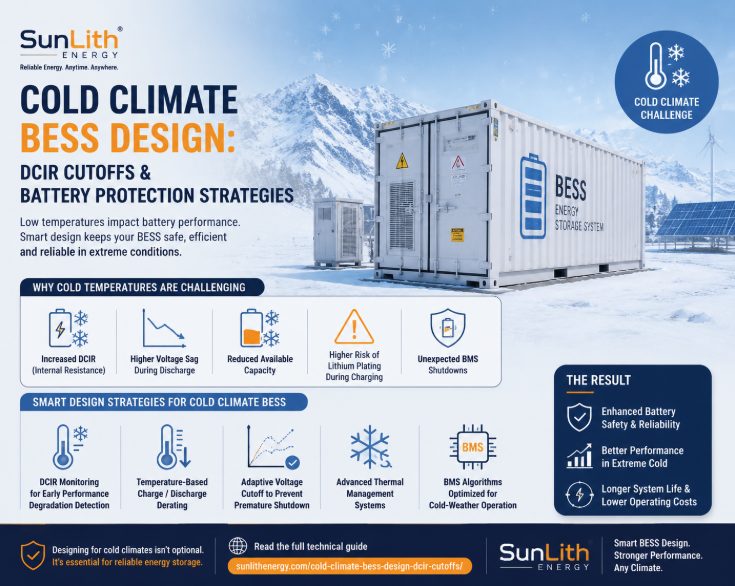
Extreme cold is one of the biggest hidden challenges for Battery Energy Storage Systems (BESS).
When temperatures drop, lithium-ion batteries experience:
⚠️ Increased internal resistance (DCIR)
⚠️ Higher voltage sag during discharge
⚠️ Reduced available capacity
⚠️ Increased risk of lithium plating during charging
⚠️ Unexpected BMS shutdownsA simple low-voltage cutoff strategy is no longer enough for harsh environments.
Modern cold-climate BESS designs require DCIR-aware protection strategies that dynamically adjust operating limits based on real battery conditions.
Key design considerations include:
✅ DCIR monitoring for early performance degradation detection
✅ Temperature-based charge/discharge derating
✅ Adaptive voltage cutoff to prevent premature shutdown
✅ Advanced thermal management systems
✅ BMS algorithms optimized for cold-weather operationA well-designed BESS should not only survive cold climates — it should deliver reliable energy when the grid needs it most.
🔋 Smart battery protection starts with understanding what happens inside the cell.
Read the full technical guide:
👉#BESS #EnergyStorage #BatteryTechnology #LithiumBattery #LiFePO4 #BatteryManagementSystem #BMS #DCIR #ESS #RenewableEnergy #SolarStorage #CleanEnergy #GridStorage #EnergyTransition #BatterySafety #SunLithEnergy
![]()