

Buddies Buzz Blog

In the Buddies Buzz blog, you'll find the latest news about the community, tutorials, helpful resources and much more! React to the news with the emotion stickers and have fun!

Artificial Intelligence: How AI is Transforming the Future of Business and Society

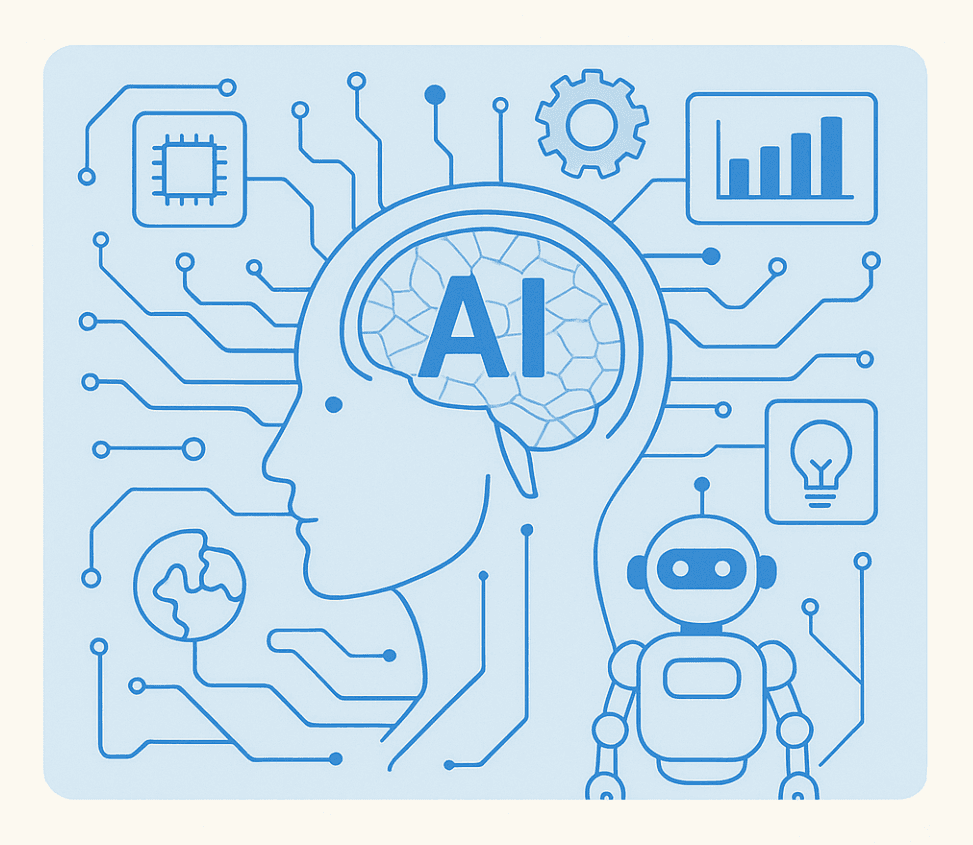
Artificial Intelligence: How AI is Transforming Our Future

Artificial Intelligence (AI) is no longer just a concept found in science fiction. Over the past decade, AI has become a driving force behind innovation, automation, and global economic growth. From personalized recommendations on streaming platforms to advanced diagnostic tools in hospitals, AI has seamlessly integrated into our daily lives. Businesses are adopting AI to stay competitive, governments are exploring it to improve services, and individuals are benefiting from smarter tools at home and work.

But beyond the buzz, what exactly is AI, why is it important, and how will it shape the future of society? To answer these questions, we must dive deeper into its definition, applications, benefits, challenges, and upcoming trends.


What is Artificial Intelligence?

Artificial Intelligence refers to the ability of machines and systems to perform tasks that typically require human intelligence. These tasks include problem-solving, learning from experience, understanding natural language, recognizing patterns, and making predictions.

There are generally two categories of AI:

  1. Narrow AI (Weak AI): Designed to perform specific tasks, such as voice recognition in Siri or product recommendations on Amazon. Narrow AI excels at its given role but cannot perform outside of it.
  2. General AI (Strong AI): A theoretical form of AI capable of performing any intellectual task that a human can. General AI does not yet exist but represents the next frontier in AI research.

Unlike traditional software, AI systems can learn and adapt by analyzing data. Machine Learning (ML), Deep Learning (DL), and Natural Language Processing (NLP) are the core technologies driving AI’s success.


The Role of AI Across Industries

AI is not confined to Silicon Valley; it is reshaping industries worldwide. Let’s explore how it is creating impact:

1. Healthcare

AI assists in early disease detection, drug discovery, and personalized treatment plans. For example, AI-powered imaging systems can spot tumors with higher accuracy than the human eye. Chatbots are improving patient care by answering questions 24/7.

2. Finance

Banks and financial institutions use AI for fraud detection, credit scoring, and algorithmic trading. Predictive models can analyze billions of transactions in seconds to prevent fraud.

3. Retail and E-commerce

AI creates personalized shopping experiences. From recommendation engines on Amazon to dynamic pricing in online stores, AI ensures customers find what they need quickly.

4. Energy and Utilities

AI optimizes power grid management, predicts demand, and integrates renewable energy sources effectively. Smart grids rely heavily on AI for balancing supply and demand.

5. Education

AI-powered platforms personalize learning. Adaptive learning systems can identify a student’s weaknesses and adjust lessons to match their pace.

6. Manufacturing

AI improves efficiency through predictive maintenance and automation. Smart robots can detect errors on assembly lines faster than humans.

7. Transportation

Autonomous vehicles and AI-driven logistics are reshaping transportation networks. Self-driving cars use AI to analyze traffic patterns, while shipping companies use AI to optimize routes.


Key Benefits of Artificial Intelligence

Artificial Intelligence offers advantages that extend far beyond automation.

  • Efficiency and Productivity: AI reduces time spent on repetitive tasks, allowing humans to focus on strategic work.
  • Data-Driven Decisions: AI analyzes vast amounts of data to uncover insights humans may overlook.
  • Personalization: Whether in shopping, entertainment, or healthcare, AI delivers experiences tailored to individual needs.
  • Innovation: AI drives the creation of new products and services, from voice-controlled assistants to smart cities.
  • Cost Savings: Automating processes lowers operational costs and minimizes errors.
  • Scalability: AI systems can manage workloads that would overwhelm human teams.

When implemented correctly, AI becomes a strategic partner that empowers people rather than replacing them.


Challenges of Artificial Intelligence and How to Overcome Them

Despite its benefits, AI presents serious challenges that need solutions.

1. Bias in AI Systems

AI systems learn from data, and if the data is biased, the output will be biased. For example, facial recognition algorithms have been criticized for misidentifying individuals of certain ethnicities.
Solution: Train AI on diverse datasets and use transparency frameworks to reduce bias.

2. Job Displacement

Automation raises concerns about job losses, particularly in manufacturing and repetitive office tasks.
Solution: Governments and businesses must invest in reskilling and upskilling programs to prepare workers for new AI-driven roles.

3. Data Privacy and Security

AI systems handle sensitive information, raising concerns about misuse or breaches.
Solution: Enforce strong data protection laws and adopt privacy-by-design approaches.

4. Ethical Concerns

AI in military applications, surveillance, and decision-making raises ethical questions.
Solution: Establish ethical guidelines, global standards, and governance policies to ensure responsible use.

5. High Costs of Implementation

Developing and deploying AI systems can be expensive for small and medium enterprises.
Solution: Cloud-based AI services and open-source tools are making adoption more affordable.


The Future Trends of Artificial Intelligence

AI’s journey is just beginning. Several trends will shape its future:

1. Generative AI

Tools like ChatGPT and image generators are revolutionizing how content is created. Generative AI will impact design, marketing, and even research by producing text, images, and code instantly.

2. Artificial Intelligence in Healthcare Expansion

AI will advance personalized medicine, tailoring treatments to each patient’s genetic profile. It will also improve remote diagnostics in underserved regions.

3. Autonomous Vehicles

Self-driving technology is progressing rapidly. While regulatory hurdles remain, AI-powered cars and delivery drones will become common in the next decade.

4. Artificial Intelligence and Cybersecurity

As cyber threats evolve, AI will act as both a defense and a threat. AI-driven cybersecurity systems will predict and prevent attacks before they occur.

5. AI-Powered Smart Cities

Urban areas will adopt AI for traffic management, waste reduction, and energy efficiency. Smart sensors and predictive analytics will improve quality of life for citizens.

6. Artificial Intelligence Governance and Ethics

Policymakers are already working on AI regulation. The future will see international standards and ethical frameworks to guide responsible use.


Artificial Intelligence and Human Collaboration

A common misconception is that AI will replace humans entirely. In reality, the most powerful applications of AI are collaborative. For instance:

  • Doctors use AI tools to enhance diagnosis but still rely on human judgment.
  • Teachers use AI-based platforms to personalize learning but remain central to student development.
  • Business leaders rely on AI-driven insights but make the final strategic decisions.

The future belongs not to AI alone, but to AI working alongside humans.


Conclusion

Artificial Intelligence is not a passing trend; it is a global transformation reshaping the way we live and work. From healthcare to finance, from education to energy, AI is driving progress across industries. Yet, its challenges—bias, privacy, cost, and ethics—must be managed responsibly to maximize benefits.

The next decade will be defined by how societies adopt, regulate, and collaborate with AI. Businesses that embrace it today will lead tomorrow. For individuals, understanding and learning AI skills will be essential.

AI is not here to replace us—it is here to empower us. By preparing now, we can ensure that the future of Artificial Intelligence is one of progress, inclusivity, and shared prosperity.

The Unbreakable Forge: How Challenges Sculpt Your Destiny and Conquer

Challenges

Challenges. That word, a mere collection of syllables, yet it carries the weight of mountains, the sting of setbacks, and the daunting shadow of the unknown. We often perceive them as roadblocks, insurmountable barriers designed to halt our progress. But what if, instead of viewing them as adversaries, we embraced them as the very architects of our potential? What if we understood that challenges aren’t meant to stop us, but to ignite the fire within, to forge us into something stronger, more resilient, and ultimately, more extraordinary?

In a world obsessed with instant gratification and curated perfection, the concept of embracing hardship feels counterintuitive. We’re bombarded with images of effortless success, of lives seemingly untouched by struggle. But the truth, the raw, unfiltered truth, is that behind every triumph, every breakthrough, lies a tapestry woven with threads of adversity.

This isn’t just motivational platitudes; it’s a fundamental principle of growth. Like a diamond formed under immense pressure, our character, our skills, and our very essence are refined through the trials we face. Challenges are the crucibles where our potential is tested, where our weaknesses are exposed, and where our strengths are forged.

The Illusion of the Smooth Path: Why Avoiding Challenges Stunts Your Growth

We crave comfort, predictability, and the absence of pain. This natural inclination leads us to avoid challenges, to seek the path of least resistance. But in doing so, we unwittingly limit our capacity for growth. We become stagnant, our potential untapped, our resilience untested.

Consider a muscle that’s never challenged. It remains weak, incapable of lifting even the lightest weight. Similarly, a mind shielded from intellectual rigor becomes complacent, unable to grapple with complex problems. A spirit untouched by adversity remains fragile, easily broken by the slightest setback.

Challenges, in their various forms, force us to confront our limitations. They expose the cracks in our armor, revealing the areas where we need to strengthen and grow. They push us beyond our comfort zones, forcing us to develop new skills, to cultivate resilience, and to tap into reserves of strength we never knew we possessed.

The Alchemy of Adversity: Transforming Challenges into Catalysts for Success

The key to unlocking the transformative power of challenges lies in our perspective. Instead of viewing them as obstacles, we must see them as opportunities. Opportunities to learn, to grow, and to emerge stronger than before.

Here’s how to harness the alchemy of adversity:

  • Embrace the Discomfort: Growth rarely occurs in our comfort zones. Embrace the discomfort that comes with facing challenges. It’s a sign that you’re pushing your boundaries and expanding your horizons.
  • Reframe Your Mindset: Instead of asking, “Why is this happening to me?”, ask, “What can I learn from this?” Shift your focus from the problem to the solution, from the obstacle to the opportunity.
  • Cultivate Resilience: Resilience is the ability to bounce back from setbacks. It’s not about avoiding failure, but about learning from it and using it as fuel for future success. Every challenge you overcome strengthens your resilience muscle.
  • Seek Out Challenges: Don’t wait for challenges to find you. Actively seek them out. Set ambitious goals, take on new projects, and step outside your comfort zone.
  • Learn from Failure: Failure is an inevitable part of the journey. Don’t fear it. Embrace it as a valuable learning experience. Analyze your mistakes, identify areas for improvement, and use them as stepping stones to future success.
  • Build a Support System: You don’t have to face challenges alone. Surround yourself with people who believe in you, who will support you through tough times, and who will hold you accountable.

The Power of “Challenges”: Why This Word Matters

Beyond its profound impact on personal growth, “challenges” is a powerful It resonates with a broad audience, as everyone faces challenges in their lives. By incorporating this keyword strategically into your content, you can attract a wider audience and improve your search engine rankings.

Here’s how to leverage the power of “challenges”:

  • Use it in your title and headings: As you can see, I have used the keyword in the title and in subheadings.
  • Incorporate it into your content naturally: Don’t stuff your content with keywords. Use them naturally and relevantly.
  • Use related keywords: Consider using synonyms and related terms, such as “adversity,” “obstacles,” “setbacks,” and “trials.”
  • Create high-quality content: Focus on providing valuable and engaging content that addresses the needs and interests of your audience.

The Legacy of Overcoming: Building a Life of Purpose and Impact

When we embrace challenges, we not only transform ourselves, but we also create a ripple effect that extends far beyond our own lives. We inspire others to face their own fears, to overcome their own obstacles, and to unleash their own potential.

The lives of the most influential figures in history are testaments to the power of overcoming challenges. They faced adversity with courage, resilience, and unwavering determination. They turned their setbacks into stepping stones, their failures into fuel, and their challenges into catalysts for extraordinary achievement.

By embracing the crucible of adversity, we can forge a life of purpose, impact, and lasting significance. We can create a legacy that inspires generations to come, a legacy built not on the absence of challenges, but on the unwavering determination to overcome them.

In the end, it’s not the absence of challenges that defines us, but how we respond to them. It’s not the setbacks we experience, but the resilience we cultivate. It’s not the obstacles we face, but the strength we find within.

So, embrace the challenges. Welcome the discomfort. Seek the lessons. And remember, you are not defined by your struggles, but by your ability to rise above them. You are forged in the fire of adversity, and you are destined for greatness.

Ternary Batteries: The Future of High-Performance Energy Storage

Ternary Batteries

In an era of rapid technological advancement and growing environmental concerns, the demand for efficient, sustainable, and long-lasting energy storage solutions has never been higher. Ternary batteries, with their impressive power density, efficiency, and sustainability, are quickly emerging as the front-runners in the race to revolutionize energy storage. But what makes ternary batteries stand out, and why are they poised to dominate industries ranging from electric vehicles (EVs) to renewable energy storage? In this blog post, we will delve into the powerful world of ternary batteries, explore their components, advantages, and challenges, and discuss their immense potential to shape the future of energy.

What is a Ternary Battery?

A ternary battery refers to a type of lithium-ion battery that incorporates three key metal oxides — usually nickel (Ni), cobalt (Co), and manganese (Mn) — in varying proportions to form its cathode material. This blend of metals, often called a “ternary cathode,” optimizes the performance characteristics of the battery, balancing energy density, stability, and cost-effectiveness.

Unlike conventional lithium-ion batteries, which typically use a single metal oxide (like cobalt or iron), ternary batteries combine multiple elements to achieve a more harmonious and efficient interaction between the materials. This combination enables ternary batteries to achieve higher specific energy and a longer lifespan, making them an increasingly attractive option for high-performance applications.

The Composition of a Ternary Battery

The core of a ternary battery is its cathode material, which accounts for much of the battery’s overall performance. The cathode in ternary batteries is typically composed of a mixture of three different metal oxides:

  1. Nickel (Ni): Nickel plays a pivotal role in increasing the energy density of ternary batteries. By enhancing the battery’s ability to store more energy per unit of mass, nickel helps to increase the overall performance, enabling longer run times and faster charging times. This makes it a vital element in applications such as electric vehicles and renewable energy storage.
  2. Cobalt (Co): Cobalt stabilizes the battery’s structure and helps in improving the cycle life. While cobalt can be expensive and its mining is often linked to ethical and environmental concerns, it still remains an essential component due to its role in enhancing the stability and longevity of the battery.
  3. Manganese (Mn): Manganese contributes to the battery’s structural integrity and helps reduce the risk of thermal runaway. It also enhances the overall safety of the battery, which is crucial in high-demand applications where reliability is paramount. Additionally, manganese helps reduce the dependency on cobalt, making the battery more cost-effective.

The optimal combination of these three elements is critical. Manufacturers can adjust the proportion of each metal to fine-tune the battery’s performance, balancing energy density, thermal stability, and cost. The most common ternary compositions include NCM (Nickel, Cobalt, Manganese) and NCA (Nickel, Cobalt, Aluminum), with NCM being the more widely used configuration.

The Advantages of Ternary Batteries

Ternary batteries are gaining prominence in various fields due to their multiple advantages. Let’s explore some of the key benefits that make them a powerful contender in the battery industry.

1. High Energy Density

One of the standout features of ternary batteries is their superior energy density. The higher nickel content in the cathode material significantly boosts the battery’s ability to store more energy in a smaller and lighter package. This translates to longer-lasting power for applications like electric vehicles (EVs), where long driving ranges are essential. Additionally, the higher energy density enables more compact battery designs, contributing to smaller, lighter devices in portable applications such as smartphones and laptops.

2. Improved Cycle Life

Cycle life refers to the number of charge and discharge cycles a battery can undergo before its performance starts to degrade. Ternary batteries, particularly those using a combination of nickel, cobalt, and manganese, exhibit excellent cycle life. This is especially important for EVs, where users demand batteries that can last for years without significant capacity degradation. The ternary composition helps the battery retain its charge efficiency and stability over thousands of cycles, leading to a longer lifespan.

3. Faster Charging Times

In addition to improved energy density, ternary batteries tend to charge more rapidly than their counterparts. The enhanced conductivity and efficient interaction between the metals in the cathode material enable faster ion movement during charging, reducing the time it takes to charge the battery fully. For consumers and industries alike, this means less downtime and more usability, which is critical in applications like electric vehicles, where charging time remains one of the primary concerns.

4. Cost-Effectiveness and Scalability

While the raw materials used in ternary batteries — such as nickel and cobalt — can be expensive, the addition of manganese allows for a reduction in cobalt content, which helps drive down costs. This makes ternary batteries a more cost-effective option when compared to traditional lithium-ion batteries that rely heavily on cobalt. Moreover, the scalability of ternary battery production has increased, as manufacturers have developed more efficient and cost-effective processes for extracting and processing the metals used in the cathode.

5. Sustainability and Safety

As the global demand for more sustainable and eco-friendly technologies rises, ternary batteries are increasingly seen as a greener alternative to traditional energy storage solutions. The balance of metals, particularly with the inclusion of manganese, can reduce the reliance on cobalt, which is often sourced from regions with questionable labor practices and significant environmental damage. Additionally, the thermal stability of ternary batteries reduces the risk of overheating or fire, making them a safer choice for high-stakes applications like EVs, drones, and renewable energy storage.

Ternary Batteries in Real-World Applications

Ternary batteries are already making waves in a variety of industries. Their high energy density, long cycle life, and fast charging capabilities make them ideal for applications where performance and reliability are paramount. Here are a few examples of how ternary batteries are transforming the world:

1. Electric Vehicles (EVs)

The electric vehicle market is one of the largest and most promising areas for the application of ternary batteries. EVs require batteries that can store large amounts of energy, provide long ranges, and have a long lifespan. Ternary batteries, with their high energy density and enhanced stability, have become the go-to choice for EV manufacturers. Companies like Tesla, BYD, and BMW are already using ternary lithium-ion batteries in their electric vehicles, ensuring that their cars have the power to compete with internal combustion engine vehicles while also offering better environmental benefits.

2. Renewable Energy Storage

As the world transitions to renewable energy sources like solar and wind, the need for efficient energy storage solutions becomes more critical. Ternary batteries, with their high energy density and longevity, offer a viable solution for storing excess energy generated from renewable sources. These batteries help smooth out the intermittency of renewable power by providing reliable energy storage systems that can release power when needed most, reducing the need for fossil fuel-based backup systems.

3. Consumer Electronics

In the world of consumer electronics, manufacturers are constantly striving for lighter, more powerful, and longer-lasting batteries for devices like smartphones, laptops, and wearables. Ternary batteries, with their fast-charging and high energy density, are increasingly being used to meet these demands. For instance, smartphones with ternary lithium-ion batteries can last longer on a single charge, allowing users to enjoy their devices without constantly worrying about recharging. Additionally, the batteries’ relatively compact size helps manufacturers create slimmer, lighter devices without compromising on performance.

Challenges and Limitations

Despite their many advantages, ternary batteries are not without their challenges. The production of ternary batteries relies heavily on the mining and processing of certain metals, particularly cobalt and nickel, which raises concerns about supply chain security, environmental impact, and ethical sourcing. Cobalt mining, in particular, has been associated with poor working conditions and human rights abuses in certain regions.

Moreover, while ternary batteries offer significant improvements in performance, they are still more expensive to manufacture than traditional batteries, which can limit their widespread adoption in certain applications. The volatility of raw material prices, particularly for nickel and cobalt, further exacerbates cost concerns.

Lastly, while ternary batteries offer significant improvements in thermal stability, they are not entirely immune to safety risks. In rare cases, batteries can still overheat or experience thermal runaway, especially if they are not manufactured or handled correctly. As the industry matures, however, better manufacturing standards and safety protocols are expected to mitigate these risks.

The Future of Ternary Batteries

The potential for ternary batteries to revolutionize energy storage is immense. As research and development continue, advancements in materials science, battery design, and manufacturing processes will only improve the performance and cost-effectiveness of ternary batteries. We are likely to see more sustainable and ethical sourcing practices emerge, addressing concerns about the environmental and social impact of raw material extraction.

Additionally, the growing adoption of electric vehicles and renewable energy systems will drive further innovation in ternary battery technology. In the not-too-distant future, ternary batteries may become the standard in energy storage across multiple industries, enabling a cleaner, more efficient, and more sustainable energy ecosystem.

Conclusion

Ternary batteries represent the cutting edge of energy storage technology, combining high performance, safety, and sustainability into a powerful package. With their superior energy density, long cycle life, and fast charging capabilities, ternary batteries are poised to play a pivotal role in the global transition to renewable energy, electric vehicles, and portable electronics. While challenges such as cost and ethical sourcing remain, the continued development of ternary battery technology promises to usher in a new era of high-performance, environmentally friendly energy storage solutions. The future is electrifying, and ternary batteries are leading the charge.