Buddies Buzz Blog

In the Buddies Buzz blog, you'll find the latest news about the community, tutorials, helpful resources and much more! React to the news with the emotion stickers and have fun!

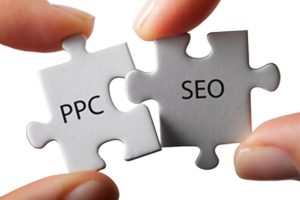
SEO and PPC: How to Use PPC Insights to Promote Content Marketing

Nowadays, marketers have search engine optimization (SEO) and pay-per-click (PPC) marketing in their web traffic toolbox but unusually use both together. They either promise that search engine optimization individually will yield long-term profits and traffic, or that PPC can yield impressive results in a short amount of time.

But can they work together? In short, we answer in a resounding yes.

Similar to SEO, PPC can increase the performance of quality content in which your team has invested time and money into driving traffic, generating leads, increasing sales, improving online visibility, and boosting views.

The advantage of combining PPC with SEO strategies is that you can advance your content better. This allows you to determine what is working and what is not – for example, which language best resonates with customers and potential customers.

Instead of abandoning PPC in favor of SEO, use it to enhance your content marketing strategy and performance with these four tips.

If you don’t have knowledge of PPC or SEO there are lots of SEO institutes in Chandigarh and PPC institutes in Chandigarh for your help.

4 strategies to use SEO and PPC together for better results

  1. Use PPC advertisements to inform content strategy

Chances are that your marketing and content team has produced a detailed keyword strategy for your blog and on-page content that is dependent on keywords relevant to both your product and your industry or customer base.

However, by using SEO alone, you limit yourself to a slow trial-and-error process to identify which targeted keywords lead to conversions on the road. Not only is it time- and labor-intensive, but it can also waste opportunities to reach the key customers where they spend the most time: social and search. PPC lets you get in front of customers on these channels, giving you access to a faster, more responsive testing ground for keywords.

In fact, Americans spend about 2.5 hours per day on social media sites, where they see dozens of advertisements targeted for themselves and their friends’ interests. On the search side, the average Internet user uses Google to find 3-4 queries per day. Clicks on ads are approximately 2: 1 more than clicks on top organic listings.

By employing PPC ads — and researching what customers respond best on platforms like Google — you can learn from successful PPC keywords, which can increase click-through rates by up to 15%. Then use these insights to inform your SEO strategy and create more relevant content.

Get the most out of PPC-informed content strategy with these three tips:

  • Conduct A / B testing by running multiple ads for the same content with different titles to determine which keywords and copy resonate the most in ads. At the end of the test, update the content title to match the best-performing ad. You can test different landing pages and their contents to learn even more.

  • In your Google Ads account, go to the “Keywords” report for each campaign you are running. Here you will see the keywords that you have specified for the campaign. Navigate to the “Search terms” section of the report to see exactly what people are looking for when they come across your ad. Download this report and use it to inform keywords or other phrases for use in your SEO content.

  • Use business-intent keywords (which include terms like shopping, discounts, coupons, tests, etc.) to encourage customers to engage with specific products and landing pages, leading them along your sales funnel. Use the same keywords in the CTA on the page you’re promoting to drive customers to the sales funnel and boost SEO.

  1. Use PPC Ads to Guide Customers Through the Content Journey

Expert marketing teams know that the key to conversion success is an undeniable sales funnel, and quality content plays a key role in driving customers to their shopping journey. But waiting for organic traffic alone to guide customers to reassuring content can starve your funnel and fail to attract the attention of buyers who are ready to buy today.

A strong SEO strategy with PPC — one that uses competing for keywords and well-formatted, topical on-page content — encourages customers to check your content and products more often than they would otherwise.

This gives you additional touchpoints throughout the customer journey to ensure that shoppers see content that prompts them to use your products or services.

A great way to improve the customer experience with your content through a dual PPC and SEO strategy is to use product- and audience-specific ads to reach buyers to customized landing pages. These pages share headlines, support messaging, and CTAs that match the ad they clicked on to create a seamless experience.

  1. Use PPC Ads for Prime Customers to Capture More SERP Traffic for Content

While it may seem meaningless to pay for an ad on the SERP on which your content already ranks, this dual effort can improve brand awareness, CTR, and the likelihood that customers will see your products and services as a result. Will remember after leaving the page.

Users are more likely to click on the top results of the page and are more likely to click on paid ads below the results. In fact, the top result typically gets 30% clicks. As you move down the page, this rate decreases, resulting in # 3 receiving only 10% of clicks

By making two lists per search results page for your business, you make a passive brand affinity that boosts the click-through rate (CTR) of your repeat business. This can ensure that when customers are ready to buy, your company tops among those who have seen many of these listings before.

Multiple SERP results encourage new customers to click on your results even faster.

This strategy can be extended by creating customized content where the title and CTA match the ad, preventing a bounce when customers meet with a message that does not align with the content they create.

  1. Use PPC and social media ads to quickly generate traffic and promote content

Quality SEO content will not bounce you into overnight traffic. But PPC and SMM can.

PPC marketing permits you to bring traffic to your site very quickly by targeting your ideal customers, who they and their communities spend most of their time online.

This is especially useful when you are beginning a new website, creating a new blog, or selling a brand-new product.

In particular, consider these seven opportunities to promote content using advertisements:

  1. On Facebook, use the Boost Post feature to promote content that has generated clicks and engagement in the past to capitalize on its reach and speed.

  2. On social media, not only target your customers but also create campaigns focusing on their friends or similar-looking audiences.

  3. On LinkedIn, use sponsored updates, which act as a boost on Facebook, to promote long-form content and specific landing pages. LinkedIn works particularly well for B2B companies – a case study showed that a B2B SaaS company saw nearly 4 times higher ROI on LinkedIn promoted positions than AdWords.

  4. Using Facebook Pixel, build a remarketing campaign around your content. Track who sees your blog posts, and then advertise to encourage them to make a purchase, or read more of your content when new articles are released. Incorporating new content into your social media remarketing campaigns helps prevent ad fatigue when you’re running ads mostly down the funnel.

  5. Also, using the Facebook Pixel, promote content upgrades (such as whitepapers, webinars, or paid guides) to encourage people who visit your blog to engage even more with your brand.

  6. On Twitter, create 5-6 different tweets using different titles promoting the same content. Share these as a campaign, and then use the top performer to inform the best long-term title for the page under consideration.

  7. In search marketing campaigns, creating ads that use negative, conflicting keywords around your product, service, and industry is a great way to increase traffic. Use myths to expose them and show how your product or service contradicts the rest.

PPC ads rank before your SEO gains speed, generating more buzz for your brand for the keywords you want to rank higher and encouraging customer engagement from the search engine. Use a combination of these tools to create a marketing pair that cannot be lost.

Master Content and Search with SEO and PPC

Using PPC ads to enhance your SEO content marketing strategy will help increase your visibility, gather leads, and increase sales. But without the right strategy for both SEO and PPC, you will just do the work of sharing.

With this post, our pay-per-click marketing guide and a free trial of Alexa’s Advanced Plan will help you shape strategic PPC campaigns. These tools will help you research your industry and keywords, as well as use this information to support your overall marketing goals.


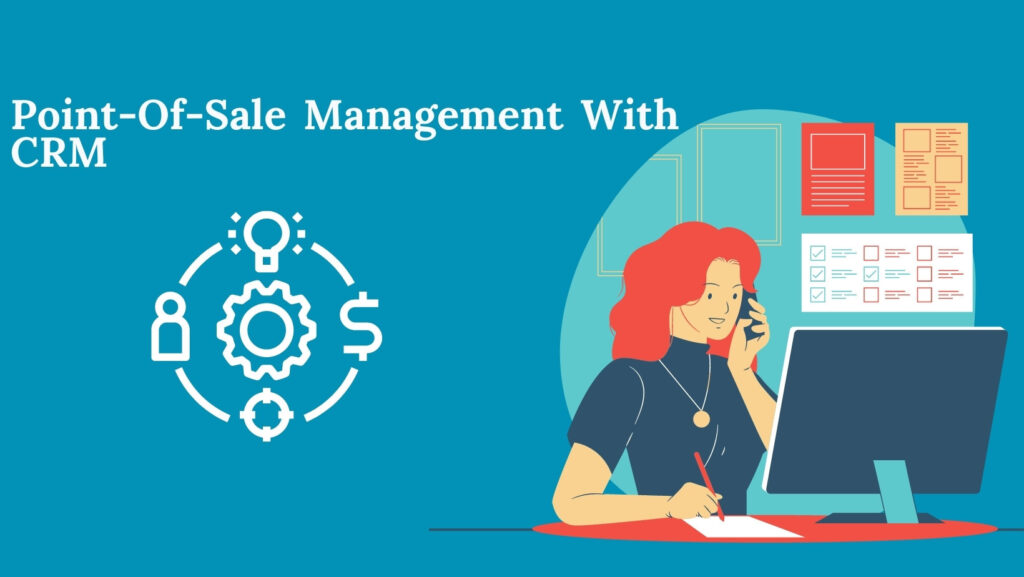
How CRM-Enabled POS Systems Can Help to Boost Your Business

One of the most challenging things in today’s world is managing sales, especially receiving payment from customers when using multiple payment methods or purchasing online. Moreover, paying with cash has been long gone, and the fear of contamination has forced people to go cashless, and it is here to stay.

So, the solution that you need now is to have multiple payment options in place that can save you from the on-spot hustle and embarrassment. And, instead of opting for a payment method, it is recommended to implementing CRM that offers complete POS support.

Hold on! you won’t have to search for the application because I have done that for you. Here is a brief review of Odoo’s POS application. If at any point you think that it is what you need, then you can consult any Odoo partners USA and Odoo CRM Consultant or contact Odoo Customer support directly. Besides, you won’t have to visit any office because thousands of Odoo Consultants working globally, so you’d be able to get a fair price for either implementation or customization.

Here you will find a complete introduction of what POS is, what features it offers, and a short brief on how you can set up your store from scratch.

What is POS?

POS is a Point-of-Sale application that was designed by Odoo. It is a complete solution that aims to organize and manage the sale, accounting, and stock from the inside. However, it goes beyond the retail shop and can be used by restaurant and bars. The best thing is, by using it, you can design, customize the floor and organize the table to manage order and send it directly to the kitchen to process.

Moreover, you can connect multiple devices to your system with the help of IoT and go cashless. And, you can also scan your customers’ vouchers, distinguish between loyalty cards, and offer discounts.

Features of POS

If you wonder what a POS application implementation can offer to your business, then here are some features that will surely help you make an informed decision.

  1. Service multiple customers at a time. If you have more than one counter like in a grocery store, then you can entertain your customers simultaneously. Moreover, with central inventory integration, you won’t have to worry about quantity synchronization.
  2. Multiple Payment processors and management is the second best feature. It allows one to charge customers via online wallets, credit & debit cards, bank transfers, etc. Along with this, you can also operate in cash. In a nutshell, it supports online and off-Line
  3. In addition to the receipt, you can also create an invoice for your customers. If the data is not available, then you can create one and print it.
  4. Like we said before, no matter how many customers you deal with simultaneously, it will always show you real-time inventory statistics and quantity reports.
  5. If you are offering specific discounts or promoting an event for your application users, you can offer a discount by scanning barcodes and coupons.
  6. Just like creating a user profile, the Odoo POS at Techloyce offers an easy-to-use interface that can help you create an online store along with a detailed catalog and synchronize it with your inventory and store located all over the city.

How It POS Work?

The POS offers an easy-to-use interface that helps you navigate and set up a store without any problem. You can create and enable multiple payment options from ‘configuration.’ In addition to this, you can set up parent product categories along with subcategories of products. Here you can insert product photos, and names and mention the quantity in hand.

For on-spot payment, you can go into the ‘Configuration’ design floor plan, set up your POS payment option, and many more. In addition to this, you can customize your header and footer by inserting logos, thank you a message, and other significant information, including store location and cashier’s name.

Lastly, the dashboard allows you to create a ‘new session’ and put a particular bill. Along with this, you can opt for cash, bank transfer, and other payment options.

Parting Words

Unlike in the past, managing multiple stores simultaneously doesn’t need to be a hustle. Moreover, if you are worried about sharing numbers with your accountant, you can create a profile and access the accountant. This way, things will be smooth.

In addition to account management, you also need a wide range of payment options in place that support cashless transactions, along with online order taking and processes. For all of this, you can use a single application known as POS. Not only that, you can schedule inventory replenishment, manage orders and deliver goods from the comfort of your office.

Lastly, the data pooled from different store locations helps in drafting comprehensive reports. But the key to a successful implementation of POS lies in consulting certified Odoo CRM Consultants.

AI in Global Sourcing: Better Supplier Negotiations

Global Sourcing

Your supply chain may be global, but you don’t have to be afraid of it. AI in global sourcing can improve your sourcing outcomes, leading to the greatest value at the lowest cost. If your suppliers are struggling to keep up with you, AI in global sourcing could help them catch up. And if you need more from your current suppliers, AI in global sourcing could help you find new ones to work with faster and at higher quality levels than ever before. Read on to learn more about how AI in global sourcing can empower your procurement team and help you find the best suppliers around the world!

 Defining AI

To help you better understand how AI might be used to drive better supplier negotiations, let’s first define what it is. As mentioned above, AI is simply any system that perceives its environment and takes actions that maximize some goal. This system can be a piece of software, a network of systems, or even a set of business processes and practices put into place by an organization. How does it work? A traditional example of AI is IBM’s chess-playing computer Deep Blue. Deep Blue was programmed with algorithms created by some of IBM’s most talented programmers and used these to calculate its next move on each turn.

 What is Machine Learning (ML)?

Machine learning is a set of tools for making decisions with data. That definition sounds a little vague, and it is. Machine learning can take many forms depending on what business problem you’re trying to solve and how much time and resources you have to apply towards solving it. Some real-world applications include speech recognition (like Siri or Alexa), search engines (like Google’s Knowledge Graph), chatbots (like those on Slack), fraud detection, credit scoring, self-driving cars, medical diagnoses, drug discovery…the list goes on. If any decision can be automated using data, there’s an opportunity for machine learning.

 The Four Stages of AI

While it’s been around for decades, AI (artificial intelligence) has exploded into public consciousness over the past few years. This is due to advances in technology that have made AI solutions both highly effective and affordable. In particular, advances like cloud computing, machine learning and natural language processing (NLP) have made it possible for even small businesses to implement AI systems at reasonable costs. The upshot of all these advancements is that we are now entering a stage where artificial intelligence can play a major role in everyday business processes such as supply chain management and negotiations with suppliers. Here are some ways companies around the world are using AI to negotiate better deals with their suppliers.

 How Can We Use AI in Global Sourcing?

How can artificial intelligence help companies drive better supplier negotiations and faster outcomes? Let’s take a look at how AI is affecting global sourcing trends. Artificial intelligence (AI) is changing every industry, including manufacturing and global sourcing. In fact, Gartner estimates that 75% of customer service and support queries will be handled by smart software by 2020. According to McKinsey’s research, we should also expect to see an increase in time-to-value through increased automation capabilities from suppliers over time – suppliers are increasingly able to use data as an input for production planning or even product design. The result: high customer satisfaction due to faster lead times and greater innovation leading to increasing competition.

 Advantages of AI in Global Sourcing

 AI is already helping sourcing companies in USA make better decisions, thanks to its ability to automate high-volume tasks and leverage data that would otherwise be inaccessible. Today’s AI capabilities mean that it’s possible to sort through thousands of supplier bids with unprecedented speed, identify patterns and potential problems, and negotiate a winning contract based on specific parameters. This has never been more important than it is today. When negotiating contracts for new suppliers, sourcing professionals need access to accurate data—and they need it quickly. AI tools can do just that and can help companies like yours stay competitive when their products are created from many different sources around the world.

 Conclusion

The decision is ultimately up to you. Will AI help improve your sourcing outcomes, or will it make things worse? The technology exists, and with every passing day, our ability to implement and use it will become better. It’s up to you whether that’s a good thing or not. There are many global sourcing companies that utilize AI in there day to day tasks to help you provide the best solutions as per your requirements.