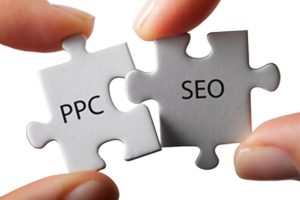
Nowadays, marketers have search engine optimization (SEO) and pay-per-click (PPC) marketing in their web traffic toolbox but unusually use both together. They either promise that search engine optimization individually will yield long-term profits and traffic, or that PPC can yield impressive results in a short amount of time.
But can they work together? In short, we answer in a resounding yes.
Similar to SEO, PPC can increase the performance of quality content in which your team has invested time and money into driving traffic, generating leads, increasing sales, improving online visibility, and boosting views.
The advantage of combining PPC with SEO strategies is that you can advance your content better. This allows you to determine what is working and what is not – for example, which language best resonates with customers and potential customers.
Instead of abandoning PPC in favor of SEO, use it to enhance your content marketing strategy and performance with these four tips.
If you don’t have knowledge of PPC or SEO there are lots of SEO institutes in Chandigarh and PPC institutes in Chandigarh for your help.
4 strategies to use SEO and PPC together for better results
Use PPC advertisements to inform content strategy
Chances are that your marketing and content team has produced a detailed keyword strategy for your blog and on-page content that is dependent on keywords relevant to both your product and your industry or customer base.
However, by using SEO alone, you limit yourself to a slow trial-and-error process to identify which targeted keywords lead to conversions on the road. Not only is it time- and labor-intensive, but it can also waste opportunities to reach the key customers where they spend the most time: social and search. PPC lets you get in front of customers on these channels, giving you access to a faster, more responsive testing ground for keywords.
In fact, Americans spend about 2.5 hours per day on social media sites, where they see dozens of advertisements targeted for themselves and their friends’ interests. On the search side, the average Internet user uses Google to find 3-4 queries per day. Clicks on ads are approximately 2: 1 more than clicks on top organic listings.
By employing PPC ads — and researching what customers respond best on platforms like Google — you can learn from successful PPC keywords, which can increase click-through rates by up to 15%. Then use these insights to inform your SEO strategy and create more relevant content.
Get the most out of PPC-informed content strategy with these three tips:
Conduct A / B testing by running multiple ads for the same content with different titles to determine which keywords and copy resonate the most in ads. At the end of the test, update the content title to match the best-performing ad. You can test different landing pages and their contents to learn even more.
In your Google Ads account, go to the “Keywords” report for each campaign you are running. Here you will see the keywords that you have specified for the campaign. Navigate to the “Search terms” section of the report to see exactly what people are looking for when they come across your ad. Download this report and use it to inform keywords or other phrases for use in your SEO content.
Use business-intent keywords (which include terms like shopping, discounts, coupons, tests, etc.) to encourage customers to engage with specific products and landing pages, leading them along your sales funnel. Use the same keywords in the CTA on the page you’re promoting to drive customers to the sales funnel and boost SEO.
Use PPC Ads to Guide Customers Through the Content Journey
Expert marketing teams know that the key to conversion success is an undeniable sales funnel, and quality content plays a key role in driving customers to their shopping journey. But waiting for organic traffic alone to guide customers to reassuring content can starve your funnel and fail to attract the attention of buyers who are ready to buy today.
A strong SEO strategy with PPC — one that uses competing for keywords and well-formatted, topical on-page content — encourages customers to check your content and products more often than they would otherwise.
This gives you additional touchpoints throughout the customer journey to ensure that shoppers see content that prompts them to use your products or services.
A great way to improve the customer experience with your content through a dual PPC and SEO strategy is to use product- and audience-specific ads to reach buyers to customized landing pages. These pages share headlines, support messaging, and CTAs that match the ad they clicked on to create a seamless experience.
Use PPC Ads for Prime Customers to Capture More SERP Traffic for Content
While it may seem meaningless to pay for an ad on the SERP on which your content already ranks, this dual effort can improve brand awareness, CTR, and the likelihood that customers will see your products and services as a result. Will remember after leaving the page.
Users are more likely to click on the top results of the page and are more likely to click on paid ads below the results. In fact, the top result typically gets 30% clicks. As you move down the page, this rate decreases, resulting in # 3 receiving only 10% of clicks
By making two lists per search results page for your business, you make a passive brand affinity that boosts the click-through rate (CTR) of your repeat business. This can ensure that when customers are ready to buy, your company tops among those who have seen many of these listings before.
Multiple SERP results encourage new customers to click on your results even faster.
This strategy can be extended by creating customized content where the title and CTA match the ad, preventing a bounce when customers meet with a message that does not align with the content they create.
Use PPC and social media ads to quickly generate traffic and promote content
Quality SEO content will not bounce you into overnight traffic. But PPC and SMM can.
PPC marketing permits you to bring traffic to your site very quickly by targeting your ideal customers, who they and their communities spend most of their time online.
This is especially useful when you are beginning a new website, creating a new blog, or selling a brand-new product.
In particular, consider these seven opportunities to promote content using advertisements:
On Facebook, use the Boost Post feature to promote content that has generated clicks and engagement in the past to capitalize on its reach and speed.
On social media, not only target your customers but also create campaigns focusing on their friends or similar-looking audiences.
On LinkedIn, use sponsored updates, which act as a boost on Facebook, to promote long-form content and specific landing pages. LinkedIn works particularly well for B2B companies – a case study showed that a B2B SaaS company saw nearly 4 times higher ROI on LinkedIn promoted positions than AdWords.
Using Facebook Pixel, build a remarketing campaign around your content. Track who sees your blog posts, and then advertise to encourage them to make a purchase, or read more of your content when new articles are released. Incorporating new content into your social media remarketing campaigns helps prevent ad fatigue when you’re running ads mostly down the funnel.
Also, using the Facebook Pixel, promote content upgrades (such as whitepapers, webinars, or paid guides) to encourage people who visit your blog to engage even more with your brand.
On Twitter, create 5-6 different tweets using different titles promoting the same content. Share these as a campaign, and then use the top performer to inform the best long-term title for the page under consideration.
In search marketing campaigns, creating ads that use negative, conflicting keywords around your product, service, and industry is a great way to increase traffic. Use myths to expose them and show how your product or service contradicts the rest.
PPC ads rank before your SEO gains speed, generating more buzz for your brand for the keywords you want to rank higher and encouraging customer engagement from the search engine. Use a combination of these tools to create a marketing pair that cannot be lost.
Master Content and Search with SEO and PPC
Using PPC ads to enhance your SEO content marketing strategy will help increase your visibility, gather leads, and increase sales. But without the right strategy for both SEO and PPC, you will just do the work of sharing.
With this post, our pay-per-click marketing guide and a free trial of Alexa’s Advanced Plan will help you shape strategic PPC campaigns. These tools will help you research your industry and keywords, as well as use this information to support your overall marketing goals.