
Education

How To Tackle Hurdles In Online Learning

The current Covid situation has proved to be quite an obstacle in our daily lives. Online learning platforms for students have been a blessing in disguise during such times. Online learning was practiced even before the pandemic situation, but nowadays it has reached a different level. It is critical to ensure that online learning is done smoothly in such times.

There are some problems that students are facing in online learning. Even if it has effectively emerged as a lifesaver, it has its own challenges.

How To Deal With Challenges In Online Learning:

There are effective ways to combat the challenges by implementing smart innovations. Take a look at how one can deal with the problems:

Net Connectivity:

One of the major difficulties that online learning has faced is fluctuating net connectivity. The personal net connections that the learners have are often subject to low bandwidth or have exceeded their data limits.

The simple process of logging into the online learning platform has proved to be a hassle for the students.

What is required to tackle the above problem is to make logging in a one-time process. Through this teachers & students just have to select their class and subject. Through this, they can proceed to learn or teach.

Assessing The Students:

It is important to assess a student’s performance. Before the pandemic, students had to go to the learning premises and undergo a test. It allowed the teacher to gain insight into their students’ progress. But that’s not possible especially now.

MCQs can be assessed by online learning systems but when it comes to theory or subjective tests, it is a hurdle for such platforms.

Checking the assignments is also a problem. If a teacher teaches across various platforms then he/she has to check the assignments uploaded by students on all those platforms. It is quite a task to download a large number of assignments.

What is needed is an easy, comprehensive system that makes the process of evaluation easier for the teachers.

Cheating In Exams & Tests:

Students can take advantage of the absence of supervision and can cheat. It is crucial for a student to be disciplined and not cheat for his/her own growth.

To tackle this issue a system is needed which informs the teacher when a student leaves the examination screen or accesses another browser.

Monitoring the students through their laptop cameras during the test will also prevent them from cheating.

Shuffling the questions prevents the students from exchanging answers by using communication mediums.

Cyber Security:

It is crucial to maintain security and safeguard your data. A lot of teachers conduct online classes through platforms such as Google Classroom and Zoom. They are not the safest platforms to conduct an online class.

Establishing a security system around your platform will prevent unwanted forces from breaking in.

Monotony:

Monotony is bound to happen if you plan to learn or teach by sitting in front of a screen for hours. You will get bored. It might put the learners off.

One needs to come up with innovative and creative ways to engage the students and to make the teaching process fun for the teachers as well.

Gamification, polls, quizzes and videos tend to make the process a lot of fun. It is essential to keep things different.

Using augmented or virtual reality has proved to engage the students by a staggering amount.

Conclusion:

By incorporating the above solutions, you will be able to function efficiently on online learning platforms. If you are a student your learning curve will increase drastically and if you are a teacher your teaching methods will improve greatly.

You can secure yourself a sustainable future ahead with the help of these platforms. All you need is the right tools and techniques to make your online platform flourish.

Get the best online course building platforms and thrive evidently. As a teacher, it will give you the chance to experiment with your teaching styles. It is greatly beneficial for students who want to have a cost-effective medium to gain knowledge and skills. The elite learning platform will prove to be the best decision for your educational ventures.


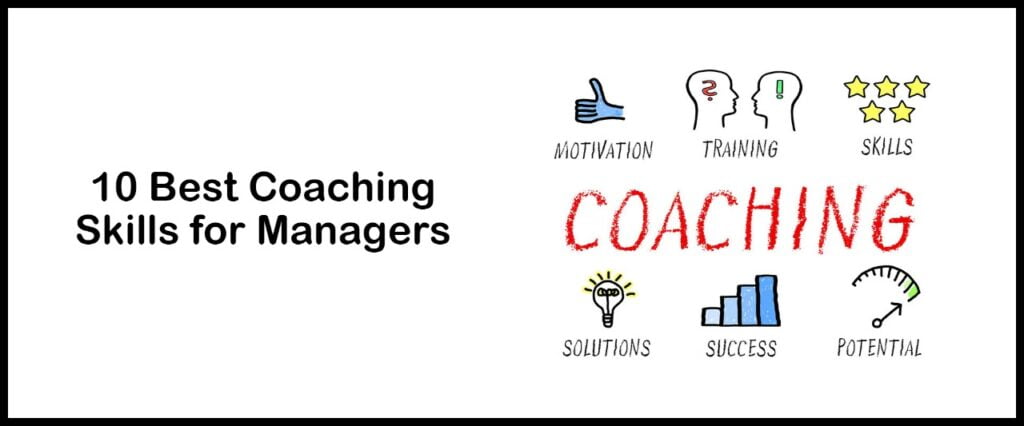
10 Best Coaching Skills for Managers

Managers and leaders are critical to an organization’s growth, and if they have the necessary coaching skill sets, they become even more valuable. Accurate coaching can help you get through those first awkward orientation days. Even so, this ensures your workplace stability, as well as acting skills, mastery, advancement, and professional development. In addition to these advantages, coaching is an effective strategy for implementing a better management future!

Only Leaders understand how to instill a sense of belonging and leverage motivation in their teams. Their way forward is to develop vital coaching skills in the employees. Best coaching skills make a difference for everyone, no matter how long it takes. Continue reading to find out about the coaching skills that effective managers and leaders employ.

You can find best coaching skills course via coursera from UC Davis Course Catalog enlisted by Take This Course team at their University of California Collection.

What are coaching skills for managers?

Coaching skills intend to assist others in reaching professional or personal objectives. That being said, coaching skills are comprised of core elements such as Stop controlling, collaborate;

Enjoy entrusted authority;

Listening more than talking;

Instead of passing judgment, provide specific feedback. Coaching skills will benefit both the individual and the company in top management or team-leading roles.

What are the coaching styles?

A coaching leadership style is far more successful with contemporary new hires than many of the repressive styles employed by many business people.  Leaders managing their employees rather than issuing orders to them are already capable of developing a rather more skilled and agile workforce, that tends to lead to a strong and thriving business.

Let us take a look at the top 5 styles for coaching:

The progressive style of Coaching (this method gives the employee autonomy and oversight, with the coach only taking action if necessary to keep the process moving)

Responsible style of Coaching;

Humanistic style of Coaching;

Imperialistic style of Coaching;

Perceptive style of Coaching.

These styles are highly helpful for employers and employees. Do adopt them and share the difference. Good luck with the styles!

The best 10 coaching skills

After telling you about the best coaching abilities and styles, it is now time to reveal the best ones. This will give an idea of how successful managers are transforming their careers through this foundation and proudly proclaiming themselves to be the best managers. Let’s go!

Listening is your strength

Coaching necessarily involves tangible and intangible active listening. Your profession as a manager and leader should be to develop one-on-one relationships in the workplace. Effective listening is a valuable skill to develop as a manager and leader. Several other employees may require additional assistance due to personal setbacks.

Listening that is respectful and productive perks up a team’s mutual trust. Employees will have a lot of ideas, concerns, and suggestions. Encourage them to share their thoughts because it is fascinating to read “you value their opinions”. Listen to what they’ve been thinking.

Realize yourself and your needs

‎Realization is an important factor. Whether in your personal or professional life to know where you’re headed is essential. In coaching, this realization accurately entails a harmony between criticism and applaud. Think and evolve your coaching discussions. Focus on what itself is not operating and productive. As well as what you must do to transform the degrading environment. If you aren’t inspiring, you better not be dispiriting.

Celebrate your accomplishments

Quit giving team pep talks. Instead, celebrate profitable work and achievements. That being said, to ensure that each person feels recognized and cherished in your entire organization, as a manager you’ll have to plan rewards. One-on-one interaction and praise by your colleagues are far more useful in keeping your team focused on shared goals. Each employee must presume they are valuable. Believe it or not, this one works the best!

Make mistakes your ideals

Disappointment is not to be penalized because it is a necessary predictor of growth. The much better course of action is to coach an employee via an error. No one ever became the finest at something without having made mistakes in life. A great manager assists their team in learning from their mistakes to prevent them in the long run. Coach your staff at the moment and you’re good to go.   

Develop a “hot” and “cool” strategy

Exactly what the title suggests. Kinda funny but effective. It’s about keeping your cool when things get rough. But turning on the heat when things get too cool. Simply maintain a balance between these “hot and cool” situations in working environments. A great manager continuously monitors their emotions in social and stressful situations. It is a way to achieve one’s consciousness. It is extremely beneficial when spurring a variety of employees.

Team cohesion and practice

The above skills require practice, however, the improvement in team cohesion will be noticeable nearly immediately. In a well-coached establishment, cooperation is a priced possession over manipulation. Hence more members of the team who take part in making the move forward, the brighter the team will perform. If you are under the supervision of “that” boss who’s always asking for results but making no efforts then now you know what to do. Work productively rather than anxiously.

Understand the perspective and lead

Face the world from their point of view, rather than your own. This will enable you to foresee the shifts and outcomes you need when coaching employees about improving motivation and effectiveness.‎‎ All have different intentions, interests, and personas, so if you speak up to make you navigate how their “real question” originally came or what their favored “why” appears to be, you will be able to better understand them.

Those who question, employers discover that such a person is brilliant in one-on-one debates and yet refuses to speak up in a team. You can see how they might feel as if someone is trying to listen in on their dialogue, attempting to make them less comfortable. You could indeed work with them quite appropriate if you bear that in mind.

Ask questions and exchange information

Clear, supporting discussions elicit more thorough and informative responses, likely to result in more fruitful coaching conversations. It’s indeed fundamental that you create positive relationships with co-workers as a group facilitator. It might give you a better idea of whether your workers are inquisitive, have enough ability to perform and focus on improving, and have a positive mindset forward into their task. Exchange as much information as possible on different matters before concluding.

Try having coaching conversations

Coaching interactions are intended to produce variations and outcomes. So, make sure to properly that a defined and outlined conversation takes place telling you what needs to be done have conversations about the next steps or dreams you and your employee have. This ensures that both you and your employee are both on the same page with requirements. Have a clear insight into the practical things that can help to adapt and change.

Competitive workplace stress

Elevated stress makes distress, whereas healthy stress promotes skill development and self-belief. You must not yell at your team. Members support a good hard-working leader more than they fear a paranoid leader. In an organization, setting a good example is crucial.

Final thoughts

Bidding goodbye here, the road to success and achievement is never wholly characterized by ideas. At its core, it is the implementation that can turn your dreams into a reality. You can change the world just by following such simple coaching skills and rule the world at your demands. Happy surfing!

Why Assignment is Important to Students

Assignments are part of a student’s academic life. Many students believe that assignments are part of what learning entails and often consider assignments a waste of time. It is no surprise that students get annoyed when instructors issue assignments. Unpopular to common belief, assignments on assignment websites serve more purpose than being part of a student’s academic life.

As students progress in their learning, assignments become more complex. So, what is the purpose of issuing assignments to learners? Here are some of the reasons why:

Evaluation of Learning

The primary reason for an assignment is to assess whether students have understood particular subjects taught in class. If a student has not grasped the topic well, it will be reflected on assignment performance. Besides that, an instructor can assess other skills that the student acquired during learning.

Practical Skills

Assignments cause students to acquire writing tips and techniques which prove useful in other academic tasks. Continuous practice is necessary for mastery of these writing skills. Writing assignments is a way of exercising these skills. When writing assignments, students come across challenges which they have to solve on their own. That practice helps students learn how to handle unpredicted scenarios.

Time Management

Assignments have instructions that must be followed in executing the assignments. One of the key instructions is the deadline for assignment submission. Time factor helps dictate the task that a student should undertake. It is advisable that a student starts with the most urgent or significant task and finish with the less urgent task. Time management is an important skill that students should use in their careers and future endeavors.

Learning Advancement

Assignments require students’ dedication which contributes to their development. Studies have shown that human beings grow as they continually utilize their brain. Student will, therefore, acquire more knowledge if they take time and put effort to do assignments on their own.

Builds Focus

The final score of any subject is always a summary of a student’s performance on assignments and final exams. Assignments are part of the entire course, and a student would not excel in their course without assignments. With that in mind, students should pay more attention to their performance on the assignment and, by extension, the whole course.

Develops Research Skills

Assignments require students to research different learning materials. Some of the materials that students would need to research for the assignment are not issued by the instructor. The student will have to look for these materials. Students acquire research skills as they advance their critical thinking. The acquired research skills will be helpful in their careers and future academic tasks.

Improves Learning Scope

Every student is responsible for their assignment. Some assignments require a student to present their assignment in front of fellow students and the instructor. In such a case, there is appreciation from classmates and criticism from instructor. The input from fellow classmates and the instructor helps the student improve in the subsequent tasks.

Proactive Exam Preparation

When a student is undertaking an assignment, it implies that they are preparing for an exam. Students become aware of the kind of questions they are likely to handle during the exam period. The feedback from the instructors help students assess whether or not they are prepared to handle the examination.

In conclusion, assignments help students understand the different topics in subjects during learning. Instructors should give students relevant knowledge to handle their assignments effectively. Giving students too much information for their assignments hinders the learning process and encourage the purpose of homework writing services. Assignments should help students acquire knowledge  and improve their grades.