
Health

Why mHealth Apps Market Exhibited A CAGR of 34.8%

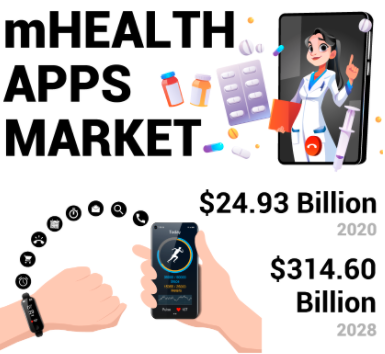
The global mHealth apps market size is expected to showcase exponential growth by reaching USD 314.60 billion by 2028 while exhibiting a CAGR of 34.8% between 2021 and 2028. This information is published by Fortune Business Insights in its report, titled “mHealth Apps Market, 2021-2028.” The report further observes that the market stood at USD 24.93 billion in 2020. The increasing prevalence of chronic ailments and the rapid-paced development in the telecommunication sector is anticipated to propel the demand for the product worldwide.

The negative effect of the global pandemic, COVID-19, has been felt across several economies facing unprecedented loss. Owing to the lockdown announced by the government agencies, several industries have been at a standstill with limited operational activities. However, a collective effort from the government and the industries is likely to bring the economy back on track and aid in the resumption of industrial activities.

Based on the app type, the market is classified into disease & treatment management, wellness management, and others.

  • Based on app type, the disease & treatment management segment held a global mHealth apps market share of about 25.5% in terms of revenue in 2020. This is due to the increasing adoption of advanced fitness apps that aid in eliminating the communication barrier between healthcare professionals and doctors.

On the basis of application, the market is divided into monitoring services, fitness solutions, diagnostic services, treatment services, and others. Moreover, based on the market place, the market is categorized into Google Play Store, Apple App Store, and others. Lastly, on the basis of region, the market is segregated into North America, Europe, Asia-Pacific, Latin America, and the Middle East and Africa.

What does the Report Include?

The market report includes qualitative and quantitative analysis of several factors such as the key drivers and restraints that will impact growth. Additionally, the report provides insights into the regional analysis that covers different regions, which are contributing to the growth of the market. It includes the competitive landscape that involves the leading companies and the adoption of strategies by them to announce partnerships, introduce new products, and collaboration that will further contribute to the growth of the market between 2021 and 2028. Moreover, the research analyst has adopted several research methodologies to extract information about the current trends and industry developments that will drive the market growth in the forthcoming years.

Increasing Focus on Advanced of Telecommunication Systems to Augment Growth

The emergence of LTE and 4G technologies has led to the development of communication services that provide faster communication abilities and better experience for patients using fitness apps. In March 2020, Google Cloud announced its collaboration agreement with AT&T to develop 5G edge computing solutions. The introduction of advanced telecommunication systems has led to the development of advanced apps that aid in the treatment and management of the patient. Moreover, the increasing prevalence of chronic ailments is anticipated to boost the demand for the product worldwide, favoring the global mHealth apps market growth in the forthcoming years. According to the Centers for Disease Control and Prevention (CDC), Americans are at high risk for heart disorders due to the increasing prevalence of high blood cholesterol and high blood pressure. On-time management and treatment can save several lives.

North America – The region is expected to showcase considerable growth during the forecast period. This is due to the increasing prevalence of chronic ailments and the high impact of sedentary lifestyles leading to several health problems amongst the people. The market in North America stood at USD 7.44 billion in 2020.

Asia-Pacific – The market is expected to experience significant growth backed by the increasing healthcare expenditure in countries such as India, Japan, and China. This is likely to propel the demand for mHealth apps in the region.

Merger and Acquisition by Key Companies to Brighten Their Market Prospects

The market is witnessing massive competition among the players that are highly focused on strengthening their footprint. These players are acquiring other smaller enterprises to expand their mHealth apps portfolio and further boost sales revenue. Furthermore, the other key companies are leveraging the opportunities provided by the market by adopting proactive organic and inorganic strategies that will aid in maintaining their presence in the forthcoming years.

Industry Development:

  • August 2020 – Livongo and Teladoc Health Inc announced the completion of their merger agreement. The two companies collaborated to enhance the user’s experience in virtual healthcare by adopting user-friendly programs to treat various chronic diseases.

List of the Companies Profiled in the Global Market:

  • Fitbit, Inc. (San Francisco, United States)
  • Apple Inc. (California, United States)
  • Omada Health, Inc. (California, United States)
  • Livongo Health (California, United States)
  • Boston Scientific Corporation (Marlborough, United States)
  • Omron Healthcare, Inc. (Kyoto, Japan)
  • Abbott (Illinois, United States)
  • Jawbone Health Hub, Inc. (California, United States)
  • Other prominent players

13 Tips to Lose the Stubborn Belly Fat Quickly

Belly fat is quite harmful to your health. It can cause serious diseases like diabetes and heart conditions extra. Being overweight can affect your skin as well. Therefore, it is very important to lose that excess abdominal fat if you want to stay healthy. I have been using my Cox gigablast package to watch healthy recipes on “Food Network.” These recipes and some healthy habits have made me lose belly fast within a month.

So, here are a few tips that you help you fit in your old clothes easily:

Increase Your Intake of Soluble Fiber

Soluble fiber is a great food source to lose weight. It absorbs water and makes you feel full for a long time. In this way, you end up eating less. Therefore, eat plenty of flax seeds, brussels sprouts, avocados, blackberries, and shirataki noodles daily to get rid of that belly fat within no time.

Don’t Consume Too Much Alcohol

Drinking too much alcohol can make you gain weight easily. It can also increase the risk of heart diseases and diabetes. Therefore, keep your alcohol consumption to a minimum if you don’t want excess fat storage around the waist.

Keep Stress Levels Low

High levels of stress can cause your body to produces an excess amount of cortisol. Cortisol is commonly known as the stress hormone. It can increase your appetite and make you gain weight quickly. To avoid that from happening, engage in activities like yoga, meditation, painting, and reading extra.

Stop Eating Sugary Foods

Sugar is not good for your health. This is because it contains fructose that can increase the risk of diabetes, heart disease, and liver diseases extra. Therefore, keep sugar consumption levels to a minimum to avoid obesity. Use even healthier sugars like honey once in a while to avoid belly fat.

Do Cardio

Doing cardio along with a healthy food intake can do wonders for your body. It can help you burn calories and keep dangerous diseases at bay. Make sure to do it routinely if you want to gain maximum benefits. However, don’t it more than 5 days a week as excessive exercise can also damage your body.

Don’t Consume Refined Carbs

Excessive carbs can also make you gain weight easily. Therefore, people who are at risk of developing PCOS, diabetes, and heart disease should lower their carb intake to stay in shape. This doesn’t mean that should stop eating carbs altogether. You can still eat unprocessed carbs like whole grains as they are healthier than refined ones.

 Avoid Beverages

Beverages like soda and punch are filled with fructose that can make you gain belly fat quickly. Consuming beverages can also increase the risk of liver and heart diseases. So, you should avoid beverages like sweet tea and soda at all costs if you want to stay healthy.

Get a Good Night’s Sleep

Not getting a good night’s sleep can help you gain weight easily. So, always get more than 7 hours of sleep every night to stay in shape. Not doing so can also make you develop “sleep apnea” which can make breathing stops intermittently during sleep. So, buy a good pillow and keep your environment comfortable to get quality sleep at night.

Eat Fatty Fish

Fatty fish is filled with good proteins and omega-3 fatty acids. These can keep dangerous heart diseases at bay. Omega 3 fatty acids can also make you lose belly and liver fat fast. So, eat salmon, sardines, anchovies, or mackerel two or three times a week to gain maximum benefits.

Don’t Drink Fruit Juices

Fruit juices are not healthy ways of getting vitamins and minerals. This is because they are filled with high amounts of sugar that can make you gain weight. It is better to drink water, iced tea, or lemon water instead of fruit juices to reduce excess fat.

Try Intermittent Fasting

Intermittent fasting is a great method of losing belly fat. Instead of 24 hours of fasting once or twice a week, you can fast for 16 hours four times a week to lose weight. However, if you experience nausea or vomiting during the fast, you should stop fasting immediately and consult a doctor.

Drink Green Tea Everyday

Green tea is a great beverage to lose belly weight fast. Caffeine can help reduce stress by reducing the production of cortisol. Green tea also contains epigallocatechin which can boost metabolism and help you lose belly fat. To reap maximum benefits, it is advisable to combine green tea with exercise.

Lift Weights

Finally, lifting weights can help you in gaining muscle mass. Doing strength training and aerobic exercise at the same time can help in decreasing visceral fat fast. I even recommended it to my friend who was suffering from this. She followed the regime – went as far as upgrading her internet plan to Cox Gigablast Silver to stream and follow fitness routine videos on YouTube!

These changes in my life have helped me save gym fees and lose belly fat while staying at home. Totally worth all the effort!

How to Write a 16 Marker in Psychology: The Ultimate Guide

Introduction

In this blog post, we will discuss how to write a 16 marker in psychology. This is an important task, as the 16 markers can often make or break your essay. Therefore, it is crucial that you understand the format of this question and how to answer it effectively. In this guide, we will provide step-by-step instructions on how to write a significant 16 marker in psychology!

What is A 16 Marker?

When it comes to taking psychology exams, one of the most common questions students have is writing a 16 marker. A 16 marker is essentially a short essay question on an exam worth 16 marks. So to answer a 16 marker well, you need to be able to synthesize information from across the course and apply it to the question at hand.

How to Prepare For a 16-Marker?

When preparing for a 16-marker, it is essential to review the types of questions typically asked on this assessment. The best way to do this is by taking practice tests. There are many resources available online that offer practice tests for the 16 markers. It is also important to practice how to time oneself for the test because the time allotted for a 16 marker is only one hour and 30 minutes.


How to Write A 16 Marker in Psychology?

First and foremost, make sure that you understand the question. Read it carefully and break it down into smaller parts. What are they asking you to do? Once you have a good understanding of the question, you can start to think about how you’re going to answer it.


Next, take a look at the rubric. The rubric is essentially a set of guidelines that will tell you how your answer will be graded. Pay close attention to what the rubric asks, and make sure that your answer meets all of the criteria.


Once you understand the question and the rubric, it’s time to start brainstorming. Brainstorming is vital because it will help you generate ideas and plan for your answer. When brainstorming, don’t worry about writing complete sentences or being perfect. Just get your thoughts down on paper.


After you’ve brainstormed, it’s time to start writing your answer. Start by introducing the topic and providing some background information. Then, present your main argument or thesis statement. After that, use evidence from the course to support your argument. Finally, conclude your answer by summarising your main points and restating your thesis.


 By following these tips, you can ensure that your answer is well-written and scored highly. 

How Long is A 16 Marker?

There is no set answer to how long you should spend on a 16-marker in psychology. Instead, aim to write around 300-400 words in total. This will allow you to go into sufficient detail without exceeding the word limit. 

Importance of A 16 Marker in Psychology

A 16 marker is a critical assessment tool in psychology. It can help determine how well a person understands and can apply psychological concepts. The questions on a 16-marker are typically designed to test critical thinking skills and problem-solving abilities. 

A good score on a 16 marker can indicate that a person can think critically and solve problems effectively. Moreover, a 16 marker is also a good predictor of academic success in psychology courses.


Conclusion

In conclusion, writing a 16-marker is not as difficult as it may seem. These remarks will help you in every way of Learning Psychology By following the tips provided in this post and being mindful of the critical components of a good essay, you should be able to produce an essay that scores well and reflects your understanding of psychology. Good luck!