Battery Certification

The Explosive Truth About UL Battery Certifications: What Smart Buyers Never Ignore

UL Battery Certifications

???? Introduction: Why UL Battery Certifications Aren’t Optional Anymore

In the electrifying world of batteries—especially in energy storage, EVs, and electronics—UL battery certifications are not just formalities. They are non-negotiable trust signals that separate safe, high-quality products from dangerous, compliance-risking time bombs.

But with names like UL 1642, UL 2054, UL 1973, UL 9540, UL 9540A, and UL 2580 floating around, it’s easy to feel overwhelmed.

Relax.
This ultimate breakdown will demystify these certifications and help you make bulletproof decisions—whether you’re a buyer, engineer, or project manager.


⚡️ What Are UL Certifications, Really?

UL (Underwriters Laboratories) is a global safety authority that rigorously tests and certifies products to ensure they meet specific safety, performance, and reliability standards. UL certification on a battery (or battery system) means:

  • It’s been tested under extreme conditions.
  • It complies with industry and legal safety standards.
  • It reduces the risk of fires, explosions, or failures.
  • It increases your chance of passing inspections and approvals.

Now let’s decode each UL certification—clearly and powerfully.


???? UL Battery Certifications and How They Differ

1. UL 1642 – Safety of Lithium Cells

  • What it Covers: Individual lithium-ion or lithium-metal cells only.
  • Where it’s Used: All sectors—consumer, industrial, automotive.
  • Tests:
    • Crush
    • Overcharge
    • Short Circuit
    • Impact
  • Why it Matters: It confirms that each cell won’t explode or ignite under stress.

???? Quick Take: UL 1642 is the foundation, but not enough alone. It doesn’t cover full battery packs or systems.


2. UL 2054 – Battery Packs for Household & Commercial Use

  • What it Covers: Complete battery packs with lithium, NiMH, NiCd, etc.
  • Where it’s Used: Power tools, electronics, appliances.
  • Tests:
    • Dielectric strength
    • Insulation resistance
    • Abnormal charging
    • Drop, vibration
  • Why it Matters: Proves your battery won’t fail under real-world abuse.

???? Key Insight: UL 2054 ensures pack-level safety for day-to-day usage—not for ESS or EVs.


3. UL 1973 – Batteries for Energy Storage & Motive Use

  • What it Covers: Battery modules or packs used in stationary or motive systems.
  • Where it’s Used:
  • Tests:
    • Thermal abuse
    • Short circuit
    • Environmental cycling
  • Why it Matters: Ensures the pack won’t trigger thermal runaway, degrade early, or catch fire.

⚙️ Pro Tip: UL 1973 is non-negotiable for ESS projects. Without it, you risk non-compliance and rejection.


4. UL 9540 – Complete Energy Storage Systems

  • What it Covers: The entire integrated ESS, including:
    • Battery pack
    • BMS (Battery Management System)
    • PCS (Power Conversion System)
    • Enclosure
  • Where it’s Used: Residential, commercial, utility-scale energy storage.
  • Why it Matters: Confirms the whole system is designed to prevent fire, electrical hazards, and performance failure.

????️ Game Changer: UL 9540 is your ticket to market in the US and many global regions. It’s the gold standard for system-level safety.


5. UL 9540A – Fire Propagation Testing (Thermal Runaway)

  • What it Is: A testing method, not a certification.
  • Purpose: Measures how thermal runaway spreads from cell → module → unit → installation.
  • Used By:
    • Fire departments
    • AHJs (Authorities Having Jurisdiction)
    • Building code officials
  • Why it Matters: Validates whether your system can contain fires safely and avoid catastrophic chain reactions.

???? Real Talk: A good UL 9540A test result is often mandatory for local permits and approvals.


6. UL 2580 – Batteries for Electric Vehicles

  • What it Covers: Battery packs used in electric vehicles (cars, buses, bikes).
  • Tests:
    • Mechanical shock
    • Crush
    • Overcharge
    • Thermal stress
  • Why it Matters: Confirms the battery is safe during crashes, charging, and real-world operation.

????️ Auto Alert: UL 2580 is the EV industry’s benchmark for battery safety.


???? At a Glance: Certification Comparison Table

UL StandardWhat It CoversUsed InKey Focus
UL 1642Individual cellsAll industriesCell safety
UL 2054Battery packsTools, gadgetsPack safety
UL 1973ESS/Motive packsSolar, telecom, EV infraStationary & motive systems
UL 9540Full ESS systemsHome, commercial ESSComplete system safety
UL 9540AFire propagationFire safety complianceThermal runaway risk
UL 2580EV battery packsElectric vehiclesCrash & abuse safety

???? Final Thoughts: The Smart Buyer’s Checklist

If you’re planning to buy, source, or install batteries for:

  • Home energy storage
  • Commercial & industrial (C&I) ESS
  • Electric vehicles
  • Backup power systems

Here’s what you need:

  • ✅ UL 1642 for cell integrity
  • ✅ UL 2054 for basic pack safety
  • ✅ UL 1973 for stationary ESS compliance
  • ✅ UL 9540 for full-system approval
  • ✅ UL 9540A to get local permits faster
  • ✅ UL 2580 if you’re going into EVs

Don’t cut corners.
Don’t just take a cell report.
Insist on full-system UL certifications.

Your investment, your safety, and your reputation depend on it.


???? Need Help with Battery Sourcing or Certification Checks?

If you’re sourcing batteries, energy storage systems, or EV components and want someone to verify certifications, factory test reports, or FAT, get in touch. I help global clients save time, reduce risk, and avoid costly mistakes. Sourcing experts

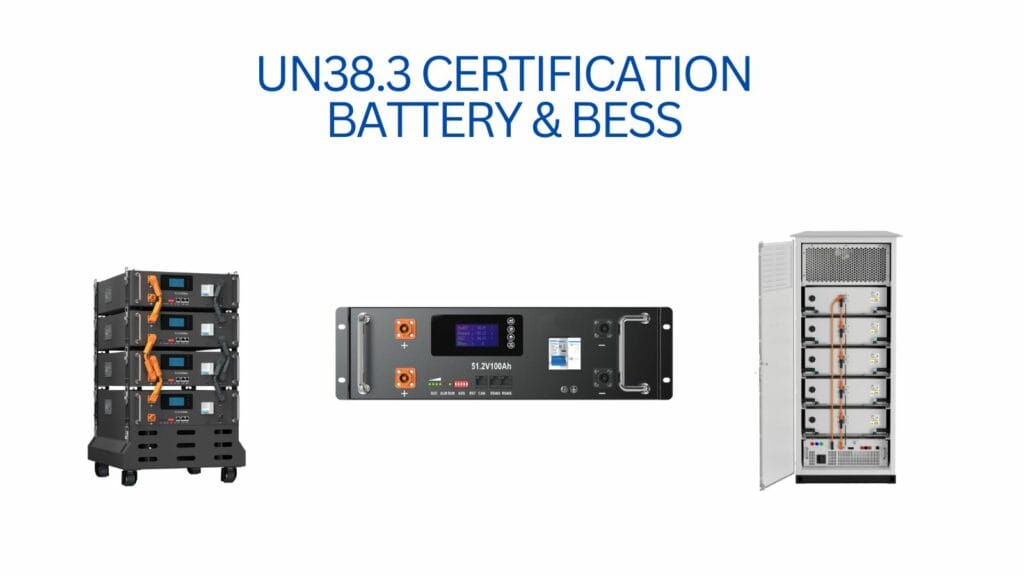
UN38.3 Certification: Your Gateway to Safe and Legal Battery Transport

UN38.3 Certification

In the fast-evolving world of lithium batteries, one certification stands between safe logistics and serious legal trouble: UN38.3. Whether you’re shipping batteries for electric vehicles, drones, energy storage systems, or portable electronics, compliance with UN38.3 Certification is non-negotiable.

In this guide, we break down everything you need to know about UN38.3 — what it is, why it matters, and how to ensure your battery products meet the global standard for safe transportation.


What Is UN38.3 Certification?

UN38.3 refers to Section 38.3 of the United Nations Manual of Tests and Criteria, Part III.
It mandates a series of rigorous safety tests that lithium-ion and lithium metal cells and batteries must pass before being transported by air, sea, rail, or road.

Purpose:
To ensure batteries can withstand transportation conditions such as pressure changes, vibrations, shocks, temperature fluctuations, and external short circuits — without risk of explosion, fire, or leakage.

In simple words, UN38.3 is your passport for batteries to legally and safely travel across borders.


Why UN38.3 Certification Is Critical

  • Legal Requirement:
    Without UN38.3, shipping lithium batteries is illegal in most countries, including the USA, EU, China, and others.
  • Safety Assurance:
    Lithium batteries can be dangerous if mishandled. UN38.3 ensures they are robust enough for real-world logistics.
  • Customs Compliance:
    Many customs authorities will seize or return battery shipments that lack a valid UN38.3 Test Summary.
  • Protect Brand Reputation:
    A single logistics incident involving a battery can damage your company’s reputation permanently.

What Products Require UN38.3 Certification?

You need UN38.3 testing for:

  • Lithium-ion batteries (rechargeable)
  • Lithium-metal batteries (non-rechargeable)
  • Battery packs
  • Batteries inside equipment (e.g., laptops, drones, EVs)
  • Batteries packed with equipment

Note: Even prototypes shipped for testing or development may require UN38.3 compliance under certain conditions.


The UN38.3 Test Items: What Batteries Must Survive

UN38.3 includes eight brutal tests designed to simulate real transport conditions:

Test NamePurpose
T.1 Altitude SimulationSimulates air transportation pressure (low pressure at 11,600 m).
T.2 Thermal TestExposure to extreme temperatures and cycling.
T.3 VibrationSimulates vibrations during transportation.
T.4 ShockSimulates mechanical shocks that may occur.
T.5 External Short CircuitSimulates a short during handling.
T.6 Impact / Crush TestTests battery strength under heavy compression.
T.7 OverchargeFor rechargeable cells/batteries only.
T.8 Forced DischargeFor cells, forces a discharge under worst-case conditions.

Passing all tests is mandatory for a UN38.3 certificate.


What Happens If You Skip UN38.3?

  • Fines: Heavy financial penalties for shipping non-compliant batteries.
  • Shipment Rejection: Airlines, shipping lines, and customs authorities will refuse non-compliant cargo.
  • Accidents: Risk of fire, explosion, injury, or property damage.
  • Legal Liability: You may be held responsible for accidents during transport.

How to Obtain UN38.3 Certification

  1. Product Preparation:
    Manufacture sample cells or batteries according to production specifications.
  2. Select Accredited Laboratories:
    Use certified third-party testing labs accredited for UN38.3 (e.g., SGS, TUV, Intertek, CTI, Pony Testing).
  3. Testing Process:
    Submit samples for the full series of UN38.3 tests.
  4. Obtain Test Report:
    A successful test produces a detailed test report.
  5. Issue UN38.3 Test Summary:
    Since 2020, regulations require a formal “Test Summary” to accompany every shipment.

Common Challenges During UN38.3 Testing

  • Inconsistent battery design or materials can cause test failures.
  • Lack of attention to packaging and markings after certification.
  • Mistakes in documenting the test summary can still block shipments.
  • Prototype versions often differ from final products and may require re-testing.

Pro Tip:
Work with experienced battery engineers and compliance consultants early in your product development to avoid expensive delays.


UN38.3 and the Energy Storage Industry

In New Energy sectors like:

  • EV Batteries
  • Home and Commercial Energy Storage
  • UAV Battery Packs
  • Portable ESS
  • Containerized Energy Storage Systems

UN38.3 is essential not just for cells but for complete battery packs and modules.

Even if your cells are certified, the final assembled pack needs its own UN38.3 testing if the design is significantly altered (different BMS, configuration, casing, etc.).


Final Thoughts

UN38.3 is not just a regulation — it’s a responsibility.

In an industry where trust is everything, showing your commitment to safety and compliance through proper UN38.3 certification sets you apart from your competitors.

Ship safe. Ship compliant. Ship smart.


Are you sourcing batteries for your next project?
Need help navigating UN38.3 compliance?

???? Contact me today for consulting, supplier audits, and battery sourcing support — ensuring your products are safe, compliant, and ready for global markets.

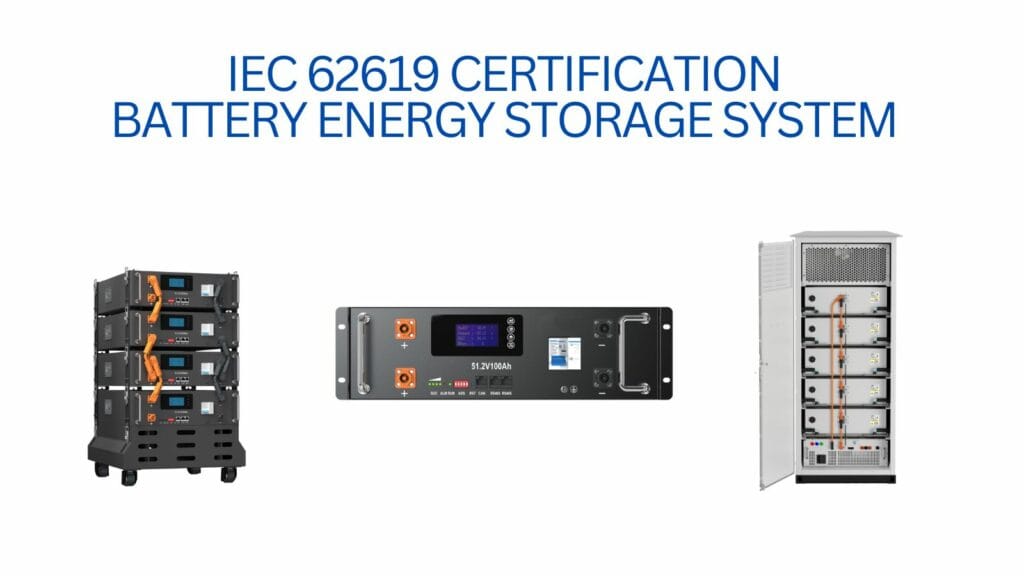
Protect Your Home and Future: Choose IEC 62619 Certified Batteries

Worried about the safety of your battery energy storage system? Discover why IEC 62619 certification is critical for protecting your investment, your people, and your peace of mind.

Imagine Losing Everything in Seconds

Think about it.
You buy a beautiful energy storage battery for your home or business.
You believe it’s safe.
But one night, without warning, it overheats.
It starts a fire.
You lose your home. Your business. Maybe even lives are at risk.

All because of one missing thing: a proper safety certification.

This is not a horror story—it’s a real risk many people unknowingly face when they buy uncertified batteries.

In this post, I’ll show you why IEC 62619 Certification is not just another boring standard.
It’s the single most important thing you should look for before buying or installing any battery system.

What Is IEC 62619 Certification?

IEC 62619 is an international safety standard created by the International Electrotechnical Commission (IEC).
It’s designed specifically for rechargeable lithium batteries used in industrial and stationary energy storage applications.

In simple words:
If you are using a battery for solar energy storage, UPS systems, backup power, or commercial energy storageIEC 62619 should be non-negotiable.

This certification means the entire battery system (not just individual cells) has been:

✅ Stress-tested
✅ Abuse-tested
✅ Verified to shut down safely under failure conditions

The tests check if the battery can survive real-world problems like short circuits, overheating, crushing forces, and even fire exposure.


Why Is IEC 62619 Certification So Important?

Here’s why you should never ignore it:

1. Your Family’s Safety Depends on It

Energy storage batteries are powerful.
Without proper protections, they can catch fire, explode, or leak dangerous chemicals.

IEC 62619 ensures that:

  • If the battery gets too hot, it shuts down safely.
  • If there’s a short circuit, it won’t explode.
  • If it’s damaged or overcharged, it won’t cause a disaster.

Would you really risk your family’s life just to save a little money on an uncertified battery?
Of course not.

2. You Deserve Peace of Mind

You worked hard to install clean energy or backup power solutions.
You deserve to sleep peacefully at night—not stay awake worrying if your battery is a ticking time bomb.

When you choose an IEC 62619-certified system, you’re choosing peace of mind.

You’re telling yourself:
“I did everything I could to protect my people and property.”

3. Protect Your Business Reputation

If you install or sell uncertified batteries and something goes wrong, your reputation could be ruined overnight.

One bad fire, one lawsuit, one insurance denial—and years of hard work can be destroyed.

An IEC 62619 certification shows your customers and partners that you take safety seriously.
That you are professional and responsible.

It’s not just a certificate.
It’s a trust badge.

4. Avoid Legal Trouble and Insurance Headaches

In many countries, insurance companies require proof that your energy storage system meets proper safety standards.
IEC 62619 is often one of those standards.

Without it:

  • Your insurance claims could be rejected.
  • You might face penalties or shutdowns during inspections.
  • You could even face lawsuits if an accident happens.

Would you risk everything you built just to save a few dollars?


What Exactly Does IEC 62619 Test?

IEC 62619 is not an easy certificate to get.
The battery must pass a brutal list of tests that simulate real-life disasters, including:

  • Overcharge Tests: Checks if the battery can survive being charged too much.
  • Short Circuit Tests: Simulates internal shorts without causing explosions.
  • Crush Tests: Sees if the battery stays safe even when physically crushed.
  • Thermal Abuse Tests: Exposes batteries to extreme heat.
  • Fire Exposure Tests: Sees how the battery reacts if caught in a fire.
  • External Force Tests: Tests against impacts, drops, and mechanical shocks.
  • BMS Functionality Tests: Verifies the Battery Management System’s response to faults.

The battery is tortured in ways that it would never face in normal use—to make sure that even in a worst-case scenario, it protects you.


Why Cell Certificates Alone Are Not Enough

Some battery suppliers try to fool customers by showing cell-level certificates like IEC 62133 or UL 1642.
While those are important, they only prove that individual battery cells are safe.

But your energy storage system is much more complex than just cells!

It includes:

  • A Battery Management System (BMS)
  • Electrical circuits
  • Enclosures
  • Cooling systems
  • Safety control software

If the entire system isn’t tested, you have no guarantee that it’s safe.

IEC 62619 tests the complete battery pack—not just the cells.
That’s the real protection you need.


Real-Life Disasters That Could Have Been Prevented

Let’s be real—battery fires happen.
They make headlines almost every month.

  • ???? Fires in energy storage farms
  • ???? Explosions in battery-powered forklifts
  • ???? Home battery systems overheating and causing property damage

In many of these cases, investigations showed that proper safety certification was missing.

Would you really want to end up in a newspaper headline like that?


Common Myths About IEC 62619 (Busted!)

“It’s Just a Piece of Paper.”

Wrong.
IEC 62619 involves actual laboratory tests by accredited third parties. It’s proof that your battery has been battle-tested against disaster scenarios.

“It’s Too Expensive to Get Certified Batteries.”

Wrong again.
Yes, certified batteries might cost 5–10% more. But compare that to the cost of:

  • Fire damage
  • Legal claims
  • Loss of business reputation
  • Insurance losses

Certification is cheap insurance for your future.

“I Only Need It for Big Projects.”

No.
Whether your battery is 5 kWh for home backup or 2 MWh for commercial use—safety doesn’t care about size.

Every battery that stores significant energy should meet IEC 62619.


How to Verify a Real IEC 62619 Certificate

Because it’s so important, some suppliers might fake certificates.

Here’s how to check:

✅ Ask for a copy of the full IEC 62619 test report—not just the certificate page.
✅ Make sure the testing lab is recognized (like TUV, SGS, UL, Intertek).
✅ Check that the report includes the full battery pack model number, not just cells.

If they refuse or give vague answers? Walk away.


What Happens If You Skip IEC 62619?

Here’s the brutal truth:

  • Your insurance may be voided.
  • You might face regulatory penalties.
  • Your project may fail inspections.
  • You may cause fires, explosions, or injuries.
  • Your reputation and business could collapse.

All for trying to save a little bit of money.


My Personal Advice to You

As someone deeply involved in energy storage consulting and sourcing, I have seen what happens when companies ignore safety standards.

It’s heartbreaking.
It’s unnecessary.
And it’s avoidable.

If you are buying, selling, or installing a Battery Energy Storage System, always demand IEC 62619 certification.
Not just for legal reasons—but for your own safety, and the safety of everyone around you.

You deserve better.
Your family deserves better.
Your customers deserve better.


Conclusion: Don’t Gamble With Safety

In the world of energy storage, you can choose safety or choose regret.

IEC 62619 is not an optional extra.
It’s the basic foundation of a safe, smart energy future.

Before you buy or install your next battery system, ask one simple question:

“Is it IEC 62619 certified?”

If the answer is yes—you’re making a smart, responsible choice.
If not—run the other way.


Need Help Sourcing Certified Battery Systems?

I help businesses and individuals around the world source genuine IEC 62619-certified batteries from top-quality factories.

✅ I check factories personally.
✅ I verify real certifications.
✅ I protect your time, money, and peace of mind.

Ready to make your energy future safe?
???? Contact me today for trusted sourcing, consulting, and inspections!