
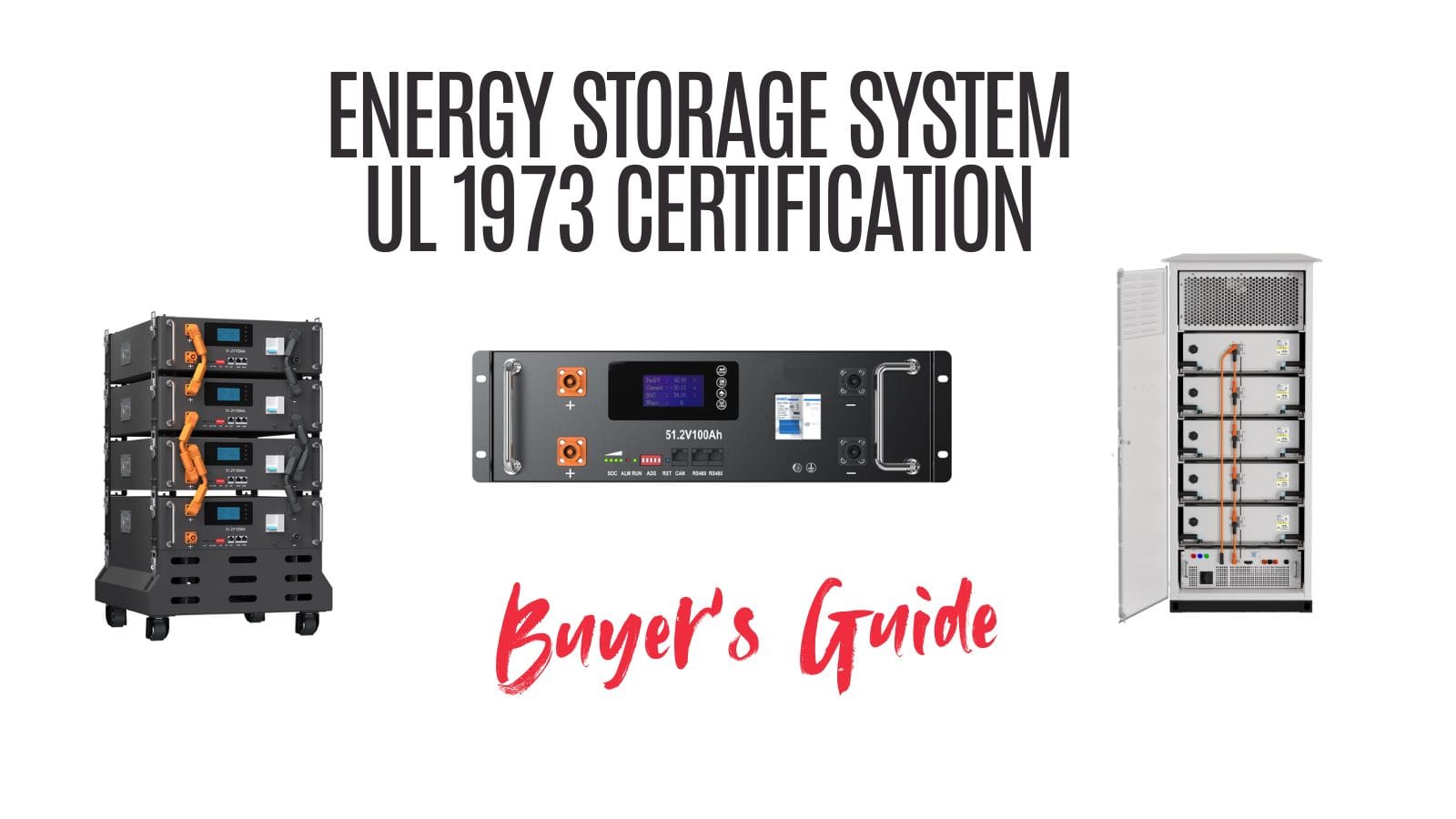

In the fast-evolving world of energy storage, safety is non-negotiable. Whether you’re powering homes, EVs, or industrial systems, your battery must inspire trust. And that trust comes stamped with one name — UL 1973 Certification.
This isn’t just a regulatory checkbox. It’s your battery’s passport to global markets, a powerful statement of quality, and a lifesaving commitment to safety. If you’re in the battery game, UL1973 isn’t optional — it’s essential.
What is UL 1973 Certification?
UL1973 is a critical safety standard developed by Underwriters Laboratories (UL) for batteries used in stationary applications, mobility support, and emergency power systems. It evaluates the entire battery system, including:
- Battery modules
- Packs
- Battery Management Systems (BMS)
- Enclosures and connections
Unlike simple cell testing, UL 1973 dives deep into the integrated battery unit, making sure every part functions safely and reliably under real-world conditions.
???? Why UL 1973 Certification Matters
✅ 1. Protects Lives and Property
Battery fires and failures can be devastating. UL1973-certified batteries undergo rigorous abuse, short-circuit, overcharge, and environmental testing. This dramatically reduces fire risks, protects infrastructure, and most importantly — saves lives.
✅ 2. Gives You a Market Edge
Whether you’re entering the U.S., Canadian, or European markets, having a UL1973 label instantly builds credibility. It’s a trust badge recognized by manufacturers, developers, and regulatory bodies worldwide.
✅ 3. Mandatory for Compliance and Tenders
UL 1973 is often a requirement in large-scale energy storage tenders, EPC contracts, and utility-grade projects. Without it, your battery may never even qualify.
✅ 4. Drives Customer Confidence
Customers ask, “Is this battery safe?”
UL1973 answers loud and clear: YES.
It’s a confidence booster that assures clients their investment is protected.
???? Real-World Applications that Demand UL 1973
- Residential & Commercial Energy Storage Systems (ESS)
- Telecom Backup Systems
- Industrial Power Backup
- Microgrids
- Electric Vehicle Infrastructure (EV Charging Stations)
Whether it’s a 5kWh home battery or a 5MWh containerized ESS, UL 1973 opens doors across verticals.
???? What Does UL 1973 Testing Include?
UL1973 is a system-level evaluation involving:
- Electrical Safety (short-circuit, overcharge, isolation faults)
- Mechanical Integrity (vibration, shock, drop)
- Environmental Performance (temperature, humidity)
- Fire Containment & Propagation Control
- Functional Safety of BMS
- Enclosure Ratings (NEMA/IP)
???? Note: Passing UL 1973 requires not just high-quality cells, but well-engineered packs, a robust BMS, and fail-safe housing.
⚠️ Common Mistakes to Avoid
- ❌ Relying only on cell-level reports – UL 1973 focuses on the full battery pack.
- ❌ Skipping pre-certification reviews – Always conduct internal safety checks before submitting.
- ❌ Choosing inexperienced labs – Work only with UL-recognized testing bodies.
???? How UL 1973 Impacts Business Growth
UL1973 isn’t a cost — it’s an investment with tangible returns:
| Benefit | Impact |
|---|---|
| Faster project approvals | Saves time and accelerates deployment |
| Improved investor confidence | Attracts funding and partnerships |
| Fewer safety incidents | Lowers insurance and operational costs |
| Entry into high-value markets | Expands global reach and opportunities |
???? A UL 1973 certificate on your product means you’re ready for the big leagues.
???? Related Certifications That Often Go Together
- UL 9540 – System-level certification for Energy Storage Systems (ESS)
- UL 9540A – Fire propagation testing
- IEC 62619 / UN 38.3 – International safety and transport certifications
- CE / UKCA Marking – European/UK market access
????️ Combining these certifications shows your battery is truly market-ready.
❤️ Final Thoughts: Safety is Power
In the race to electrify our world, let’s not cut corners. The real power of a battery lies not just in its energy capacity — but in its ability to protect, to perform, and to earn trust.
If you’re a battery manufacturer, integrator, or EPC player — UL 1973 is your golden ticket. It’s not just a certificate. It’s a badge of honor, a promise to your customers, and a foundation for global success.
???? Ready to Get UL 1973 Certified?
As a sourcing and quality control consultant in the New Energy space, I can help you:
- Connect with top UL-certified labs in China
- Pre-check your system for readiness
- Avoid costly delays during certification
- Source compliant components for pack, BMS, and enclosure
???? Let’s talk if you need a trusted expert to walk this journey with you.





You must be logged in to post a comment.