Renewable Energy Storage: The Key to a Sustainable Future

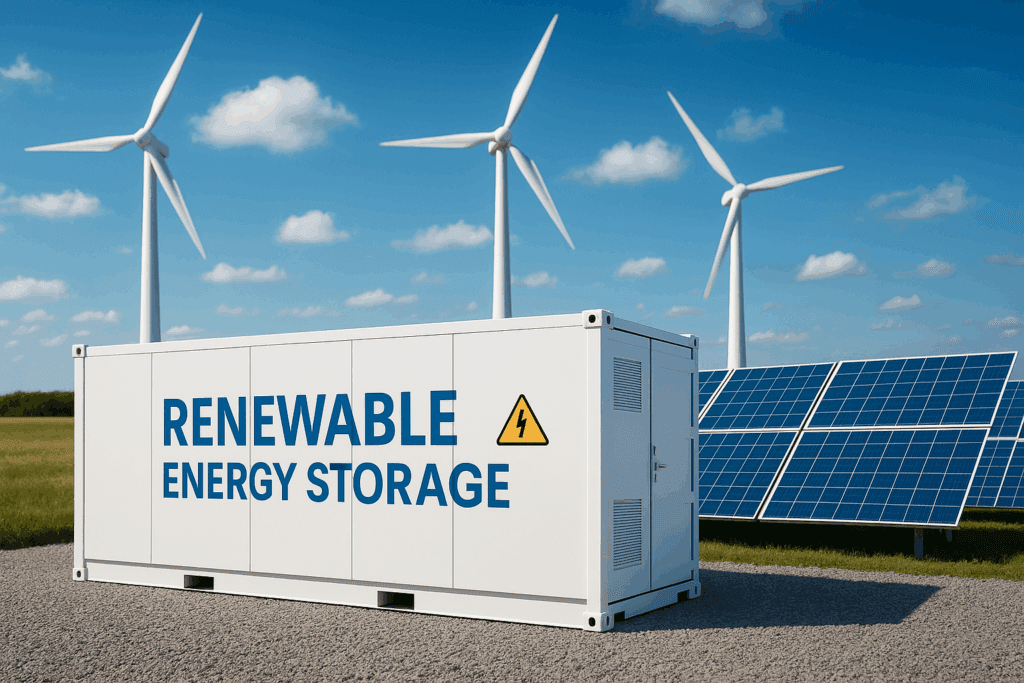
Renewable Energy Storage

The future of energy isn’t just green—it’s smart, flexible, and resilient. While renewable sources like solar and wind dominate headlines, their true power is only unlocked when paired with effective renewable energy storage systems. Without storage, renewable energy remains an inconsistent and underutilized asset. With it, we gain control, reliability, and true sustainability.

Let’s explore how renewable energy storage is reshaping the global energy landscape and driving us toward a carbon-neutral world.


Why Energy Storage Matters

Renewable energy is inherently intermittent. The sun doesn’t shine at night, and wind patterns are unpredictable. This variability creates a significant challenge: how do we store excess energy for use when production dips?

That’s where energy storage becomes vital.

Energy storage systems (ESS) absorb surplus energy during peak production and release it when demand spikes or production drops. This balance is critical for maintaining grid stability, reducing dependence on fossil fuels, and ensuring continuous power availability—even during outages.


Types of Renewable Energy Storage Technologies

Modern renewable storage solutions span several technologies. Each plays a unique role in supporting the grid and renewable power systems:

1. Battery Energy Storage Systems (BESS)

BESS are the most popular and rapidly evolving storage technology. They store electrical energy in chemical form and are ideal for both small- and large-scale applications.

  • Lithium-ion batteries dominate due to their high energy density and fast response times.
  • LFP (Lithium Iron Phosphate) and NMC (Nickel Manganese Cobalt) batteries are commonly used in solar and wind power storage.
  • Semi-solid and solid-state batteries are emerging with improved safety and energy density.

2. Pumped Hydro Storage

This is the oldest and most established storage method. Water is pumped uphill during low demand and released through turbines during high demand.

  • Offers long-duration storage
  • Best for utility-scale applications
  • Requires suitable geographic conditions

3. Thermal Energy Storage

This stores energy in the form of heat, often using molten salts or other materials. It’s commonly used with concentrated solar power (CSP) systems.

  • High efficiency
  • Ideal for industrial and utility sectors

4. Compressed Air Energy Storage (CAES)

Energy is stored by compressing air in underground caverns. During peak demand, air is released to generate electricity via turbines.

  • Long life cycles
  • Suitable for grid-level storage

Benefits of Renewable Energy Storage

When paired with renewables, storage solutions offer unparalleled advantages for individuals, businesses, and governments:

✅ Energy Independence

Store your own solar or wind energy and reduce reliance on the grid.

✅ Grid Stability

BESS smooths out fluctuations, stabilizing voltage and frequency in real time.

✅ Peak Shaving & Load Shifting

Avoid high energy charges by using stored energy during peak hours.

✅ Backup Power

Energy storage provides uninterrupted power during blackouts or grid failures.

✅ Lower Carbon Emissions

Stored renewable energy displaces fossil-fuel-based backup generators, reducing carbon footprints.


Key Applications of Renewable Energy Storage

????️ Residential Systems

Homeowners with rooftop solar often pair it with a small battery system for energy security and savings.

???? Commercial & Industrial (C&I)

Factories and businesses use storage to manage demand charges and protect critical operations.

Grid-Scale Storage

Governments and utilities deploy massive BESS installations to balance the grid, integrate renewables, and defer costly infrastructure upgrades.

???? Remote & Island Communities

Energy storage eliminates diesel dependency and enables 100% renewable microgrids in remote locations.


The Future of Renewable Storage: What’s Coming Next?

As storage technology advances, we are witnessing rapid cost reductions, improved battery chemistries, and smarter energy management systems.

  • AI-driven EMS (Energy Management Systems) are optimizing when and how stored energy is used.
  • Second-life EV batteries are being repurposed for stationary storage, reducing waste and costs.
  • Hydrogen storage and flow batteries are being explored for ultra-long-duration storage.

Governments are also recognizing the value. From the U.S. to China to the EU, policies now include incentives, mandates, and funding for energy storage deployment.


Challenges to Overcome

Despite the promise, a few challenges remain:

  • High upfront costs of some storage solutions
  • Recycling and disposal of batteries
  • Supply chain concerns around lithium, cobalt, and other materials
  • Need for standardized regulations and safety protocols

The good news? Industry innovation is addressing all these issues head-on.


Conclusion: Storage Unlocks the Full Potential of Renewables

Energy generation alone cannot solve the climate crisis. To truly transition to a clean energy future, we must store renewable energy intelligently and efficiently. Renewable energy storage is no longer optional—it’s the cornerstone of modern power systems.

Whether you’re a homeowner looking for energy security or a business aiming to cut costs and emissions, renewable energy storage is the solution you’ve been waiting for.

Invest in storage. Power the future.

Power Conversion Systems (PCS): The Beating Heart of Smart Battery Energy Storage Systems

PCS (Power Conversion System

As the global demand for cleaner, more reliable, and more efficient energy solutions intensifies, Battery Energy Storage Systems (BESS) have emerged as a linchpin in the renewable energy revolution. But behind the scenes, a vital component ensures the seamless conversion of energy from one form to another—Power Conversion Systems (PCS).

Much like the heart in a human body, Power Conversion System plays a central role in managing energy flow within a BESS. It ensures that the energy stored in batteries can be used when needed and that excess energy from solar, wind, or the grid can be efficiently stored.

This article dives deep into the world of PCS, exploring what it is, how it works, the different types available, and why it is indispensable for the performance, safety, and profitability of modern energy storage systems.


What is a Power Conversion System (PCS)?

A Power Conversion System (PCS) is the core electrical interface in a BESS that converts direct current (DC) stored in the battery into alternating current (AC) for use on the grid or by electrical loads—and vice versa.

Power Conversion System includes inverters, rectifiers, control units, transformers, and protection systems. Its job is to handle the bi-directional flow of electricity, ensuring smooth transitions and stable power quality.


The Core Functions of Power Conversion System in BESS

1. DC to AC Conversion (Inversion)

When energy stored in the battery (DC) needs to be supplied to the grid or to AC loads, PCS converts it to AC. This is especially critical in grid-tied applications.

2. AC to DC Conversion (Rectification)

Power Conversion System also handles the charging process. It converts AC power from the grid or renewable sources into DC to charge the batteries efficiently.

3. Grid Stabilization and Support

Modern Power Conversion System units provide advanced functionalities like voltage and frequency regulation, reactive power support, harmonic filtering, and black start capabilities.

4. Load Shifting and Peak Shaving

PCS enables intelligent control of when to charge or discharge the battery based on demand, energy prices, or time-of-use tariffs, improving ROI and grid efficiency.

5. System Protection and Control

Built-in protections like overvoltage, overcurrent, short circuit, and anti-islanding ensure safety and compliance with grid codes.


Why PCS is Crucial in Energy Storage Systems

Without Power Conversion System, a BESS would be unable to interact with the outside world. Batteries store energy in DC, but the majority of our electric infrastructure runs on AC. PCS acts as the bridge, enabling:

  • Grid compatibility
  • Bidirectional energy flow
  • High conversion efficiency
  • Advanced control strategies
  • Energy trading and arbitrage

Types of PCS in Battery Energy Storage Systems

1. Centralized Power Conversion System

A single large PCS unit handles the entire battery array. It’s efficient for utility-scale systems but can be a single point of failure.

Applications:

  • Utility-scale solar + storage projects
  • Industrial peak shaving systems

2. String Power Conversion System (Modular PCS)

Multiple small Power Conversion System units are distributed across the system. Offers redundancy and scalability, making it ideal for commercial and C&I systems.

Applications:

  • C&I rooftop installations
  • Microgrids

3. Hybrid PCS

Combines multiple energy sources (solar, diesel genset, grid) and integrates them with the battery system, offering maximum flexibility and resilience.

Applications:

  • Off-grid systems
  • Islanded microgrids
  • EV charging stations with renewable input

Key Technical Parameters of PCS

When selecting a PCS, the following parameters should be carefully considered:

ParameterImportance
Power Rating (kW/MW)Determines the load the PCS can handle
Conversion EfficiencyAffects overall system losses and ROI
Grid ComplianceMust meet IEEE, IEC, UL, or regional grid codes
Harmonic Distortion (THD)Lower THD means cleaner power
Reactive Power SupportHelps with voltage regulation
Communication ProtocolsShould support Modbus, CAN, or Ethernet
Cooling MethodAir-cooled vs. liquid-cooled for high-temp zones

PCS in Action: Real-World Use Cases

1. Renewable Energy Integration

Solar and wind produce intermittent energy. PCS smoothens fluctuations by storing excess energy and releasing it when generation drops.

2. Microgrids and Remote Areas

PCS enables independent energy management in areas not connected to the main grid, reducing dependency on diesel generators.

3. Data Centers

PCS in BESS ensures zero downtime and clean switchover during outages, improving uptime and power quality.

4. EV Charging Infrastructure

EV fast chargers require high power. PCS helps balance grid load by storing and discharging energy during peak times.


PCS vs Inverters: What’s the Difference?

While Power Conversion System includes inverters, it is not limited to them. Power Conversion System is a complete subsystem encompassing inverters, rectifiers, filters, controllers, communication interfaces, and grid compliance features.

Inverter:

  • Converts DC to AC only
  • Typically unidirectional

Power Conversion System:

  • Bidirectional conversion (DC↔AC)
  • Includes multiple control and protection features
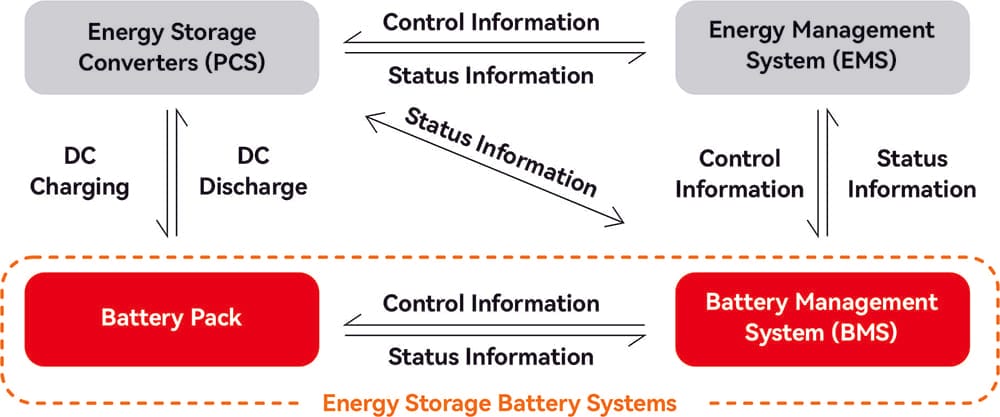
  • Interfaces with EMS, BMS, and the grid

Integration of PCS with Other Systems

1. Battery Management System (BMS)

Power Conversion System works closely with the BMS to ensure safe charging/discharging by monitoring battery cell voltages, temperatures, and states of charge.

2. Energy Management System (EMS)

PCS executes the commands from EMS, managing power flow based on time-of-use tariffs, grid signals, and energy trading strategies.

3. Supervisory Control and Data Acquisition (SCADA)

In utility-scale installations, Power Conversion System sends real-time data to SCADA for performance monitoring and fault diagnostics.


The Rise of Smart PCS

Modern Power Conversion System systems come equipped with:

  • AI algorithms for predictive analytics
  • IoT integration for remote monitoring
  • Cybersecurity protocols to prevent hacking
  • Blockchain for energy trading in peer-to-peer networks

This evolution makes Power Conversion System not just a power converter, but a smart energy orchestrator.


Challenges in PCS Deployment

Despite its critical role, Power Conversion System deployment presents several challenges:

  • High Initial Cost: Especially for large systems or hybrid configurations
  • Thermal Management: Efficient heat dissipation is crucial
  • Grid Compliance: Varying standards across countries complicate design
  • EMI/EMC Compliance: Avoiding interference with other devices
  • Space and Ventilation Requirements: Especially for indoor installations

Future of Power Conversion System in BESS

As the world shifts towards a decentralized and decarbonized energy model, Power Conversion System will take center stage in enabling flexibility, grid resilience, and cost-effective energy storage.

Emerging trends include:

  • Wide Bandgap Semiconductors (SiC, GaN): Higher efficiency and smaller size
  • Multi-port PCS: Handling solar, grid, and storage simultaneously
  • DC-DC Isolated Power Conversion System: For safe and efficient integration of second-life batteries
  • Vehicle-to-Grid (V2G): Power Conversion System will power bi-directional energy flow in EV charging networks

Conclusion

The success of any Battery Energy Storage System hinges on the performance and reliability of its Power Conversion System. PCS is more than a technical component—it’s the gateway, the translator, and the guardian of the entire energy storage ecosystem.

As energy systems evolve, PCS will remain at the forefront, ensuring that the power we generate, store, and consume is clean, stable, and smart.

Whether you’re designing a microgrid, deploying a utility-scale storage plant, or developing a smart city infrastructure, investing in a robust Power Conversion System is non-negotiable.

It’s not just a piece of equipment.
It’s the brain and backbone of modern energy transformation.

EMS (Energy Management System): The Intelligent Core Powering the Future of Energy Storage

EMS * Energy Management System)

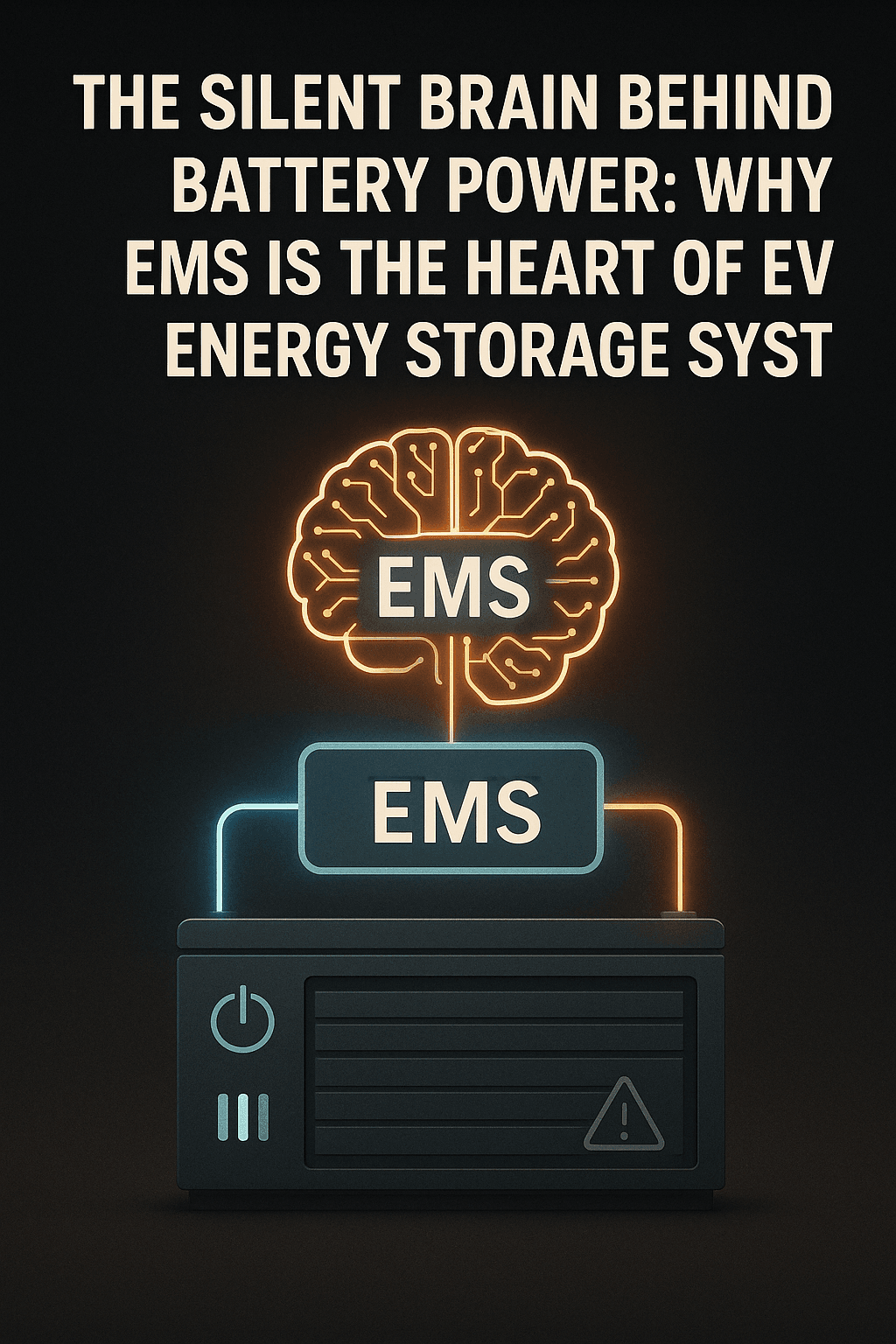
In the world of energy, we often admire the power, but rarely acknowledge the brain behind it. While battery cells, BMS, and PCS receive most of the attention in an energy storage system, there exists an unsung hero—the Energy Management System (EMS). Quiet, invisible, yet incredibly powerful—Energy Management System is the central nervous system of every energy storage solution.

In a rapidly electrifying world, where outages cost millions, renewable sources fluctuate, and grid stability is paramount—Energy Management System plays a decisive, life-saving role.

If you’re investing in battery systems, building an ESS, or managing a smart grid—understanding Energy Management System isn’t optional. It’s essential.


What is EMS (Energy Management System)?

At its core, an EMS is a sophisticated control system that monitors, manages, and optimizes the energy flow in a battery energy storage system (BESS).

Think of it like this:

  • The Battery is the Heart
  • The BMS (Battery Management System) is the Nerve
  • The Energy Management System is the Brain

It connects everything—solar panels, inverters, batteries, grid, and loads—orchestrating power flows with intelligence and precision.

Key Functions of an Energy Management System:

  • Real-time energy monitoring and analytics
  • Load forecasting and energy optimization
  • Charge/discharge scheduling
  • Peak shaving and load shifting
  • Integration with solar, wind, grid, and diesel
  • Demand-side management
  • Grid interaction & revenue optimization

Why EMS Matters in Energy Storage Systems

1. Because Power Without Control is Chaos

A high-capacity battery without Energy Management System is like a sports car without a driver.
Yes, it can go fast—but it can also crash. Hard.

Energy Management System controls when to store energy, when to release it, and how to do it safely. It decides:

  • When to charge from solar
  • When to sell power back to the grid
  • When to avoid grid usage during peak prices

Without Energy Management System, energy decisions are blind and reactive, leading to inefficiencies, losses, or even system failure.


2. The Key to Profitability

Energy is money. EMS is how you make more of it.

For commercial and industrial setups, Energy Management System can save thousands to millions by:

  • Reducing peak demand charges
  • Enabling participation in grid services
  • Selling energy when prices are high
  • Minimizing energy waste and downtime

Energy Management System helps energy Storage systems become revenue-generating assets, not just storage units.


3. Your Guardian Against Failures

Every battery system carries risks—thermal runaway, overcharging, deep discharge, communication failures.

While BMS protects the battery at the cell level, EMS protects the entire ecosystem.

It ensures that:

Energy Management System is your safety commander, reducing the risk of fire, blackout, and equipment failure.


4. Enables Smart Integration with Renewables

Renewables are the future. But they’re also unpredictable.

The sun doesn’t always shine. The wind doesn’t always blow.

Energy Management System allows you to:

  • Predict renewable output using AI & weather data
  • Prioritize solar or wind over grid use
  • Smooth out power fluctuations
  • Store surplus energy for night-time or low-supply periods

In short, Energy Management System makes clean energy dependable.


5. It’s the Brain of Smart Grids

We’re moving toward decentralized, intelligent energy systems—smart homes, smart grids, and VPPs (Virtual Power Plants).

In this world, Energy Management System is your passport.

It communicates with:

  • Grid operators
  • Aggregators
  • Utility APIs
  • Building Battery Management Systems (BMS)
  • Internet of Things (IoT) platforms

It enables autonomous decision-making—a future where your system acts in real-time, based on external signals and internal logic.


Real-Life Use Case: EMS in Action

Industrial Park in Southeast Asia

An industrial complex installed a 5MWh battery system with solar panels. Initially, without Energy Management System, they saw:

  • Frequent overcharging
  • High peak demand penalties
  • Poor system performance

After Energy Management System integration:

  • Peak demand reduced by 40%
  • Monthly savings: over $25,000
  • ROI achieved in 18 months

The Energy Management System monitored real-time prices, weather, and load data—automatically deciding when to store, sell, or shift energy usage.

That’s not just smart—that’s transformational.


Types of EMS Platforms

  1. On-Premise Energy Management System
    • Installed locally
    • Low latency
    • Used in data-sensitive environments
  2. Cloud-Based Energy Management System
    • Accessible remotely
    • Uses AI & big data
    • Easy to update & scale
  3. Hybrid Energy Management System
    • Combines both local and cloud intelligence
    • Ideal for mission-critical sites

Choosing the Right Energy Management System: What to Look For

When evaluating an EMS, don’t just check the brochure. Look for:

✅ Open communication protocols (Modbus, OPC UA, MQTT)
✅ Compatibility with BMS, PCS, Inverters
✅ Real-time dashboard and mobile access
✅ Predictive analytics and machine learning
✅ Alarm systems and redundancy
✅ Customizable logic rules
✅ Cybersecurity features

Ask the hard questions. Your energy future depends on it.


EMS vs BMS: Know the Difference

FeatureEMSBMS
ScopeEntire system (battery + grid + solar)Individual battery cells
FocusEnergy optimization & managementBattery safety and health
IntelligenceAI-powered decision-makingReal-time cell monitoring
Integration LevelHigh (with inverters, grid, SCADA)Low (battery-focused only)
Strategic ValueRevenue generation & cost savingsSafety and performance of battery

BMS and EMS Both are critical. But Energy Management System is what turns your storage into a business tool.


The Future is EMS-Driven

As we transition into an electrified, AI-powered, and decentralized energy world, EMS will be the central command system.

Imagine:

  • Homes that buy energy only during low rates
  • Factories that run on solar + storage with zero carbon
  • Cities that never suffer blackouts thanks to BESS
  • Fleets of EV chargers powered by solar + Energy Management System

This is no longer a dream. EMS is the technology that makes it real.


Conclusion: Let Energy Management System Be Your Edge

Energy is no longer just about storage—it’s about strategy.
And EMS is your strategic brain.

Whether you’re managing a home ESS, a commercial solar plant, or a utility-scale BESS—EMS gives you control, safety, and profit.

In a world where energy prices rise, policies shift, and grid stability becomes fragile—your Energy Management System isn’t just software.
It’s your edge, your intelligence, and your future-proofing tool.


Ready to Build Smarter Battery Energy Storage Systems?

If you’re sourcing energy storage systems or looking for turnkey ESS solutions, make sure your Energy Management Systemis powerful, scalable, and battle-tested.

Need help finding the right EMS-integrated solution?

?Let’s connect.
As a sourcing expert in the new energy space, I help global clients find Energy Management System-equipped, cost-effective, and certified battery systems that deliver results.