Certifications

The Explosive Truth About UL Battery Certifications: What Smart Buyers Never Ignore

UL Battery Certifications

???? Introduction: Why UL Battery Certifications Aren’t Optional Anymore

In the electrifying world of batteries—especially in energy storage, EVs, and electronics—UL battery certifications are not just formalities. They are non-negotiable trust signals that separate safe, high-quality products from dangerous, compliance-risking time bombs.

But with names like UL 1642, UL 2054, UL 1973, UL 9540, UL 9540A, and UL 2580 floating around, it’s easy to feel overwhelmed.

Relax.
This ultimate breakdown will demystify these certifications and help you make bulletproof decisions—whether you’re a buyer, engineer, or project manager.


⚡️ What Are UL Certifications, Really?

UL (Underwriters Laboratories) is a global safety authority that rigorously tests and certifies products to ensure they meet specific safety, performance, and reliability standards. UL certification on a battery (or battery system) means:

  • It’s been tested under extreme conditions.
  • It complies with industry and legal safety standards.
  • It reduces the risk of fires, explosions, or failures.
  • It increases your chance of passing inspections and approvals.

Now let’s decode each UL certification—clearly and powerfully.


???? UL Battery Certifications and How They Differ

1. UL 1642 – Safety of Lithium Cells

  • What it Covers: Individual lithium-ion or lithium-metal cells only.
  • Where it’s Used: All sectors—consumer, industrial, automotive.
  • Tests:
    • Crush
    • Overcharge
    • Short Circuit
    • Impact
  • Why it Matters: It confirms that each cell won’t explode or ignite under stress.

???? Quick Take: UL 1642 is the foundation, but not enough alone. It doesn’t cover full battery packs or systems.


2. UL 2054 – Battery Packs for Household & Commercial Use

  • What it Covers: Complete battery packs with lithium, NiMH, NiCd, etc.
  • Where it’s Used: Power tools, electronics, appliances.
  • Tests:
    • Dielectric strength
    • Insulation resistance
    • Abnormal charging
    • Drop, vibration
  • Why it Matters: Proves your battery won’t fail under real-world abuse.

???? Key Insight: UL 2054 ensures pack-level safety for day-to-day usage—not for ESS or EVs.


3. UL 1973 – Batteries for Energy Storage & Motive Use

  • What it Covers: Battery modules or packs used in stationary or motive systems.
  • Where it’s Used:
  • Tests:
    • Thermal abuse
    • Short circuit
    • Environmental cycling
  • Why it Matters: Ensures the pack won’t trigger thermal runaway, degrade early, or catch fire.

⚙️ Pro Tip: UL 1973 is non-negotiable for ESS projects. Without it, you risk non-compliance and rejection.


4. UL 9540 – Complete Energy Storage Systems

  • What it Covers: The entire integrated ESS, including:
    • Battery pack
    • BMS (Battery Management System)
    • PCS (Power Conversion System)
    • Enclosure
  • Where it’s Used: Residential, commercial, utility-scale energy storage.
  • Why it Matters: Confirms the whole system is designed to prevent fire, electrical hazards, and performance failure.

????️ Game Changer: UL 9540 is your ticket to market in the US and many global regions. It’s the gold standard for system-level safety.


5. UL 9540A – Fire Propagation Testing (Thermal Runaway)

  • What it Is: A testing method, not a certification.
  • Purpose: Measures how thermal runaway spreads from cell → module → unit → installation.
  • Used By:
    • Fire departments
    • AHJs (Authorities Having Jurisdiction)
    • Building code officials
  • Why it Matters: Validates whether your system can contain fires safely and avoid catastrophic chain reactions.

???? Real Talk: A good UL 9540A test result is often mandatory for local permits and approvals.


6. UL 2580 – Batteries for Electric Vehicles

  • What it Covers: Battery packs used in electric vehicles (cars, buses, bikes).
  • Tests:
    • Mechanical shock
    • Crush
    • Overcharge
    • Thermal stress
  • Why it Matters: Confirms the battery is safe during crashes, charging, and real-world operation.

????️ Auto Alert: UL 2580 is the EV industry’s benchmark for battery safety.


???? At a Glance: Certification Comparison Table

UL StandardWhat It CoversUsed InKey Focus
UL 1642Individual cellsAll industriesCell safety
UL 2054Battery packsTools, gadgetsPack safety
UL 1973ESS/Motive packsSolar, telecom, EV infraStationary & motive systems
UL 9540Full ESS systemsHome, commercial ESSComplete system safety
UL 9540AFire propagationFire safety complianceThermal runaway risk
UL 2580EV battery packsElectric vehiclesCrash & abuse safety

???? Final Thoughts: The Smart Buyer’s Checklist

If you’re planning to buy, source, or install batteries for:

  • Home energy storage
  • Commercial & industrial (C&I) ESS
  • Electric vehicles
  • Backup power systems

Here’s what you need:

  • ✅ UL 1642 for cell integrity
  • ✅ UL 2054 for basic pack safety
  • ✅ UL 1973 for stationary ESS compliance
  • ✅ UL 9540 for full-system approval
  • ✅ UL 9540A to get local permits faster
  • ✅ UL 2580 if you’re going into EVs

Don’t cut corners.
Don’t just take a cell report.
Insist on full-system UL certifications.

Your investment, your safety, and your reputation depend on it.


???? Need Help with Battery Sourcing or Certification Checks?

If you’re sourcing batteries, energy storage systems, or EV components and want someone to verify certifications, factory test reports, or FAT, get in touch. I help global clients save time, reduce risk, and avoid costly mistakes. Sourcing experts

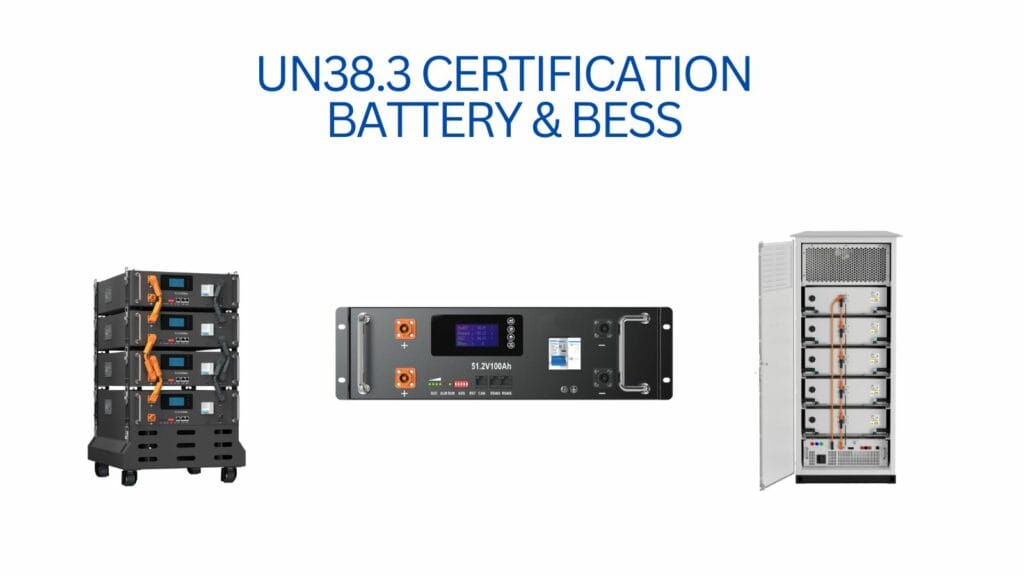
UN38.3 Certification: Your Gateway to Safe and Legal Battery Transport

UN38.3 Certification

In the fast-evolving world of lithium batteries, one certification stands between safe logistics and serious legal trouble: UN38.3. Whether you’re shipping batteries for electric vehicles, drones, energy storage systems, or portable electronics, compliance with UN38.3 Certification is non-negotiable.

In this guide, we break down everything you need to know about UN38.3 — what it is, why it matters, and how to ensure your battery products meet the global standard for safe transportation.


What Is UN38.3 Certification?

UN38.3 refers to Section 38.3 of the United Nations Manual of Tests and Criteria, Part III.
It mandates a series of rigorous safety tests that lithium-ion and lithium metal cells and batteries must pass before being transported by air, sea, rail, or road.

Purpose:
To ensure batteries can withstand transportation conditions such as pressure changes, vibrations, shocks, temperature fluctuations, and external short circuits — without risk of explosion, fire, or leakage.

In simple words, UN38.3 is your passport for batteries to legally and safely travel across borders.


Why UN38.3 Certification Is Critical

  • Legal Requirement:
    Without UN38.3, shipping lithium batteries is illegal in most countries, including the USA, EU, China, and others.
  • Safety Assurance:
    Lithium batteries can be dangerous if mishandled. UN38.3 ensures they are robust enough for real-world logistics.
  • Customs Compliance:
    Many customs authorities will seize or return battery shipments that lack a valid UN38.3 Test Summary.
  • Protect Brand Reputation:
    A single logistics incident involving a battery can damage your company’s reputation permanently.

What Products Require UN38.3 Certification?

You need UN38.3 testing for:

  • Lithium-ion batteries (rechargeable)
  • Lithium-metal batteries (non-rechargeable)
  • Battery packs
  • Batteries inside equipment (e.g., laptops, drones, EVs)
  • Batteries packed with equipment

Note: Even prototypes shipped for testing or development may require UN38.3 compliance under certain conditions.


The UN38.3 Test Items: What Batteries Must Survive

UN38.3 includes eight brutal tests designed to simulate real transport conditions:

Test NamePurpose
T.1 Altitude SimulationSimulates air transportation pressure (low pressure at 11,600 m).
T.2 Thermal TestExposure to extreme temperatures and cycling.
T.3 VibrationSimulates vibrations during transportation.
T.4 ShockSimulates mechanical shocks that may occur.
T.5 External Short CircuitSimulates a short during handling.
T.6 Impact / Crush TestTests battery strength under heavy compression.
T.7 OverchargeFor rechargeable cells/batteries only.
T.8 Forced DischargeFor cells, forces a discharge under worst-case conditions.

Passing all tests is mandatory for a UN38.3 certificate.


What Happens If You Skip UN38.3?

  • Fines: Heavy financial penalties for shipping non-compliant batteries.
  • Shipment Rejection: Airlines, shipping lines, and customs authorities will refuse non-compliant cargo.
  • Accidents: Risk of fire, explosion, injury, or property damage.
  • Legal Liability: You may be held responsible for accidents during transport.

How to Obtain UN38.3 Certification

  1. Product Preparation:
    Manufacture sample cells or batteries according to production specifications.
  2. Select Accredited Laboratories:
    Use certified third-party testing labs accredited for UN38.3 (e.g., SGS, TUV, Intertek, CTI, Pony Testing).
  3. Testing Process:
    Submit samples for the full series of UN38.3 tests.
  4. Obtain Test Report:
    A successful test produces a detailed test report.
  5. Issue UN38.3 Test Summary:
    Since 2020, regulations require a formal “Test Summary” to accompany every shipment.

Common Challenges During UN38.3 Testing

  • Inconsistent battery design or materials can cause test failures.
  • Lack of attention to packaging and markings after certification.
  • Mistakes in documenting the test summary can still block shipments.
  • Prototype versions often differ from final products and may require re-testing.

Pro Tip:
Work with experienced battery engineers and compliance consultants early in your product development to avoid expensive delays.


UN38.3 and the Energy Storage Industry

In New Energy sectors like:

  • EV Batteries
  • Home and Commercial Energy Storage
  • UAV Battery Packs
  • Portable ESS
  • Containerized Energy Storage Systems

UN38.3 is essential not just for cells but for complete battery packs and modules.

Even if your cells are certified, the final assembled pack needs its own UN38.3 testing if the design is significantly altered (different BMS, configuration, casing, etc.).


Final Thoughts

UN38.3 is not just a regulation — it’s a responsibility.

In an industry where trust is everything, showing your commitment to safety and compliance through proper UN38.3 certification sets you apart from your competitors.

Ship safe. Ship compliant. Ship smart.


Are you sourcing batteries for your next project?
Need help navigating UN38.3 compliance?

???? Contact me today for consulting, supplier audits, and battery sourcing support — ensuring your products are safe, compliant, and ready for global markets.

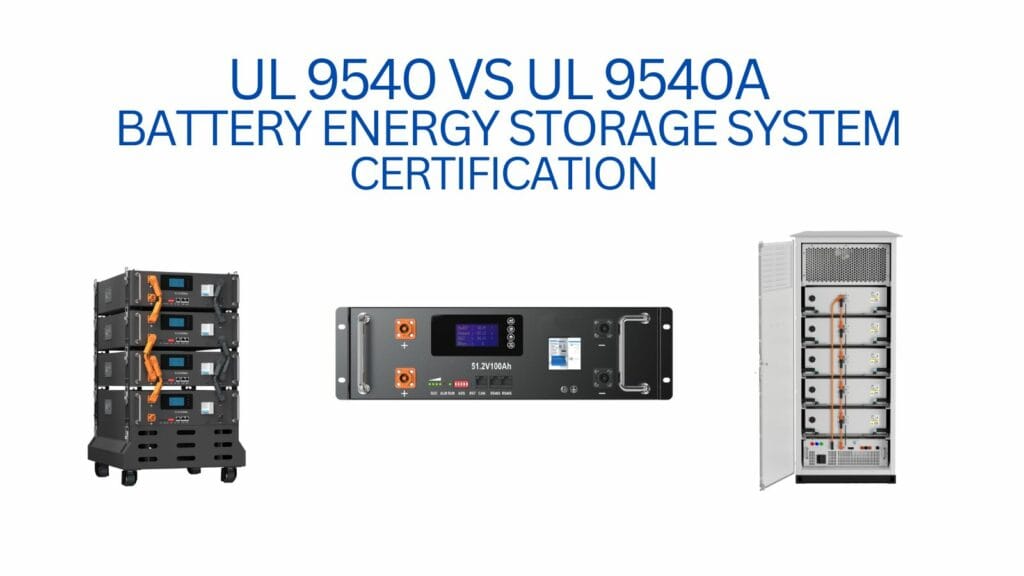
UL 9540 vs UL 9540A – What You MUST Know Before Buying a Battery System

UL 9540 vs UL 9540A

Your Battery System Can Save Lives—or Risk Them: Energy storage is powerful. It lights homes, powers vehicles, and backs up hospitals. But one mistake in choosing or certifying your system can cost not just money—but lives. That’s why safety is everything.And that’s where UL 9540 and UL 9540A come in. They sound similar, but they’re not the same.

Let’s break it down.


???? First, What Is UL?

UL stands for Underwriters Laboratories, a trusted global safety certification company. When a product is UL Certified, it means it’s been tested to meet strict safety standards.

For energy storage systems (ESS), UL 9540 and UL 9540A are the two big names everyone’s talking about. And for good reason.


✅ What Is UL 9540?

UL 9540 is the full-system certification for energy storage.
It looks at the whole battery system—including the battery packs, battery management system (BMS), inverter, cooling, controls, wiring—everything.

To pass UL9540, a product must prove:

  • It works safely under normal use
  • It doesn’t pose serious risks when something goes wrong
  • It meets strict electrical, fire, and mechanical safety standards

Think of UL9540 like getting a driver’s license for your energy storage system. It says: “This complete system is safe and ready to go.”


???? What Is UL 9540A?

UL9540A is NOT a certification.
Let’s say that again: UL 9540A is not a certification.
It’s a test method—a very intense one. It’s designed to understand how a battery behaves if it catches fire or goes into thermal runaway.

UL9540A helps answer these life-saving questions:

  • Will the fire spread to other cells or packs?
  • Will there be flames, smoke, or explosions?
  • How far will the heat go?
  • Can fire suppression systems stop it?

This test doesn’t “pass” or “fail” your system. Instead, it gives detailed fire data. That data is often required by fire departments, building inspectors, and city authorities.

It’s like a crash test for batteries—showing what happens when the worst-case scenario hits.


???? Key Differences Between UL 9540 and UL 9540A

UL 9540UL 9540A
Full certificationTest method only
Focuses on complete ESSFocuses on fire behavior
Grants approval to sell/useProvides data for safety review
Required for market entryRequired for fire code compliance
Like a driver’s licenseLike a crash test

???? Why Both Matter

If you’re a buyer, EPC, or investor in battery systems, don’t stop at just asking,
“Is this UL9540 certified?”

Also ask:
“Has it been tested under UL9540A?”

Why?

Because a system can be UL9540 certified—but still fail to meet local fire code unless UL9540A test data proves it’s safe during a fire.

Imagine installing a big system in a hospital, school, or mall—and the fire chief shuts it down because you skipped UL9540A testing.

That’s a nightmare you don’t want.


???? Real-World Example

A US-based integrator bought a containerized battery system that was UL 9540 certified. But during fire inspection, the AHJ (Authority Having Jurisdiction) asked for UL 9540A data.

There was none.

Result?
The project was delayed by 6 months.
Tens of thousands in losses.
Lost client trust.

All because they didn’t understand the difference.


???? Who Needs These?

If you are:

You NEED to know this.
And your supplier MUST provide both.


???? Final Thoughts: Choose Safety. Choose Smart.

Battery systems are the backbone of the new energy future.
But fire doesn’t care about technology or price.

It only cares about safety.

UL 9540 and UL 9540A are not optional—they’re your protection.
Protection for your team, your site, and your reputation.

When you ask your supplier for these certifications, you’re not just ticking boxes.
You’re demanding safety, responsibility, and peace of mind.

And that makes you a smarter, stronger leader.


???? Need Help Sourcing Safe Battery Systems?
I help clients around the world find fully certified, tested, and compliant energy storage systems that save time, money, and lives.

???? Let’s talk. Your project deserves the best.