
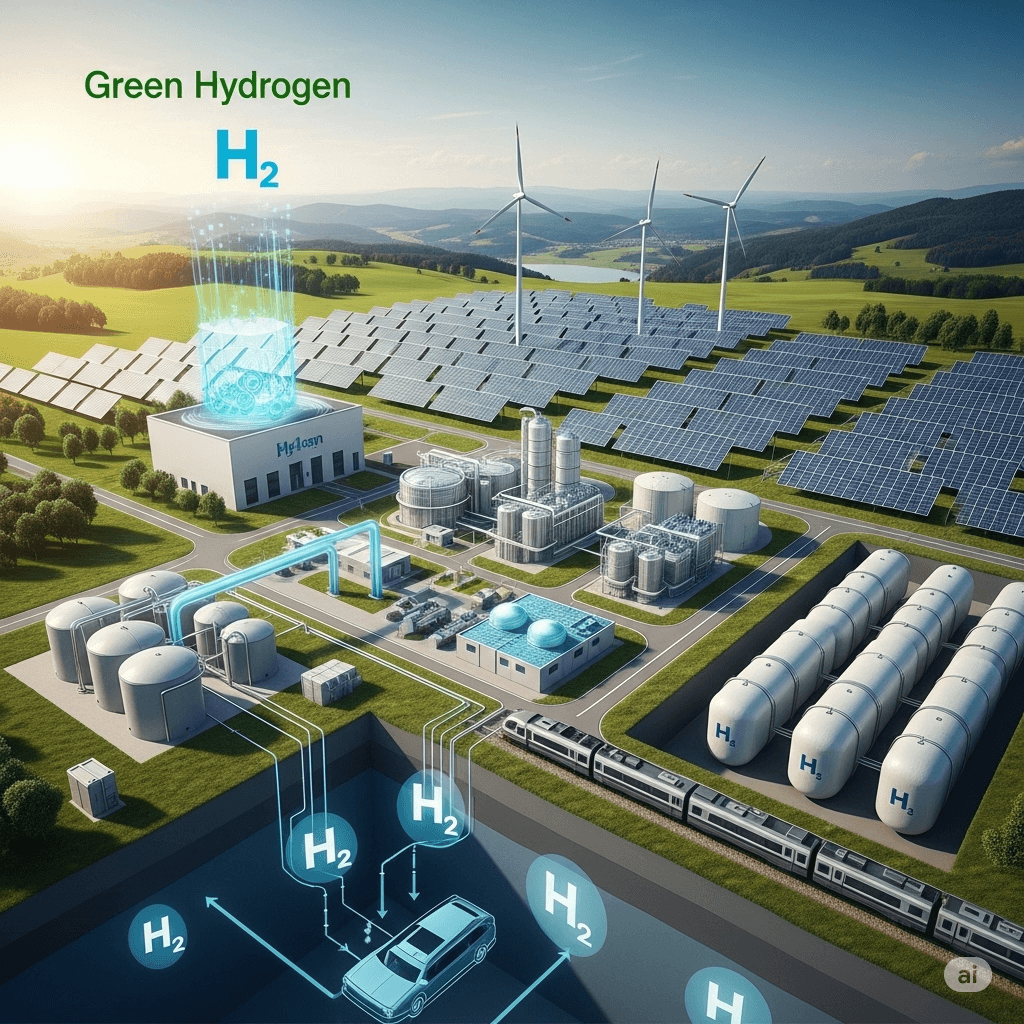

In today’s fight against climate change, green hydrogen is becoming a hot topic. But what is green hydrogen? How is it made? How do we store it? And how does it help us build a carbon-neutral world? This guide will break it down in simple words.
What is Green Hydrogen?
Hydrogen is the most common element in the universe. It can be used as a clean fuel. But not all hydrogen is “green.”
- Green hydrogen is made using renewable energy like wind or solar power.
- This process doesn’t release carbon emissions, which makes it “green.”
How is Green Hydrogen Produced?
The main method to produce green hydrogen is called electrolysis.
Here’s how it works:
- Renewable electricity (from solar panels or wind turbines) is used.
- This electricity powers an electrolyzer, which splits water (H₂O) into hydrogen (H₂) and oxygen (O₂).
- The hydrogen gas is collected and can be used as fuel.
The best part? No greenhouse gases are released during this process!
How is Green Hydrogen Stored?
Hydrogen is a very light gas, so it needs special storage methods. There are a few common ways:
✅ Compressed Gas: Hydrogen is stored under high pressure in strong tanks.
✅ Liquid Hydrogen: Hydrogen is cooled to very low temperatures and stored as a liquid.
✅ Chemical Storage: Hydrogen can also be stored in chemical compounds and released when needed.
Safe storage is important because hydrogen is flammable. New technologies are making storage safer and cheaper every year.
How is Green Hydrogen Used?
Green hydrogen can be used in many ways:
- Power Generation: It can run fuel cells to make electricity with zero emissions.
- Transportation: Hydrogen cars, buses, trucks, and even trains can run on it.
- Industry: Industries like steelmaking and chemicals use hydrogen instead of fossil fuels.
- Heating: It can be blended with natural gas to heat buildings.
Why is Green Hydrogen Important for a Carbon-Neutral World?
A carbon-neutral world means we stop adding more CO₂ to the atmosphere than we remove. Green hydrogen helps because:
🌍 It replaces fossil fuels in hard-to-decarbonize sectors like heavy industry and long-distance transport.
🌞 It stores extra renewable energy for later use, helping balance the grid.
🚛 It makes clean fuels for trucks, ships, and planes where batteries alone may not work well.
Challenges
Green hydrogen is amazing, but there are still challenges:
⚡ Cost: It’s still more expensive than fossil fuels.
🔋 Infrastructure: We need more pipelines, refueling stations, and storage systems.
🔬 Efficiency: Making, storing, and using hydrogen can waste energy if not done carefully.
Governments and companies worldwide are investing big money to solve these problems.
What is the Future of Green Hydrogen?
Experts believe green hydrogen will play a big role in reaching net-zero emissions by 2050.
- Countries are building “hydrogen hubs.”
- New technologies are making electrolyzers cheaper.
- More wind and solar power will help produce more green hydrogen.
Final Thoughts
Green hydrogen is more than just a buzzword — it’s a clean, flexible fuel that can help us build a carbon-neutral future. From clean production to smart storage and wide uses, it’s a big piece of the clean energy puzzle.
As costs drop and technologies improve, we will see green hydrogen become part of our daily lives — fueling vehicles, factories, and even our homes, without harming the planet.
FAQs
Q: Is green hydrogen the same as blue hydrogen?
A: No. Green hydrogen uses renewable energy with no CO₂ emissions. Blue hydrogen uses natural gas and captures some CO₂, but it still relies on fossil fuels.
Q: Can I use green hydrogen at home?
A: Not yet for most people, but in the future, green hydrogen could be blended with natural gas for heating and cooking.
Q: Is hydrogen safe?
A: Hydrogen is flammable, but with the right storage, handling, and safety systems, it can be used safely like other fuels.
Let’s Build a Cleaner Future Together
Green hydrogen is a key to reaching a carbon-neutral world. Stay informed and support clean energy projects — together, we can make the planet greener and cleaner for everyone!






You must be logged in to post a comment.