
Buddies Buzz Blog

In the Buddies Buzz blog, you'll find the latest news about the community, tutorials, helpful resources and much more! React to the news with the emotion stickers and have fun!

Most Terrifying and Breathtaking Glass Bridges in China

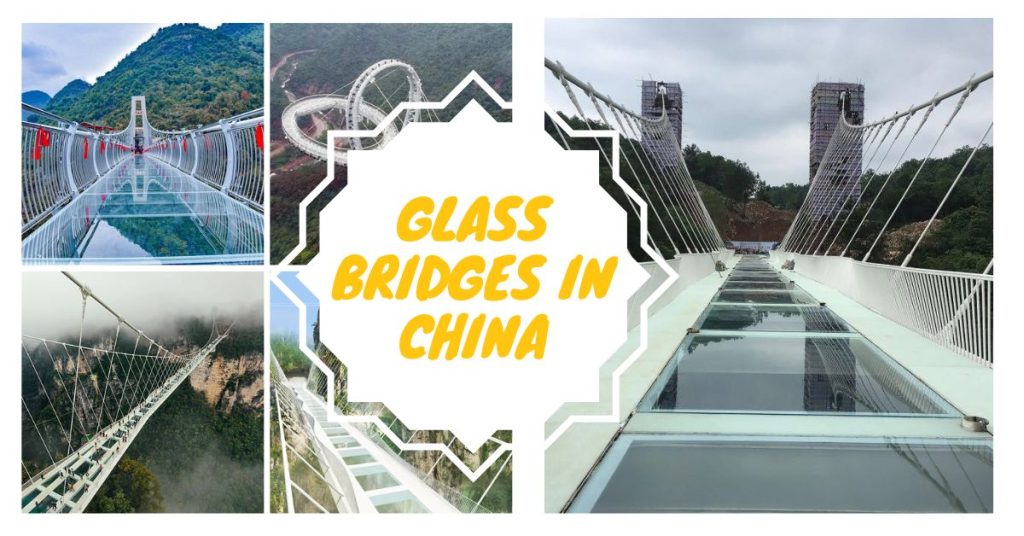
Travelers are constantly seeking new thrills and countries are in a constant race to satisfy this new demand. Over the last 5 years, new see-through glass bridges have been popping up around the world and especially in China. These stomach-churning bridges have dizzying heights up to 300 meters (980 feet) above ground! Nevertheless, with the list of the most popular glass bridges in China, this article uncovers the most beautiful, yet most terrifying and scariest skywalks this country has to offer. 

The glass bridges are creatively designed and offer breathtaking views. It can be a glass suspension bridge overlooking a lush forest wreathed with mist, a perfectly transparent glass bridge hanging over a steep grand canyon, or a glass-bottom bridge that surprisingly combines with a spectacular musical waterfall.

So if you’re in India, you can take a flight to check out the “Bihar Glass Bridge” whose length is about 85 feet and the width is about 6 feet. 

Here are the top scary glass bridges in China that are absolutely terrifying! 

Zhangjiajie Glass Bridge 

Location: Zhangjiajie Grand Canyon, Sanguansi Tujia Ethnic Village, Zhangjiajie

With a length of 536 meters and a width of 6 meters, Zhangjiajie Glass Bridge is a large valley suspension bridge and is famous both in China and abroad for setting many world records for glass Bridges when it was built. In addition to the skywalk function, it also features a bungee, a swing, a zipline, a runway, wire walking, and other thrilling experiences. Nevertheless, it is definitely suggested to put it on your list, if you are looking for an adventurous and thrilling vacation.

Tianmenshan Skywalk in Zhangjiajie 

Location: Tianmenshan National Forest Park, Zhangjiajie, Hunan Province

The Coiling Dragon Cliff of Tianmen Mountain in Zhangjiajie has made its fame for years, and is a must-have thrill for a Zhangjiajie adventure. The glass skywalk in China is 100 meters (328 feet) long, 1.6 meters (5 feet) wide, and around 1,430 meters (4,700 —feet) above sea level. It is comparable to the world-renowned “Sky Road”—the glass corridor of the Grand Canyon in the United States, and thus has the reputation of “Eastern Sky Road.” On that note, you can check out the “Grand Canyon Glass Bridge” by booking a flight to the USA. 

Shenzhen Guangming Glass Suspension Bridge 

Location: Dadingling Greenway, Guangming District, Shenzhen City, Guangdong Province

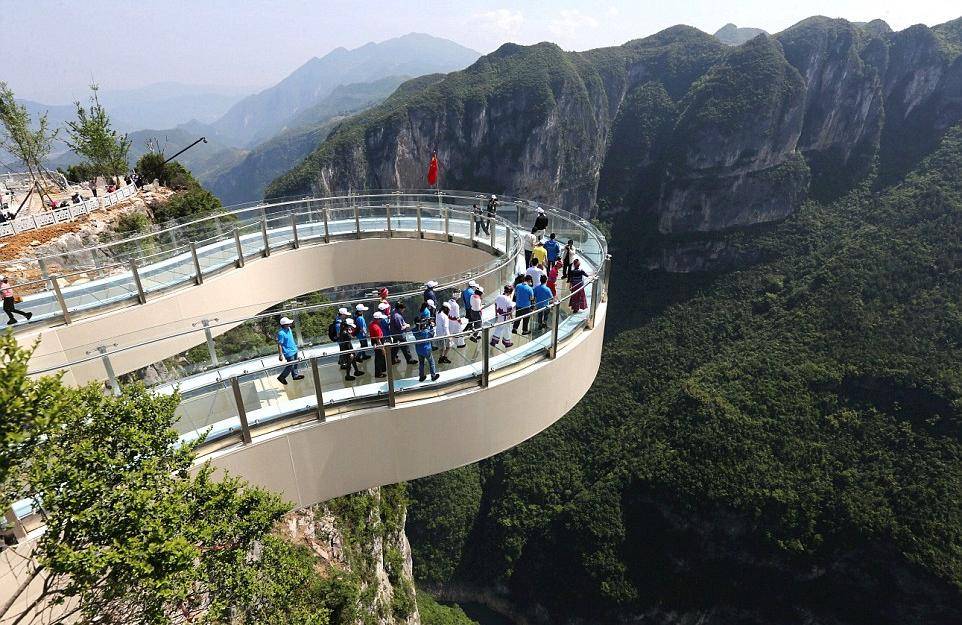
For many travelers, Shenzhen is a beautiful, comfortable, and convenient metropolis, but there are not many experiences considered to be thrilling. The good news is, the city now has an amazing glass bridge embedded in the Dadingling Greenway of Guangming District. The bridge is composed of three rings, with diameters of the rings are 50, 30, and 20 meters respectively, suspended in the air dozens above the ground in the forest. Standing on the bridge, you can enjoy an uninterrupted view of the City of Light. The most amazing thing is the technology applied on the glass suspension bridge—it is covered with solar panels that absorb the sunlight during the day and light up the whole bridge instantly when night falls.

Ruyi Glass Bridge in Shenxian Scenic Area

Location: Shenxianju Scenic Area, Taizhou City, Zhejiang Province

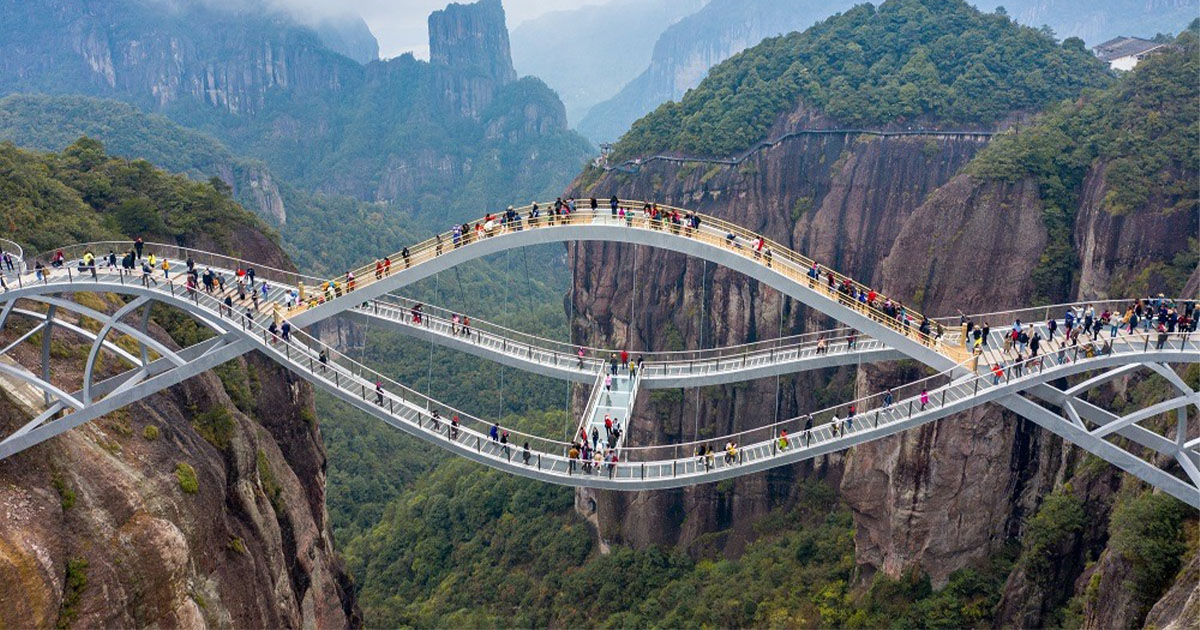
This arched-steel-structured glass bridge, integrated with nature and mountains, just looks like a jade ruyi in the sky. When the transparent glass bottom makes people quake, the magnificent natural beauty completely soothes you mentally. The main body of Ruyi Bridge, China is shaped by flexible lines of the main and secondary arches, connected by steel cables, and forming a sky eye in the middle. The bridge deck pavement is composed of steel grille, wood board, sticky stone, and transparent glass, and the guardrails(made of stainless steel wire mesh), which not only ensure the passage of all tourists but also provide a fabulous, clear, and breathtaking sightseeing experience.

If you wish to read more travel-related blogs, then check them out at ImpetusLabs and step into the world of the expedition.

Qingyuan Yuntian Boba Glass Bridge 

Location: Gulongxia Original Ecological Tourism Area, Qingxin District, Qingyuan City

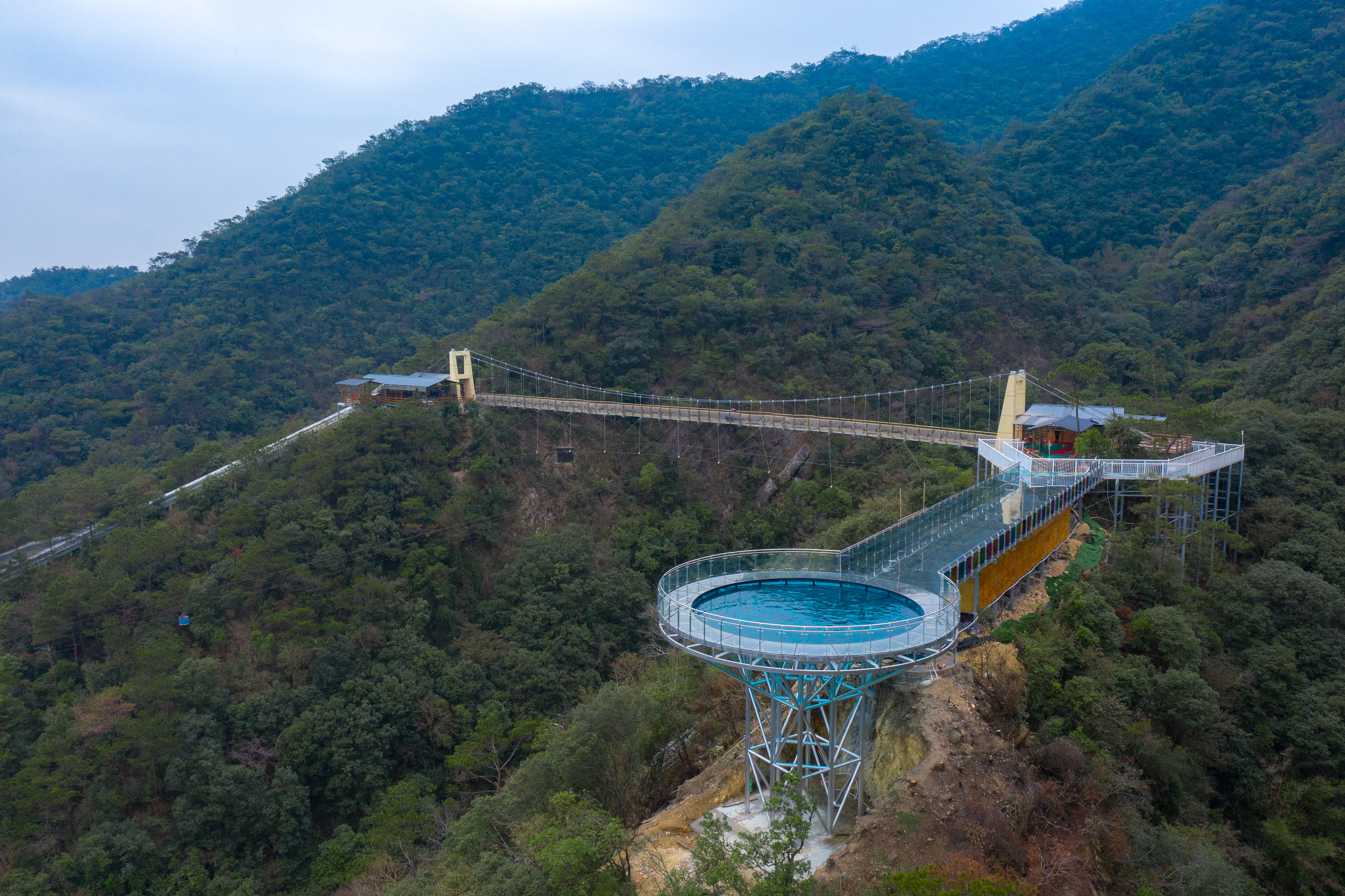
It is the first of its kind in the world, and is famed as a super cool “glass combination”. With a total length of 1,314 meters, it is taken as a glass viewing platform, glass skywalk & glass bridge with views of the waterfall and surrounding landscapes. Moreover, it takes about 45 minutes to complete the entire walk. The platform is 202 meters long and the suspended span is 72 meters. It uses three layers of super transparent glass with a total of 4.5 centimeters, making it one of the thickest plank glass bridges in the world. 

On one of the platforms of the glass walkway, special effects such as “sound, light, and electricity” are installed to create fabulous effects such as “smoke blowing” and “rosy gallery bridge”. And the glass bridge China crack effect will make you feel the glass bridge breaking, but it isn’t!! 

Cloud Skywalk Bridge

Location: Longgang Scenic Area, Yunyang County, Chongqing

Built on a cliff 1,010 meters above sea level, this glass bridge in China has a cantilever 26.68 meters long. The bridge is 718 meters above the ground, and the walkway is 3.4 meters wide and 50 meters long. In addition, it’s the world’s longest cantilever glass bridge. Interestingly, this unique landform has been favored by many top extreme sports masters in China as well as abroad. In April 2016, the world’s highest low-altitude skydiving competition was held on this bridge, and top athletes from more than 10 countries competed in this thrilling competition. 

Qingchuan Glass Bridge

Location: Lianzhou City, Qingyuan City, Guangdong Province

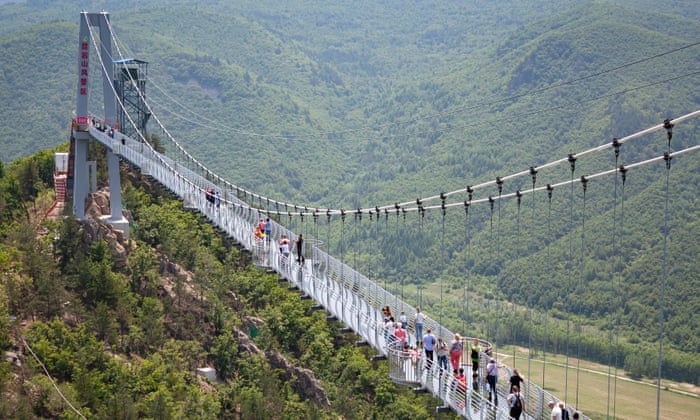
This iconic yet terrifying bridge is nestled in Huangchuan Three Gorges, known for its stunning landscapes. The glass bridge spans the steep cliffs of Huangchuan Three Gorges, overlooking the largest waterfall group in north Guangdong. This skywalk of China has a clear width of 8.8 m with a bridge level of 201m and is crowned as the “longest Glass-paved suspension bridge” in the Guinness World Record for its 526.14 m glass length. With the vertical circular arc stainless steel guardrail on both sides of the bridge, as well as the eye-catching Chinese red color of the bridge tower and main cable, this glass bridge blends perfectly with the modern and classic Chinese structure.

Walking through the glass bridge, one might tremble with fear, but the scenery is absolutely gorgeous. More surprisingly, it can easily bear the weight of vehicles and you can also see several cars crossing the bridge in style.

Conclusion 

These were the most terrifying and longest glass bridges in China, which you can visit and experience the true sense of thrill and feel the increased adrenaline in your body as you walk through the bridge. 

Energy Storage System (ESS)

energy storage system

Energy from renewables must be consumed and generated simultaneously. Solar produces power when the sun shines, and wind generates power when the wind blows. The future of renewable energy depends on our ability to store it. We need an Energy Storage System (ESS) to accelerate the clean energy transition, reduce costs, and increase reliability for businesses, utilities, and communities. A Solar Power system connected with battery energy storage maximizes the value of solar energy.

Battery storage technologies are essential to speed up the replacement of fossil fuels with renewable energy. Battery storage technology is crucial in ensuring homes and businesses can be powered by green energy, even when the sun isn’t shining or the wind has stopped blowing.

What is a Battery Energy Storage System?

A battery energy storage system (BESS) is an electrochemical device. That charges (or stores energy) from the grid or Solar power system and then discharges that energy later to provide electricity when needed. A battery energy storage unit contains several components: one or more battery modules and a battery management system with various sensors.

Battery storage, or battery energy storage systems (BESS), store energy from renewables (solar and wind), and The stored energy can power your home at night or during a power outage.

To discuss and evaluate battery storage technologies, we should first define some terms that are relevant and specific to storage discussions.

Battery energy storage systems are considerably more advanced than the batteries you insert in your TV remotes & children’s toys.

A battery storage system can be charged by renewable energy or a grid.

Intelligent software uses algorithms to coordinate energy production, and computerized control systems decide when to keep the energy to provide reserves or release it to the grid.

Benefits Of A Battery Energy Storage System

Battery Energy Storage Systems store excess energy produced by your Solar System during the daytime (when your solar panels are generating power) in a battery. The stored #energy can power your home at night or during a power outage.

Battery energy storage systems (BESS) can charge with multiple options like Solar energy, wind energy, or the grid.

Best Cells for BESS

Lithium-ion batteries are the dominant form of energy storage. Lithium-Ion Batteries can hold a charge longer than other batteries, are less expensive, and have a smaller footprint. Batteries do not generate power; batteries store energy.

who is looking to reduce their energy costs and carbon footprint at the same time? BESS is the best solution for homes owners and businesses.

Solar panels only generate electricity when the sun is shining. Combines a battery energy storage system with solar PV to reduce energy costs and carbon footprint at the same time.

A combined solar and storage installation can adjust for any dips in a generation that weather creates.

Storage Batteries can also allow you to disconnect from the grid and keep your equipment running for a predetermined period.

If you need power during later hours of the day, you can benefit from adding a battery storage system to your solar PV.

Battery energy storage provides peace of mind with keeping the power on during an outage. Energy storage works with or without solar and is a safe and seamless alternative to small generators. Generators are one of the main contributors to carbon monoxide.

Which to Opt for Your Android App Development? Kotlin or Java

Undoubtedly, Java had a dominant position among programming languages and was regarded as one of the most crucial resources for Android app development. The programming languages available to Android developers have expanded over time, however. C#, Lua, C/C+, JavaScript, Scala, Clojure, and others are a few of them. But one statically typed programming language, in particular, has captured the spotlight, and even Google I/O is centered on it. The hotline is the language that JetBrains created. In reality, Kotlin will now be an officially supported language for creating Android apps, according to a conference announcement made by Google I/O. Following an important statement, there was a surge, and the pros and cons of Java against Kotlin were started. One benefit of Kotlin is that it can be effectively installed and executed on the Java Virtual Machine (JVM).    We aim to demonstrate why Kotlin is superior to Java by highlighting its advantages and disadvantages.

  • Compared to Java, Kotlin is Easier to Learn

As opposed to Java, the first benefit is that Kotlin is significantly simpler to learn. It provides to those aspiring to build Android apps.

You don’t need any previous experience with mobile app development to master this language. The programming language may also be created quickly, in addition.

 Plus, it would be the cherry on top if you are conversant with programming languages like Java or C#. Kotlin’s creators did a fantastic job of making the language simple enough for young children to understand.

  • Gets Android Studio’s Full Support

Additionally, Android Studio provides the developers with expanded assistance and educates them on the available adaption tools. It’s fascinating that a developer may select Java without second thoughts while concurrently working on a project in Kotlin. Because of this, Kotlin is simple to comprehend and use while developing applications, even for Java experts.

  • Kotlin Provides the Best Programming Methodology

An Android Developer may have a variety of alternatives available to him when he chooses a programming technique. Pick a programming paradigm may sometimes be challenging since each has advantages and disadvantages. Now you can depend on Kotlin, which provides a well-balanced blend of functional and procedural programming, without causing any misunderstanding.  

Additionally, Kotlin provides extension methods that aid in extending the class’s level of proficiency. The lack of need for the developers to adhere to the same customs and aesthetic patterns aids in modifying the style. But everybody who has used Java will know that they must utilize class by utilizing Java.Util.Collections codes.

These codes are also incredibly lengthy and intricate. Additionally, it will take a lot of time. But why go the other way when you have Kotlin? Better use of it.

  • Kotlin Offers Accurate and Trustworthy Codes

As a result of its shorter and more compact codes, Kotlin provides developers with a more pleasant experience compared to Java. There are reduced possibilities of bugs being created if you have to write fewer programs. On the other hand, Kotlin employs less boilerplate code than Java, which requires developers to write lengthy sentences while coding.

The dependability of Kotlin’s code is well recognized. It has been noted that developers often have issues with runtime errors, syntax that doesn’t release, improper use of null pointers, etc. The developers should know that null pointers help develop good, error-free code. Kotlin provides all of these benefits.

Variables without assigned values are incompatible with the compiler and cannot be used. Thus, including a question mark at the end is crucial if you want to utilize the variable. When writing code, the compiler must keep an eye on the nullable value. What is the advantage now? It increases the resulting code’s security.

  • Maintaining Data Consistency

Control over data consistency is another significant benefit Kotlin has over its rival Java. Android developers no longer have to go to the trouble of using a manual command mechanism to maintain data homogeneity is undoubtedly a significant advantage. They have a few choices to alter it.

The first approach involves using the keyword “Val” to represent it, and the second consists in using the keyword “Val” to apply the read-only option. It not only preserves data consistency but also lessons risks and the potential for faults. However, the term used in Java is “Final,” which is not particularly useful for those who create apps.

  • Higher-order Functions Offer Benefits

Higher-order functions, generally speaking, are particular languages that may take other functions as inputs or return them as values. However, one of the main reasons they have required us is because they help in condensing programs, even those with complicated logical structures and high levels of complexity. It is possible to write programs elegantly.

Contrarily, this is something that Java continues to lack. You are not obtaining these commands’ accessibility here. Kotlin, you have the option of lambda expressions, in which the function is called another function rather than being stated.  

  • Java Loses to Kotlin in Data Classes

With regard to the data classes, Kotlin arguably outperforms Java in several other areas. To put it simply, classes are the places where the data is kept, and prefixes often identify them, like Var or Val. Additionally, this saves time and makes it much simpler to decipher the codes.  

Conclusion

One might say that the competition between the two most popular programming languages for creating Android applications was exciting. However, Kotlin consistently outperformed Java throughout the conversation, which is why it is thought to replace Java eventually.

On the other hand, given that it is still relatively new to the app development industry, it will take some time before it experiences additional growth. Although Google is prepared to support it, it is not official so you won’t get much assistance from that end.