

Buddies Buzz Blog

In the Buddies Buzz blog, you'll find the latest news about the community, tutorials, helpful resources, and much more! React to the news with the emotion stickers and have fun!

UL 9540 vs UL 9540A – What You MUST Know Before Buying a Battery System

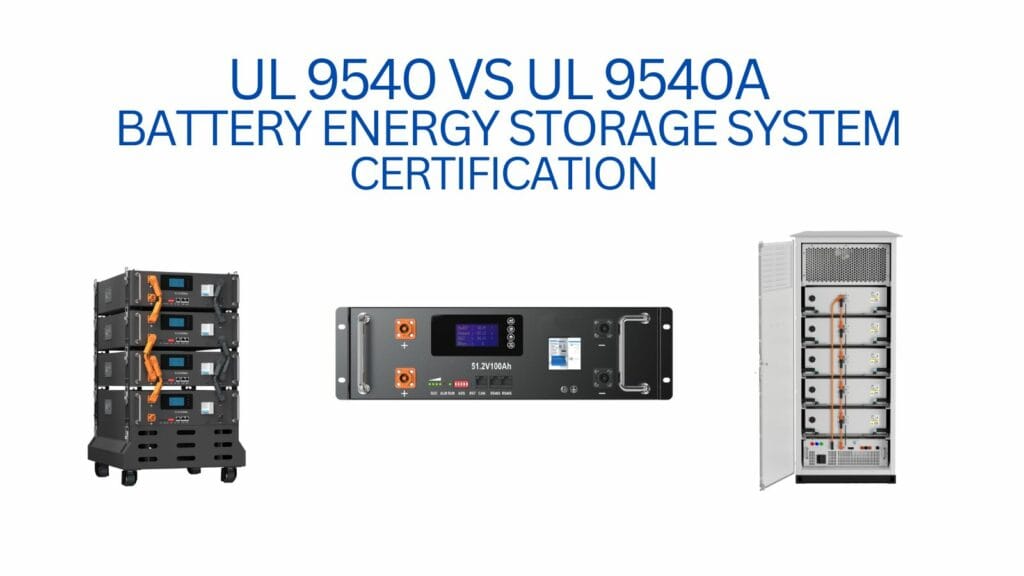
UL 9540 vs UL 9540A

Your Battery System Can Save Lives—or Risk Them: Energy storage is powerful. It lights homes, powers vehicles, and backs up hospitals. But one mistake in choosing or certifying your system can cost not just money—but lives. That’s why safety is everything.And that’s where UL 9540 and UL 9540A come in. They sound similar, but they’re not the same.

Let’s break it down.


???? First, What Is UL?

UL stands for Underwriters Laboratories, a trusted global safety certification company. When a product is UL Certified, it means it’s been tested to meet strict safety standards.

For energy storage systems (ESS), UL 9540 and UL 9540A are the two big names everyone’s talking about. And for good reason.


✅ What Is UL 9540?

UL 9540 is the full-system certification for energy storage.
It looks at the whole battery system—including the battery packs, battery management system (BMS), inverter, cooling, controls, wiring—everything.

To pass UL9540, a product must prove:

  • It works safely under normal use
  • It doesn’t pose serious risks when something goes wrong
  • It meets strict electrical, fire, and mechanical safety standards

Think of UL9540 like getting a driver’s license for your energy storage system. It says: “This complete system is safe and ready to go.”


???? What Is UL 9540A?

UL9540A is NOT a certification.
Let’s say that again: UL 9540A is not a certification.
It’s a test method—a very intense one. It’s designed to understand how a battery behaves if it catches fire or goes into thermal runaway.

UL9540A helps answer these life-saving questions:

  • Will the fire spread to other cells or packs?
  • Will there be flames, smoke, or explosions?
  • How far will the heat go?
  • Can fire suppression systems stop it?

This test doesn’t “pass” or “fail” your system. Instead, it gives detailed fire data. That data is often required by fire departments, building inspectors, and city authorities.

It’s like a crash test for batteries—showing what happens when the worst-case scenario hits.


???? Key Differences Between UL 9540 and UL 9540A

UL 9540UL 9540A
Full certificationTest method only
Focuses on complete ESSFocuses on fire behavior
Grants approval to sell/useProvides data for safety review
Required for market entryRequired for fire code compliance
Like a driver’s licenseLike a crash test

???? Why Both Matter

If you’re a buyer, EPC, or investor in battery systems, don’t stop at just asking,
“Is this UL9540 certified?”

Also ask:
“Has it been tested under UL9540A?”

Why?

Because a system can be UL9540 certified—but still fail to meet local fire code unless UL9540A test data proves it’s safe during a fire.

Imagine installing a big system in a hospital, school, or mall—and the fire chief shuts it down because you skipped UL9540A testing.

That’s a nightmare you don’t want.


???? Real-World Example

A US-based integrator bought a containerized battery system that was UL 9540 certified. But during fire inspection, the AHJ (Authority Having Jurisdiction) asked for UL 9540A data.

There was none.

Result?
The project was delayed by 6 months.
Tens of thousands in losses.
Lost client trust.

All because they didn’t understand the difference.


???? Who Needs These?

If you are:

You NEED to know this.
And your supplier MUST provide both.


???? Final Thoughts: Choose Safety. Choose Smart.

Battery systems are the backbone of the new energy future.
But fire doesn’t care about technology or price.

It only cares about safety.

UL 9540 and UL 9540A are not optional—they’re your protection.
Protection for your team, your site, and your reputation.

When you ask your supplier for these certifications, you’re not just ticking boxes.
You’re demanding safety, responsibility, and peace of mind.

And that makes you a smarter, stronger leader.


???? Need Help Sourcing Safe Battery Systems?
I help clients around the world find fully certified, tested, and compliant energy storage systems that save time, money, and lives.

???? Let’s talk. Your project deserves the best.

UL 1973 Certification: Your Battery’s Passport to Safety, Trust & Market Success

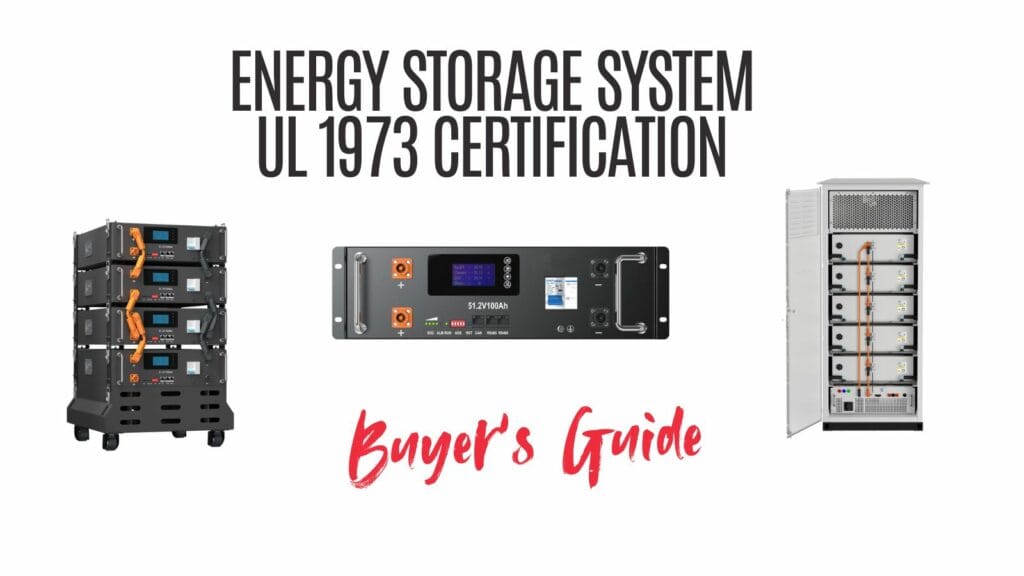
UL 1973 certification

In the fast-evolving world of energy storage, safety is non-negotiable. Whether you’re powering homes, EVs, or industrial systems, your battery must inspire trust. And that trust comes stamped with one name — UL 1973 Certification.

This isn’t just a regulatory checkbox. It’s your battery’s passport to global markets, a powerful statement of quality, and a lifesaving commitment to safety. If you’re in the battery game, UL1973 isn’t optional — it’s essential.


What is UL 1973 Certification?

UL1973 is a critical safety standard developed by Underwriters Laboratories (UL) for batteries used in stationary applications, mobility support, and emergency power systems. It evaluates the entire battery system, including:

  • Battery modules
  • Packs
  • Battery Management Systems (BMS)
  • Enclosures and connections

Unlike simple cell testing, UL 1973 dives deep into the integrated battery unit, making sure every part functions safely and reliably under real-world conditions.


???? Why UL 1973 Certification Matters

✅ 1. Protects Lives and Property

Battery fires and failures can be devastating. UL1973-certified batteries undergo rigorous abuse, short-circuit, overcharge, and environmental testing. This dramatically reduces fire risks, protects infrastructure, and most importantly — saves lives.

✅ 2. Gives You a Market Edge

Whether you’re entering the U.S., Canadian, or European markets, having a UL1973 label instantly builds credibility. It’s a trust badge recognized by manufacturers, developers, and regulatory bodies worldwide.

✅ 3. Mandatory for Compliance and Tenders

UL 1973 is often a requirement in large-scale energy storage tenders, EPC contracts, and utility-grade projects. Without it, your battery may never even qualify.

✅ 4. Drives Customer Confidence

Customers ask, “Is this battery safe?”
UL1973 answers loud and clear: YES.

It’s a confidence booster that assures clients their investment is protected.


???? Real-World Applications that Demand UL 1973

  • Residential & Commercial Energy Storage Systems (ESS)
  • Telecom Backup Systems
  • Industrial Power Backup
  • Microgrids
  • Electric Vehicle Infrastructure (EV Charging Stations)

Whether it’s a 5kWh home battery or a 5MWh containerized ESS, UL 1973 opens doors across verticals.


???? What Does UL 1973 Testing Include?

UL1973 is a system-level evaluation involving:

  • Electrical Safety (short-circuit, overcharge, isolation faults)
  • Mechanical Integrity (vibration, shock, drop)
  • Environmental Performance (temperature, humidity)
  • Fire Containment & Propagation Control
  • Functional Safety of BMS
  • Enclosure Ratings (NEMA/IP)

???? Note: Passing UL 1973 requires not just high-quality cells, but well-engineered packs, a robust BMS, and fail-safe housing.


⚠️ Common Mistakes to Avoid

  • Relying only on cell-level reports – UL 1973 focuses on the full battery pack.
  • Skipping pre-certification reviews – Always conduct internal safety checks before submitting.
  • Choosing inexperienced labs – Work only with UL-recognized testing bodies.

???? How UL 1973 Impacts Business Growth

UL1973 isn’t a cost — it’s an investment with tangible returns:

BenefitImpact
Faster project approvalsSaves time and accelerates deployment
Improved investor confidenceAttracts funding and partnerships
Fewer safety incidentsLowers insurance and operational costs
Entry into high-value marketsExpands global reach and opportunities

???? A UL 1973 certificate on your product means you’re ready for the big leagues.


???? Related Certifications That Often Go Together

  • UL 9540 – System-level certification for Energy Storage Systems (ESS)
  • UL 9540A – Fire propagation testing
  • IEC 62619 / UN 38.3 – International safety and transport certifications
  • CE / UKCA Marking – European/UK market access

????️ Combining these certifications shows your battery is truly market-ready.


❤️ Final Thoughts: Safety is Power

In the race to electrify our world, let’s not cut corners. The real power of a battery lies not just in its energy capacity — but in its ability to protect, to perform, and to earn trust.

If you’re a battery manufacturer, integrator, or EPC player — UL 1973 is your golden ticket. It’s not just a certificate. It’s a badge of honor, a promise to your customers, and a foundation for global success.


???? Ready to Get UL 1973 Certified?

As a sourcing and quality control consultant in the New Energy space, I can help you:

  • Connect with top UL-certified labs in China
  • Pre-check your system for readiness
  • Avoid costly delays during certification
  • Source compliant components for pack, BMS, and enclosure

???? Let’s talk if you need a trusted expert to walk this journey with you.

Why AI Results Vary Due to Computing and Bandwidth? Does AI Use Your Computer’s CPU, RAM, and Bandwidth?

AI results vary due to computing and bandwidth

AI results vary due to computing and bandwidth: Artificial Intelligence (AI) has moved from futuristic concept to daily tool. Whether you’re chatting with an AI assistant, generating images, or running data analysis, you might notice something odd: sometimes results are instant and accurate, while other times they’re slower or less reliable.

Why does this happen? The answer lies in computing resources and bandwidth. Let’s break it down with real-life examples.


Does AI Use Your Computer’s CPU, RAM, and Bandwidth?

The first thing to understand is where the AI is running:

  • Cloud-based AI (ChatGPT, Google Gemini, MidJourney, etc.):
    These AIs live in massive data centers. The heavy computing happens on remote servers, not on your device. Your computer or phone just sends a request over the internet and waits for the reply.
    • Impact: Your CPU and RAM don’t matter much here. What matters most is your internet speed and stability (bandwidth and latency).
  • Local AI (Stable Diffusion, private LLMs, offline chatbots):
    If you install the AI software on your computer, then your CPU, GPU, and RAM become critical. More powerful hardware = faster processing and better results.
    • Impact: Bandwidth is less important since most of the work happens locally, but storage and memory matter a lot.

👉 Example: Running MidJourney (cloud AI) on a fast gaming PC vs. an old laptop will feel almost the same—because the cloud server does the work. But running Stable Diffusion locally will be dramatically faster on the gaming PC than the old laptop.


Why AI Results Vary: The Role of Computing Power

AI models are heavy-duty software, designed to crunch enormous amounts of data. Here’s how computing power matters:

  • CPUs (Central Processing Units):
    Great for general-purpose tasks but slower for AI since they process fewer operations in parallel.
  • GPUs (Graphics Processing Units):
    Designed for parallel processing, perfect for AI training and inference. Faster, but require more power and memory.
  • TPUs (Tensor Processing Units):
    Special chips built by Google just for AI, far faster than CPUs or GPUs for certain tasks.

👉 Case Example 1:

  • Scenario A (Fast computer, high resources free): You run Stable Diffusion on a desktop with a powerful GPU and 32GB RAM. An AI image is generated in 20 seconds.
  • Scenario B (Basic laptop with no GPU, 8GB RAM): The same image takes 6–8 minutes to generate, or may fail due to lack of memory.

Result: Your hardware directly changes speed, reliability, and even quality.


Why Bandwidth Matters in AI

Even when the AI is cloud-based, your internet connection affects the experience:

  • High bandwidth, low latency:
    • Fast requests and responses.
    • AI-generated results (like text or images) arrive smoothly.
    • Feels instant and reliable.
  • Low bandwidth, high latency:
    • Delays in sending/receiving requests.
    • Partial or incomplete responses.
    • Sometimes the AI disconnects or times out.

👉 Case Example 2:

  • Scenario A (Fast internet, fiber connection 200 Mbps, low latency): You ask ChatGPT a question, and the response starts streaming instantly with no interruptions.
  • Scenario B (Mobile data, unstable 2 Mbps connection): You ask the same question, but it takes 10 seconds just to start, and the response may pause mid-way or cut off completely.

Result: AI performance isn’t always about the AI—it’s about your internet speed.


Why AI Results Vary Between Users

Two people using the same AI service can have different experiences. Here’s why:

  1. Server Load Balancing – AI platforms assign requests to different servers. If your server is busy, responses may be slower.
    • Example: During peak hours, ChatGPT might take longer to reply than late at night.
  2. Hardware Differences (Local AI) – Devices with more powerful CPUs/GPUs deliver faster and higher-quality results.
    • Example: A gaming PC running Stable Diffusion can create a 1024×1024 image in 20 seconds, while a low-end laptop struggles at 512×512 for several minutes.
  3. Bandwidth Variations – Internet quality makes a big difference.
    • Example: One user on fiber internet loads an AI video generation app smoothly. Another on mobile hotspot keeps facing interruptions.
  4. Caching & Optimization – Some platforms optimize frequently used queries.
    • Example: Asking ChatGPT a very common question (“What is AI?”) loads faster than asking it a unique, complex question.

Final Thoughts

AI results vary not because the AI “decides” to be slow or fast, but because of the computing resources and network conditions supporting it.

  • Cloud AI: Depends more on your internet speed and server load.
  • Local AI: Depends heavily on your CPU, GPU, and RAM.

👉 If you want consistent, faster AI performance:

  • Use a powerful computer with free resources for local AI.
  • Use high-speed, low-latency internet for cloud AI.

This way, you’ll get the best out of any AI tool—whether on desktop, laptop, or mobile.