

Buddies Buzz Blog

In the Buddies Buzz blog, you'll find the latest news about the community, tutorials, helpful resources, and much more! React to the news with the emotion stickers and have fun!

BEE Certificate gives star rating to your Products and more

To promote conservation of energy, Indian introduced BEE certification. India also created a Bureau through which it can keep a sharp eye on the electric power efficiency of the consumer products. IF you are one of the electric appliance producers, remember that the bureau of always watching. 

But it’s not to punish you, it’s to motivate you. The Bureau of Energy Efficiency in India rates your products via star rating when you obtain BEE registration. Depending on the rating you’ve gotten, you can effortlessly market your products. However, if your star-rating is less than what you asked for, you can go back to the drawing board and redesign your product. 

So, what is BEE certification in India? This blog is going to give you the answer to this question and will also tell you how to obtain it quite easily. 

BEE Certification: History and Definition

When the 21st Century arrived, people’s perception towards electrical products changed, and so does the seller’s. Appliances that were once seen as luxury, became a necessity. People who once couldn’t afford them, now saved to buy them. Soon, the prices dropped as well, and more and more people started to buy the electrical appliances. At hindsight, it was admirable. However, the more the electric appliance sale rose, the more government got afraid of losing valuable electric power. 

That fear gave rise to BEE certification in India. By testing the product and rating on its energy efficiency, the Bureau intends to promote manufacturers to create products that use less electric power. At the same time, it promotes people to buy products that are five star rated in terms of electric efficiency. 

How to get BEE certification in India

The process to get certification by the BEE in the form of star rating involves two stages of steps:

  1. First, you need to get your brand registered by the BEE. To do that, you need to file an online application via the official BEE portal. The BEE certification requirements for brand registration are as follows:

    1. Trademark registration certificate of the brand

    2. Company incorporation certificate

    3. MOA

    4. Sample of products. 

  2. Once you have gotten registration for the brand of your electrical appliance, you can move on the model registration. It’s here the device is tested by the BEE and given a star rating. The documents required for this step are as follows:

    1. BEE brand registration certificate

    2. Test reports from an NABL accredited lab

    3. Sample of the product. 

So, how much does it cost to go through the entire process. The brand registration fee has to be paid one time. However, the BEE registration fee for the models is INR 2000 per model. 

An additional part to remember is that the certification is only for a finite time. Meaning that as the time passes, the product will lose its efficiency. 

Conclusion

BEE certification is a process that can be considered the need of the hour. However, it requires a deep level of insight into the product’s efficiency. If you’re looking for it for your product, reach out to our BEE certification consultants.

Tips You Should Know Before Buying a Concrete Batching Plant

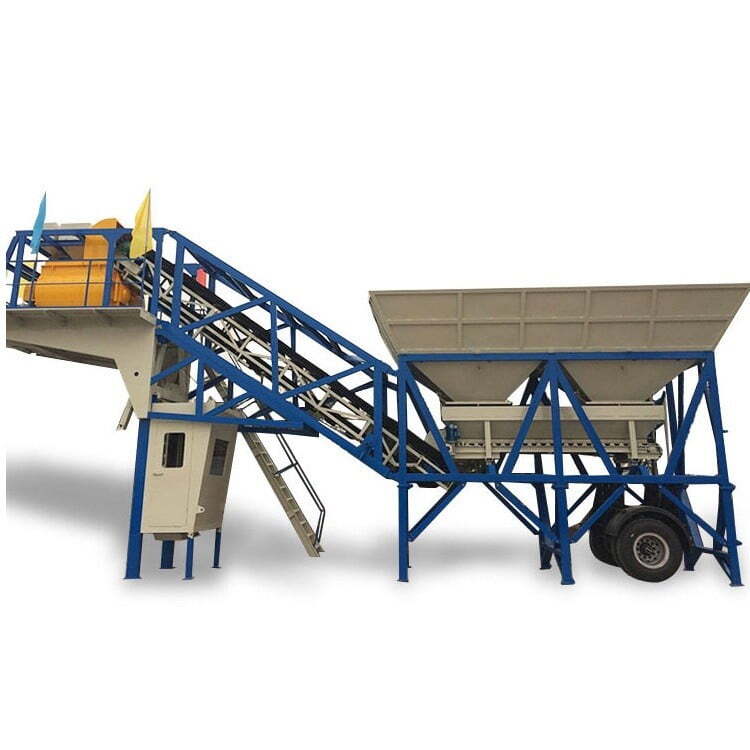
Do you want to buy a concrete batching plant that can meet the construction characteristics and transportation facilities? You can find many companies in the market selling concrete batching plants of different sizes and shapes.

Batching plants come with various features and design principles. But how choosing the best-selling company will require time for research and finding the best and most trustworthy concrete batching plant supplier in China or any other country. You can find some helpful suggestions for this purpose, which helps you a lot in decision making.

      You must have good knowledge about the fundamentals of concrete design for solving troubleshooting problems. You must have a good sense of the component’s interaction in a mixture to check the ready mix concrete quality and adjustments. You can modify the mixture according to your needs if you have some basic knowledge of ingredients and their interactions.

      There is nothing one size fits all about buying a concrete batching plant as requirements and applications may not suit everyone. One thing is suitable for your application and project, but it is not necessary. It will be suitable for another buyer. Plant production may also vary; some plants can produce 1-10 yds. /hour and others can produce more than 100 yds. /hour.  So check the output capacity of the buyer company before purchasing the plant.

      The high hourly production does not imply high storage capacity, so the storage base on the material’s quantity fits into the bin. Some high-production plants have low-level storage of material. On the other hand, slow large plants have a significant amount of material. So a concrete batching plant should match your company’s model and needs.

       You should know the difference between a dry batch concrete plant and a wet batch concrete plant. A dry concrete batch uses for the mixing of concrete with the comparison of other batching plants. It has high efficiency and mixes the concrete with the mixer truck. The dry concrete batch plant uses cement, sand, and gravel to feed the batch plant. After passing from the manual scale, raw material discharges into the truck chute. Wet mixing equipment is also different from dry mixing equipment. To increase the application, many concrete batching plants combine the dry and wet mixing characteristics.

      The dry batch plant’s operating cost and power consumption are low compared to the wet batch plant. So consider it if you have a limited budget for buying a concrete batching plant.

      For the long site construction, the dry concrete batch can be a good choice for you. It ensures the material freshness and can prevent the hardening of the mixture.

      You must know if your selected seller company is responsible for the after-purchase support and any field repair if you require it. You can ask specific questions about tech support and product quality guarantee. A certified trusted, and reputable manufacturing company can provide you with all support before delivery and after shipment.

      Ensure concrete batching plant company has a good reputation and certified and professional expertise for their business. By choosing a local company, you can cut down the transportation charges.

Bottom Line

For fast construction work and a highly sustainable structure, choose a reliable and suitable concrete batching plant manufacturer. Determine your budget, and requirement for concrete, and a high-quality plant before buying a concrete batching plant.

What is the purpose of a food processor?

Food processors have been in existence for many years all over people’s kitchens. However, most people do not have the knowledge on how to optimize their abilities in the kitchen.

Whether it is dicing onion for your salad, thinly slicing potato for your favorite dishes or finely chopping herbs, a food processor will be your best friend in the kitchen.

Also, emulsifying, whisking, pureeing, kneading, mixing, whipping, mincing and even making soup is possible with this type of kitchen appliance.

This type of home kitchen appliance is my sous-chef, and I use it more than any other appliance.

Food processor uses include the following;

1. Chopping

From roughly chopped to smoothly cut, food processors are the best. It can be used in processing vegetables. Examples are carrots, onions, celery, root vegetables and winter squeeze.

The best food processor comes with a chopping blade. It is used for chopping as well as mixing and puréeing. It’s also called a multi-purpose blade.

Hummus

Is there anybody who does not love hummus? Hummus bought from stores has too much lemon juice or vinegar for preservation, and most hummus companies uses inexpensive oils in place of virgin olive oil.

You can make hummus using your food processor. First and foremost, chop parsley in your food processor. Add boiled chickpeas, a few garlic cloves, lemon zest or can squeeze fresh juice of your lemons, sesame paste and pulse until it is creamy!

Add olive oil. Ensure you add salt for flavor, pepper. When making my hummus, I also love to add a pinch of cumin and smoked paprika.

When using a food processor, your duty is to ensure the device has the right conditions for it to work. They include enough space on a kitchen counter, source of power, expert mastery of the device and additions needed.

2. Slicing

The slicing disc looks like the shredding disc. It lies on the upper part of the food processor bowl and items to be sliced are passed through the feed tube.

The blades are available in distinct sizes for you to cut fine, standard, rough or thick.

With this type of food processor blade, I like to cut Brussels sprouts into thin slices for salads and sautés. It is also good for slicing potatoes or other vegetables.

Making Salads, Salsa and Dressings

Making salads, Salsa and dressings with a food processor is pretty quick.

Simply use the discs which are supplied with your device and in seconds, vegetables and fruits are chopped into small and uniform slices. At times like this you will not require a knife and chopping board.

Ingredients for salsa are chopped finely and if you want a smooth texture, keep your food processor running.

Dressings do not require much effort. Simply put on the chopping, slicing or S-blade, and then add everything else and Pulse.

3. Shredding

Many different types of food processors are supplied with shredding disc, at times referred to as a grating disc, which sits on the upper part of the bowl. Food is pushed through the feed tube of the food processor.

As soon as it reaches the disc, food is shredded before dropping down to the bowl of food processor. Rapidly and effectively shreds carrots for carrot cake, coleslaw, or broccoli for a crispy salad.

4. Making Dough

The uses of a Food processor include making dough. A dough blade is made of metal or plastic and the paddles are less curved as compared to the s-blade. It is used to make dough for bread, pizza, just to name a few.

Bread dough, pizza dough, pie crusts and pasta are made in a big food processor for dough. Splitting butter pieces into smaller bits in flour is made quicker and easier.

5. Making Juice

A lot of food processors are designed with a juicer attachment. This will be helpful for making citrus fruits and daily fresh juice.

You will require a food processor that has a centrifugal juicer attachment if you need to make fresh fruit or vegetable juice. These are unusual, though Braun brand manufactures them.

6. Making Nut Butter

Not only can a food processor chop nuts, but it can make almond or homemade peanut butter.

 Let’s be honest. Purchased almond butter is costly while peanut butter bought from the store usually comprises of a ton of sugar, salt and hydrogenated oils (all these are not essential for a delicious peanut butter).

There are best food processors for nut butter such as Vitamix Professional Series 750 Brushed Stainless Finish with 64-Oz. Container.

A good nut butter food processor should be powerful for difficult tasks which include chopping nuts.

It should have high wattage which is required to make nut butter. This is because the nuts require 10-15 minutes in the device to break down entirely and be consistent.

Find a model that has 600 watts and more. Many food processors with 500 watts or less are suitable for easier tasks.

It is possible to prepare nut butter with a low wattage food processor. However, you may require stopping the device after a couple of minutes to prevent the motor from burning out.

Homemade nut butter is good, healthy and cheap food that one can easily make and add it to sauces, sandwiches, dips and whatever else comes to your mind.

7. For meat

I bet many people do not know that a food processor can be used for grinding meat.

If you will not find the ground chicken you were searching for in the shops, don’t worry-you can use a food processor to make your own, as well as grind beef, lamb, and pork.

You should cut your beef into smaller pieces before putting it in a food processor.

 It should be pulsed on and off instead of working constantly. This stops the beef cubes from excessive processing.

Benefits of a food processor for meat:

·         It provides you with fresh and juicy meat

·         You do not require the grinder

·         It is less chaotic

·         There is less contact of uncooked meat and your hands

·         Meat can be grinded at any time