Blog Masonry

8 Type of Sewing Machine Thread

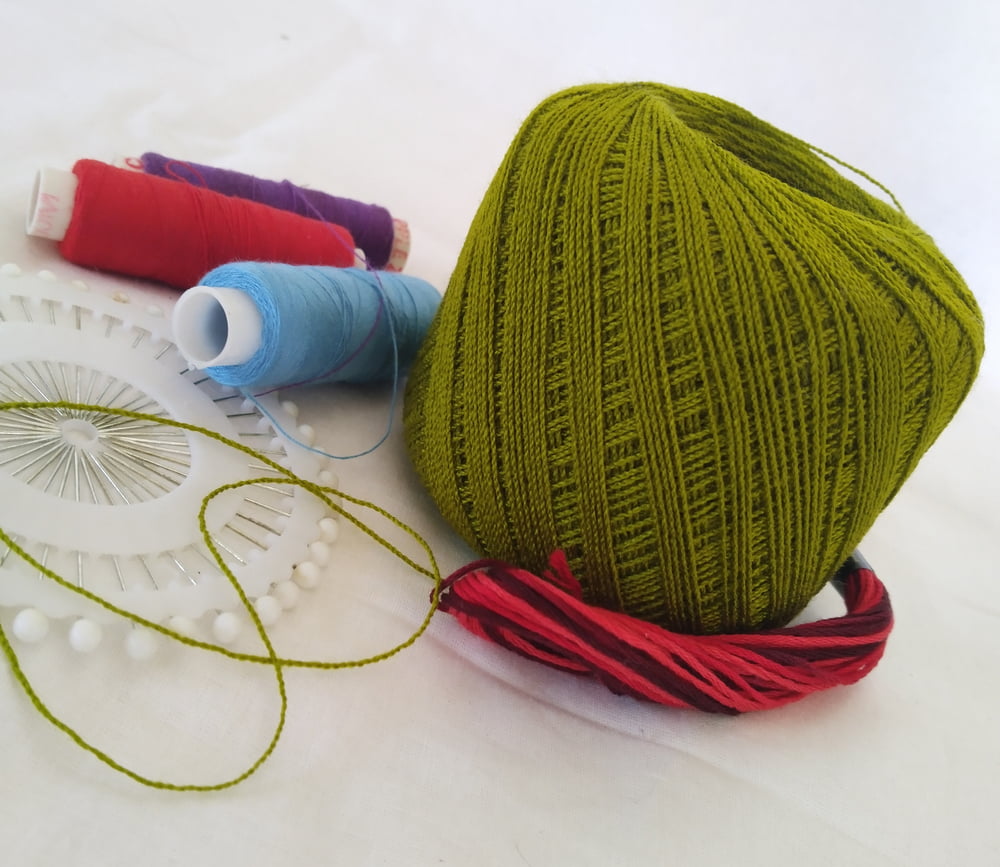
In this article, we’re going to look at the thread. How do you pick the right type of sewing machine thread to reduce the thread break? Did you know there are multiple forms of thread? We’ll go over in detail what you need to know about the thread.

It takes more than just good sewing skills to achieve a professional look. You must use not only the suitable fabric and needle but also the right thread. Knowing which thread to use for your sewing project is essential to producing a good result. A project that is too small or weak will fall apart; a project that is too large or coarse will break or tear the fabric. Here’s some advice on how to choose the right sewing thread for your project.

  1. Silk Thread

Silk thread is excellent and is suitable for weaving natural fibers like silk or wool. It’s perfect for tailoring because it’s tough and resistant to high temperatures. Silk thread can also be used for basting, and it won’t leave unsightly holes in the fabric if used with the right needle.

  1. Polyester Thread 

Polyester thread, unlike cotton, cannot withstand high temperatures and can be damaged if pressed too hard. When pressing synthetic fabrics, it’s fine because you’ll be using a low heat environment. This thread has more give than cotton, which is a plus. Polyester thread has a smoother finish than cotton thread, allowing it to glide through cloth more quickly.

  1. Cotton Thread

When stitching with natural fiber fabrics, cotton thread is the best option. The cotton can withstand a lot of heat, which is crucial when pressing seams. Many cotton threads are mercerized, which means they have a smooth surface that makes dyeing easier and gives them a lustrous, smooth finish. Cotton thread is more likely to snap due to its lack of elasticity.

  1. Nylon thread

This is a synthetic thread-like polyester and is ideal for sewing all sorts of fabrics. They come in various weights, with a heavy-weight nylon thread being suitable for sewing with heavy fabrics. This thread is extremely strong and semi-transparent. Whatever the fabric and needle, you can still use a 90/14 to 100/16 needle for this thread.

  1. Metallic thread

They’re used to add a touch of class to any space. To sew with this thread, you’ll need a special needle. In the bobbin, ordinary all-purpose or bobbin-weight thread is used. If you sew at high speed, you risk losing the thread. When using this thread, careful stitching can result in beautiful embellishments.

  1. Rayon Thread 

This thread has a lovely finish and is used for decorative purposes. Do not use it to sew seams because it is very delicate and prone to breaking more than any other thread.

  1. Jeans Thread

This is a heavier-weight thread for hand or machine stitching denim and making or mending jeans. Overlock seams, straight work seams, and topstitch with it. It’s available in jean colors as well as this bi-color thread that matches the denim. 80-100 needle scale

  1. All-purpose thread

This is a hybrid thread with polyester and cotton properties since the polyester thread is wrapped in cotton. This is, in my opinion, the best for sewing with a sewing machine. It can be used to stitch woven garments, knits, and synthetic fabrics.

The polyester in this thread provides stretch, while the cotton provides ease of stitching. This thread is also heat resistant, so if you need to press the fabric when sewing with high heat, this is the thread to use.

 If you are looking for embroidery digitizing services in USA, we have been offering services at cheap rates. If you are willing to buy the best digitizing services, we are the most suitable providers. You can get Services by calling us or visit our website.

Comfast Extender Setup | Ap.Setup

comfast

How to Setup a Comfast Extender?

Make sure your home or office has a reliable WiFi signal with a 300Mbps wireless speed and two external antennas that can effectively improve signal strength and stability.Comfast Extender Setup would convert your wired network into a wireless network, increasing the WiFi signal to hard-to-reach areas and strengthening your existing WiFi coverage.

There are some advantages of using the Comfast Extender Setup.

Comfast Extenders Setup are the perfect solution for any phone network problems. As a result,the Comfast extender setup removes all dead zones in your home by steadily boosting your wireless network’s signal and distributing it throughout your house.

Comfast Extender Setup accomplishes this by collecting existing cellular network signals and distributing them to areas where the internet is unavailable.The best thing is that all you have to do now is set up your Comfast Wi-Fi range extender.

Follow the system’s rules when setting up your Comfast Range Extender Setup.

1: First and foremost, the extender must be powered and switched on. Connect the connector to a secure power source and press the power button for a few seconds. When the control LED becomes stable, the extender is successfully turned on.

2: After the router has been switched on, connect the New Extender Setup to it with an ethernet cable or by using the WPS push button.

3: Once your extender is connected to your router, you’ll need to locate a device that will connect to the network. This case looks awesome with a notebook or desktop computer.

4: Connect to your computer’s wireless network. Then, after double-checking that it is up to date, activate a selection tab. Open the ap.setup file in the tab’s URL bar.

5: You’ll be asked to log in with your username and password when browsing the new extender device list. When you first complete the configuration, the keys for all of the input fields will be “admin,” so just fill in the fields and click the login button.

6: After you’ve successfully signed in, you’ll be given a short, easy-to-follow guide. Simply select Setup from the app’s menu, and the setup will be led by on-screen directions.

7: If you carefully watch every move on the screen, you’ll be able to easily set up your extender.

We offer support for ap.setup and any other issues with your extender in the United States, the United Kingdom, Australia, and Canada.

What does a Comfast Extender Setup require?

Ap.Setup is a WiFi Range Extender setup service that helps you to connect your WiFi Range Extender to WiFi-N first, then type Ap.Setup or comfast extender setup into the URL to get started with Comfast Extender Setup.

Setting Up a Wireless Network Repeater with WPS:

1: In setup, position the Comfast Repeater next to the Network Signal Access Point; once synced, you can move it around.

2: Press and hold the WPS button for 5–10 seconds on your home network.

3: On the Comfast Repeater, press and hold the WPS button for 10 seconds (within 2 minutes).

4: When the WiFi signal flashes blue, the connection is complete.

5: Join the Comfast Network Repeater (the “Home Network”)- PLUS

6: You will only need to create or enter the password once for security reasons.

Some important certifications of the IoT industry

IoT certifications

Certain opportunities don’t come easily without a certification, regardless of the profession or business. The Internet of Things is no exception. If you want to work in hardware, software engineering, or front-end design, these programs will not only provide you with a strong foundation in IoT, but they will also allow you to showcase your skills and knowledge to your dream employers.

In 2017, research predicted 1.4 million jobs in the field, with 300,000 described as entry-level and IoT-related. It also predicted a 21% growth in IoT endpoints in 2019, with 5.8 billion by 2020. This development will be driven by utilities, governments, healthcare companies, and the automotive industry as they use technology to adapt and transform their businesses.

This is simply to demonstrate the vast array of possibilities available to you. Your career growth goals will never be exceeded with the right preparation and certifications. Here are some IoT certifications to think about having this year.

  1. Internet of Things: Cisco

IoT certifications, which are job role-based services, are available via the Cisco Learning Network. CCENT and CCNA Industrial certifications are available via Cisco’s Industrial/IoT career track. The training focuses on Internet Protocol (IP) networking skills, with automation, manufacturing, and electricity as focus areas.

  1. Internet of Things Foundation Series: AWS

Telemetry, command and control, fleet management, and predictive maintenance are all included in this AWS IoT series certification.

The training course is aimed at data engineers, operational analysts, and business decision-makers, among others, who want to learn more about the subject. The certification validates a candidate’s understanding of technical topics such as MQTT, IoT Security, and the AWS IoT Rules Engine.

  1. CertNexus: IoTBIZ, CIoTP and CIoTSP

CertNexus provides the largest and most extensive IoT certification program currently available, including an entry-level cert for business types and practitioner certificates for IT pros and security specialists. CertNexus is a U.S.-based multinational training and certification organization that has been in operation since the early 2010s.

The Certified Internet of Things Practitioner (CIoTP) and Certified Internet of Things Security Practitioner (CIoTSP) credentials are both highly technical and professional. As a result, they should be appropriate for technical professionals who want to show that they have job-ready IoT skills and knowledge. The IoTBIZ certification is targeted specifically at business practitioners who want to learn about the benefits and challenges of designing and integrating Internet of Things devices and systems.

  1. Microsoft Certified: Azure IoT Developer Specialty

Microsoft currently provides 12 Azure-related certifications. The Azure IoT Developer cert, however, is the only one that explicitly mentions IoT. It implements Azure IoT software and resources required to set up and run the cloud and edge portions of an IoT solution. As a consequence, it is highly focused on programming and implementation. Microsoft also has its own IoT School, which is full of useful and fascinating online resources, the majority of which are free.

  1. Internet of Things Foundation Certification: Cloud Credential Council 

The Internet of Things Foundation certification is one of the vendor-neutral certifications offered by CCC (IoTF). This covers the technology’s principles and consequences, as well as market integration and monetization. The target audiences for the IoTF are software engineers, IT architects, system managers, and application developers.

An IoT device is nothing but a simple device that has been connected to the internet for the purpose of exchanging information. Every IoT device has different power requirements. A simple sensor node will be able to operate on an AA battery or even a coin cell with an output voltage of 3V and will require very less current. But an IoT device that needs to run a motor will need something more than that. It will require a battery that can give up to 2 Amperes of current, like a sealed lead acid battery with an output voltage of 12V.

 The best benefit you can expect from achieving any of the certifications is salary. Here is the list of salaries offered to an IoT-certified professional:

  • Software Engineer: USD 79k

  • Senior Firmware Engineer: USD 108k

  • Senior Software Engineer: USD 133k

  • Software Developer: USD 66k

  • Solutions Architect: USD 105k

You must be excited to know more about the industry and add these certifications to your resume. If yes, then you should just get the right training to help you guide through the exam preparation process. uCertify is among the best platforms that provide IT training courses. We provide various comprehensive learning resources to help you prepare for these certification exams.