Batteries

From Grid Congestion to Resilience: How BESS is Transforming Energy Infrastructure

grid congestion

As our world uses more electricity than ever before, our old power grids are feeling the strain. More people, more electric cars, more gadgets — it all adds up to more energy moving through the wires. This can lead to grid congestion, blackouts, and expensive upgrades.

But there’s good news. Battery Energy Storage Systems (BESS) are changing the game. Let’s break down what that means for our energy future.


What Is Grid Congestion?

Think of the grid like a big highway for electricity. When too many cars get on the road at once, you get a traffic jam. The same thing happens with electricity. If too much power tries to move through the grid, lines get overloaded.

This can cause:

  • Power cuts and blackouts.
  • Higher costs for utilities and customers.
  • Delays in adding more renewable energy like solar and wind.

How BESS Helps Ease Grid Congestion

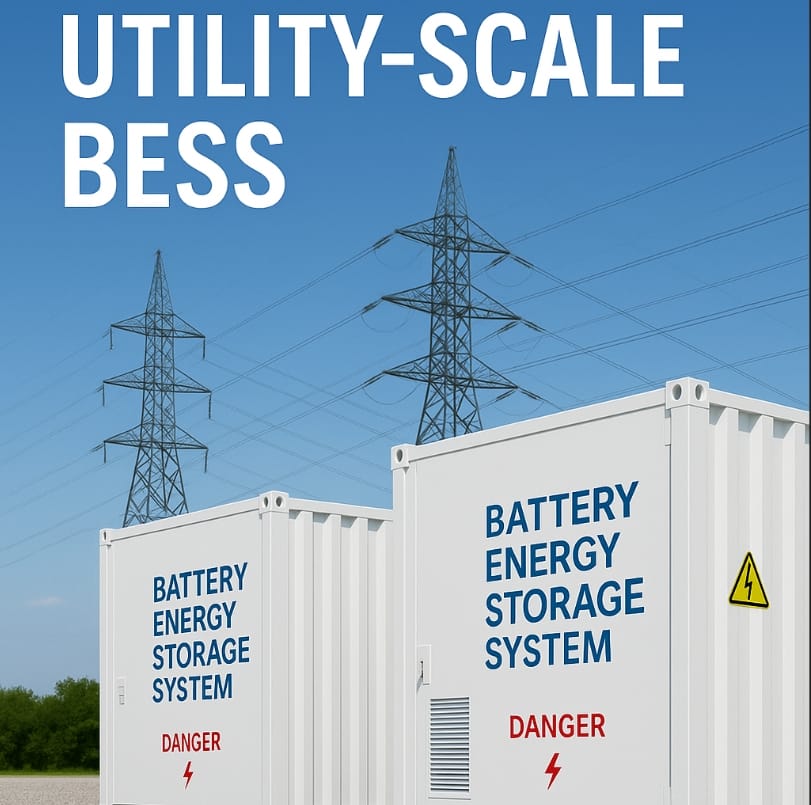
BESS works like a giant rechargeable battery for the grid. It stores extra power when demand is low or when there’s too much solar or wind power. Then, when demand spikes, BESS sends that stored power back into the grid.

This helps in two big ways:

  1. Smooths out energy flow — no more “traffic jams.”
  2. Supports renewables — keeps extra clean energy for when we need it.

Making the Grid Stronger and More Resilient

Extreme weather, heat waves, and storms are putting more pressure on our grids. Outages are becoming more common in many places. BESS gives us a backup plan.

When the grid goes down, BESS can:

  • Keep the lights on in homes and businesses.
  • Power critical services like hospitals and emergency shelters.
  • Help utilities get the grid running again faster.

Helping to Modernize the Grid

Upgrading old wires and transformers is expensive and takes years. BESS lets us get more out of what we already have. Utilities can avoid costly upgrades by using storage to balance supply and demand.

Plus, BESS works well with smart grids and new technologies like microgrids. Communities can build local “mini-grids” with storage to stay powered up even if the main grid fails.


Real-World Examples

Cities and towns worldwide are adding BESS to strengthen their energy systems. For example:

  • In California, big BESS projects help prevent blackouts during heat waves.
  • In Australia, BESS helps balance the ups and downs of wind and solar power.
  • In rural areas, storage systems allow small communities to have stable power without costly grid connections.

The Future Looks Bright

As batteries become cheaper and more efficient, BESS will play an even bigger role. Experts say that in the next decade, energy storage will be just as important as solar panels and wind turbines in building a clean, reliable energy future.


Final Thoughts

Our energy needs are growing, and our old grids can’t keep up alone. Battery Energy Storage Systems are giving us a way forward — reducing congestion, preventing blackouts, and making our grids stronger and smarter.

In short, BESS is turning our energy infrastructure from fragile to resilient. That’s good for our homes, our communities, and our planet.


FAQ: From Grid Congestion to Resilience

What is grid congestion?

Grid congestion happens when too much electricity tries to flow through the power lines at once. This overload can lead to blackouts, higher costs, and limits on adding more renewable energy.

How does BESS help prevent power outages?

Battery Energy Storage Systems store extra power when it’s available and release it when needed. This backup power keeps homes, businesses, and essential services running during grid failures or peak demand.

Is BESS only for big cities?

No! BESS can be used by big cities, small towns, or even remote villages. It helps stabilize power supply anywhere the grid needs extra support.

Does BESS work with renewable energy?

Yes. BESS is great for storing extra energy from solar panels and wind turbines. It makes renewable energy more reliable, even when the sun isn’t shining or the wind isn’t blowing.

Is battery storage safe?

Modern BESS systems follow strict safety standards. They’re built with smart controls, cooling systems, and protections to keep them safe and reliable.

DC-Coupled Battery Storage: The Game-Changer in Modern Energy Systems

DC-coupled battery storage

As the world transitions towards renewable energy, the need for smarter, more efficient energy storage solutions has never been greater. One innovation rapidly gaining attention is DC-coupled battery storage systems—a powerful configuration that optimizes energy capture and storage while reducing costs and complexity.

Whether you’re a project developer, EPC contractor, or a commercial energy user, understanding how DC-coupled systems work and their benefits can significantly impact your project ROI and system performance.


What is DC-Coupled Battery Storage?

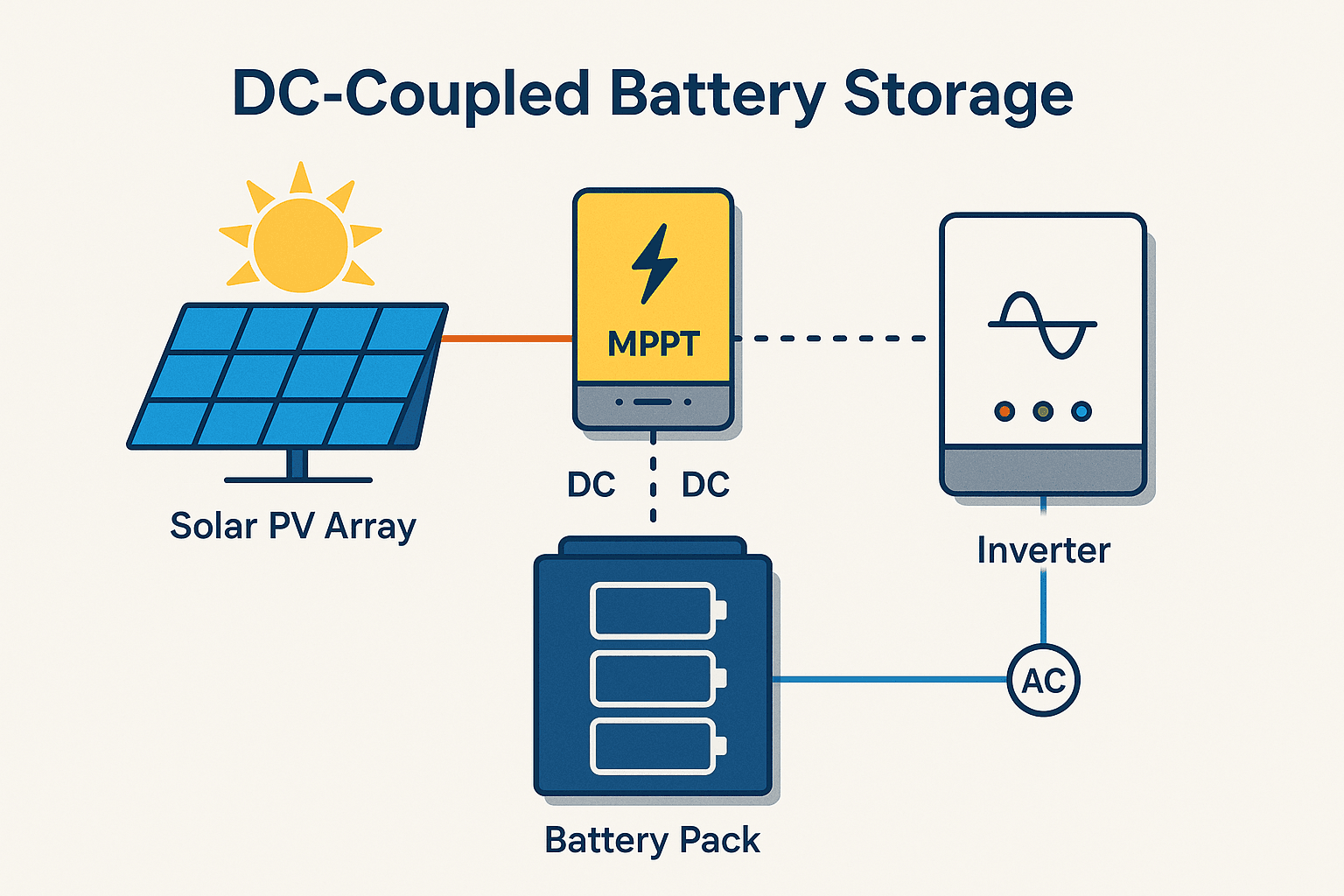
In simple terms, DC-coupling means that both the solar PV system and the battery storage system are connected on the same direct current (DC) bus before conversion to alternating current (AC) for end-use or grid export.

The Core Components:

  • Solar PV Array
  • MPPT (Maximum Power Point Tracker)
  • DC-DC Converter
  • Battery Pack
  • Inverter (DC to AC conversion)

Unlike AC-coupled systems where solar and battery systems have their own inverters, DC-coupled systems share one inverter, allowing more streamlined energy management.


Why DC-Coupled Battery Storage is Gaining Momentum

1. Higher Efficiency

DC-coupled systems avoid multiple DC-to-AC and AC-to-DC conversions, which means:

  • Less energy loss during charging/discharging
  • Improved round-trip efficiency (often 5–10% higher than AC-coupled systems)

2. Lower System Costs

  • Fewer inverters and balance of system (BoS) components
  • Reduced wiring and installation complexity
  • Lower maintenance needs

3. Better Solar Energy Harvesting

Excess solar energy that might otherwise be lost during curtailment is efficiently directed to the battery in real-time, especially in net-zero or off-grid systems.

4. Seamless Energy Management

  • Integrated control logic handles solar generation, load demand, and storage needs automatically
  • Easier integration with energy management systems (EMS)

5. Ideal for Hybrid and Off-Grid Projects

DC-coupled setups shine in areas with unstable grids or no grid access at all—perfect for:

  • Microgrids
  • Remote telecom stations
  • Rural electrification
  • EV charging stations

DC-Coupled vs AC-Coupled: A Quick Comparison

FeatureDC-CoupledAC-Coupled
InverterSharedSeparate
Conversion LossLowerHigher
CostGenerally LowerHigher
ComplexityLowerHigher
Battery ChargingDirect from DCVia AC
Best ForNew InstallationsRetrofits

Bottom Line:
DC-coupling is better suited for new builds and optimized hybrid systems, while AC-coupling may still have relevance in retrofit applications.


Design Considerations for DC-Coupled Systems

Battery Type Compatibility

  • LFP (Lithium Iron Phosphate) is most commonly used for safety and stability
  • Ensure your battery supports high-voltage DC connections and works well with your MPPT

Charge Controllers and DC/DC Converters

  • Must be appropriately sized and matched to your PV capacity and battery bank
  • Efficient MPPT tracking is critical for optimizing solar input

Sizing and Load Analysis

  • Assess load profile, peak demand, and required autonomy
  • Consider oversizing solar to maximize battery charging even in cloudy conditions

Inverter Selection

  • Should support hybrid operation modes: grid-tied, off-grid, or both
  • Look for high efficiency ratings (above 96%) and smart communication capabilities

System Monitoring

  • Invest in robust monitoring software with real-time alerts and remote troubleshooting
  • Ensure compatibility with smart meters, EMS, and BMS

Challenges and Limitations

Even though DC-coupled systems offer strong advantages, they also come with specific limitations:

Complexity in Retrofitting

Upgrading an existing solar system to DC-coupled storage can be technically difficult and often not cost-effective.

Limited Flexibility for Modular Expansion

Adding more capacity later may require system redesign or inverter upgrades.

Battery Chemistry Sensitivity

Some DC-coupled setups may only work with specific battery chemistries, unlike AC systems which are more plug-and-play.


Real-World Applications of DC-Coupled Systems

Commercial & Industrial (C&I) Installations

Companies using rooftop solar benefit from reduced peak demand charges, better load shifting, and improved energy self-consumption.

Agricultural Microgrids

Farms with irrigation pumps, cold storage, and other heavy machinery benefit from reliable DC-coupled energy solutions.

Remote Areas and Islands

Communities without grid access rely on DC-coupled systems for round-the-clock power, often paired with diesel as a last-resort backup.

EV Charging Stations

DC-coupled storage enables ultra-fast charging, reduces grid dependence, and lowers energy costs during peak hours.


Regulations and Safety Standards

When deploying a DC-coupled battery system, always consider:

Compliance Standards:

  • IEC 62933 for safety and performance
  • UL 9540 and UL 1973 for battery systems
  • NEC 690.10 for PV + Storage installations

Fire and Thermal Safety

  • Implement multi-layered BMS and fire suppression
  • Design proper ventilation and temperature controls

Cybersecurity

If remotely accessible, your EMS and BMS should be cyber-hardened against potential threats.


Who Should Choose DC-Coupled Systems?

You should consider a DC-coupled system if:

  • You are designing a new renewable energy project
  • You want maximum solar utilization
  • Your project is in a remote or off-grid area
  • You seek higher system efficiency and fewer hardware redundancies
  • You’re deploying commercial-scale or utility-grade solutions with advanced EMS/BMS

Final Thoughts: A Smarter Way to Store Power

DC-coupled battery storage is more than just a technological shift—it’s a strategy for the future. With energy costs rising and grid instability increasing, businesses and communities that invest in efficient, intelligent systems today are positioning themselves for resilience and energy independence tomorrow.

It’s not just about storage. It’s about control, savings, and sustainability. And in that race, DC-coupled systems are winning.


Need Help Choosing the Right System?

As a New Energy Consultant with over 13 years of experience in China’s energy sector, I help clients:

  • Source high-quality DC-coupled batteries
  • Verify factory certifications
  • Design efficient hybrid systems
  • Ensure safety compliance and project ROI

???? Let’s connect on LinkedIn or reach out for a free consultation!


What is an AC Coupled Energy Storage System?

AC coupled energy storage system

AC Coupled Energy Storage System: As the world rapidly shifts toward renewable energy, managing power generation, storage, and consumption efficiently is critical. Solar and wind power are clean but intermittent. That’s where energy storage systems (ESS) play a key role. Among the most practical configurations for integrating storage into existing systems is the AC coupled Energy storage system.

This blog explores AC coupled Energy storage systems in detail—what they are, how they work, their advantages, disadvantages, and where they fit best in modern energy infrastructure.


What is an AC Coupled Energy Storage System?

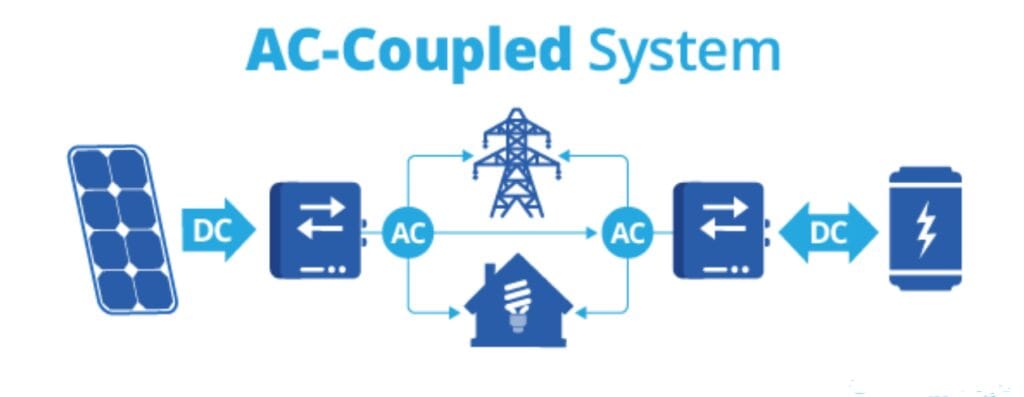
An AC coupled Energy storage system connects batteries to the grid or a solar PV system via an inverter on the AC side—as opposed to DC coupling, where batteries share a common inverter with the PV system.

In AC coupling, both the solar inverter and the battery inverter operate independently but feed into the same alternating current (AC) bus. This makes it easier to retrofit batteries into an existing grid-tied solar system or to operate in hybrid or microgrid environments.


How Does AC Coupling Work?

Here’s a simplified workflow of an AC coupled system:

  1. Solar panels produce DC power, which is converted to AC by a solar inverter.
  2. This AC power either goes to the grid or is consumed by local loads.
  3. A separate battery inverter (bi-directional) connects the battery system to the AC bus.
  4. The battery inverter handles charging (from grid or solar) and discharging (to supply power when needed).

The Energy Management System (EMS) coordinates energy flow, prioritizing self-consumption, peak shaving, or backup supply.


Key Components of an AC Coupled Energy Storage System

  • Solar PV System
  • String Inverter (or Microinverters)
  • Battery Storage Unit
  • Battery Inverter / Hybrid Inverter
  • Energy Management System (EMS)
  • Smart Meter / CTs
  • Grid Connection (optional in off-grid mode)

Advantages of AC Coupled Energy Storage Systems

Easy Retrofitting

AC coupling is perfect for adding storage to existing grid-tied PV systems. There’s no need to replace or modify the original solar inverter.

Modular & Scalable

Battery capacity and power rating can be scaled independently of the solar system. This flexibility is crucial for growing energy needs.

Higher Efficiency in Off-Grid Mode

In AC microgrids, AC coupling is more efficient because loads, generation, and storage all operate on the AC side—avoiding multiple DC-AC conversions.

Seamless Backup Power

With proper control systems, AC coupled setups can provide uninterruptible power supply (UPS) functionality during grid outages.

Technology-Agnostic

You can use different brands for solar and battery inverters, giving project owners freedom of choice.


Challenges and Limitations for AC Coupled Energy Storage System

⚠️ Multiple Conversions Lead to Losses

DC → AC (solar inverter) → DC (battery charge) → AC (load/grid) involves extra conversion steps, resulting in lower round-trip efficiency compared to DC coupling.

⚠️ More Complex Control & Synchronization

Two inverters must work in harmony. This requires advanced EMS and precise control algorithms, especially for grid-forming or islanding applications.

⚠️ Higher Upfront Cost

More hardware (separate inverters) and control systems can mean higher CapEx, though the ease of installation might offset some of these costs.

⚠️ Limited DC-Only Charging

You can’t charge batteries directly from the PV’s DC power. This could be a problem when grid power is down and solar output is high.


Use Cases of AC Coupled Energy Storage Systems

Residential Retrofits

Homeowners with existing solar PV systems can add storage without modifying their inverter setup.

Commercial Buildings

Businesses seeking peak shaving, demand charge reduction, or backup power benefit from the modularity of AC coupled systems.

Microgrids & Off-Grid Projects

Rural or island microgrids often use AC coupled configurations to manage multiple energy sources and loads.

Utility-Scale Hybrid Plants

Some utility-scale ESS installations use AC coupling to enable independent control of solar and storage assets.


AC Coupling vs. DC Coupling: Quick Comparison Table

FeatureAC CoupledDC Coupled
Inverter SetupSeparate solar & battery invertersShared hybrid inverter
EfficiencyLower due to more conversionsHigher due to fewer conversions
Retrofit FriendlinessExcellentPoor
ComplexityHigher (multiple devices)Lower (single device)
ScalabilityHighModerate
Charging from PV During OutageNo (unless advanced EMS)Yes
Battery Sizing FlexibilityHigherLimited to inverter capacity

Recent Technological Trends

  • Grid-forming inverters are now being integrated into AC coupled systems, allowing them to maintain grid frequency in island mode.
  • Smart EMS algorithms are improving system efficiency and coordination between inverters.
  • Hybrid inverters with AC-coupled inputs are emerging, combining the best of both worlds.
  • Battery vendors are offering plug-and-play AC coupled kits, making installations faster and more standardized.

Conclusion: Is AC Coupling Right for You?

AC coupled Energy storage systems offer unmatched flexibility, especially when integrating with existing solar setups or in microgrid environments. While the efficiency is slightly lower due to extra conversion steps, the ease of retrofitting, modular design, and robust backup power capabilities make AC coupling a strong contender in the energy storage space.

As the renewable energy landscape evolves, AC coupled systems will continue to play a crucial role—especially in applications where flexibility, scalability, and compatibility matter more than absolute efficiency.


Call to Action: Let’s Design the Right System for Your Needs

Are you looking to upgrade your solar system with energy storage? Or planning a microgrid project? I help clients in the new energy sector source, design, and implement optimal storage systems tailored to their goals—be it residential, commercial, or utility-scale.

???? Contact me today to explore whether AC coupling is the right choice for your project!