Batteries

EMS (Energy Management System): The Intelligent Core Powering the Future of Energy Storage

EMS * Energy Management System)

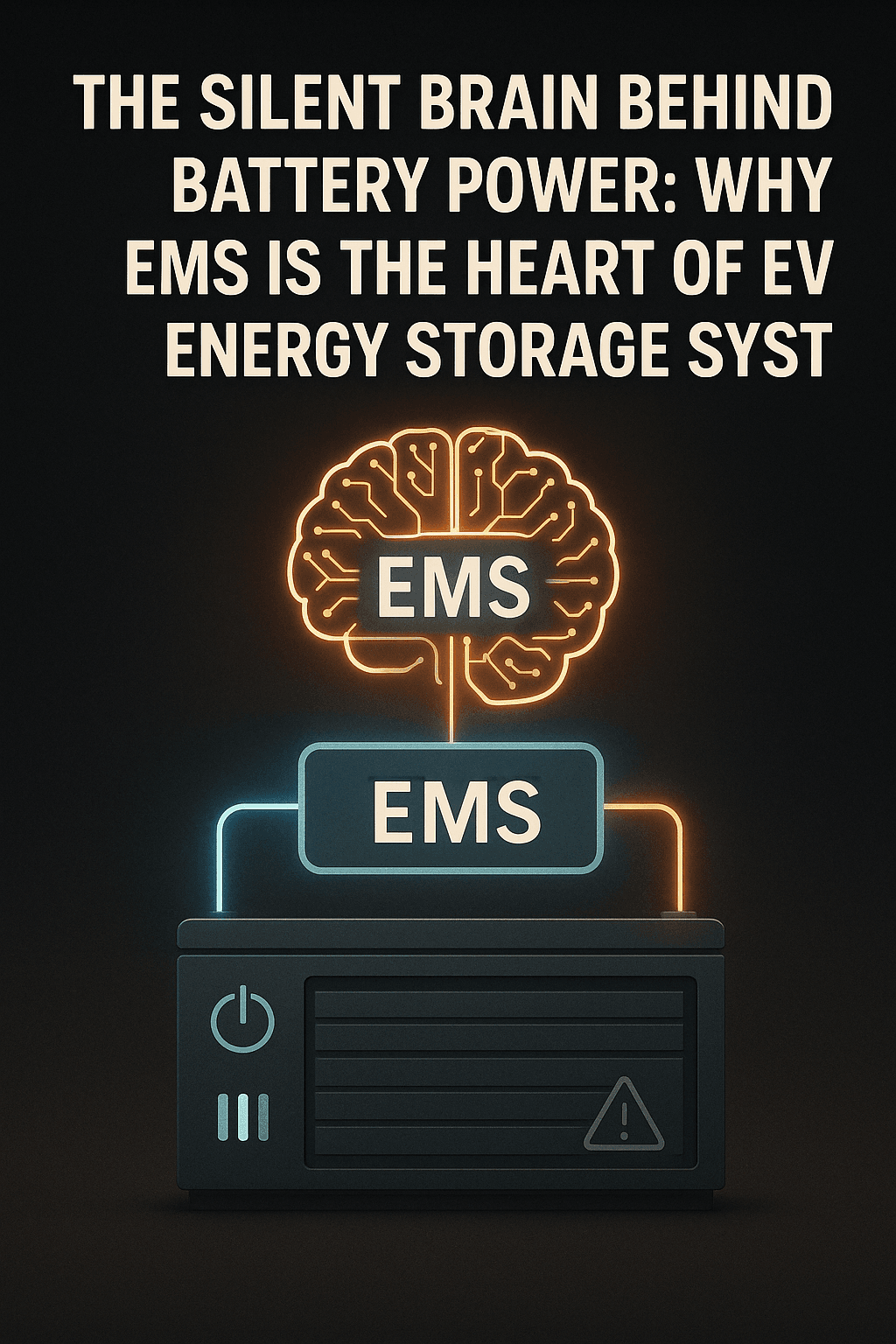
In the world of energy, we often admire the power, but rarely acknowledge the brain behind it. While battery cells, BMS, and PCS receive most of the attention in an energy storage system, there exists an unsung hero—the Energy Management System (EMS). Quiet, invisible, yet incredibly powerful—Energy Management System is the central nervous system of every energy storage solution.

In a rapidly electrifying world, where outages cost millions, renewable sources fluctuate, and grid stability is paramount—Energy Management System plays a decisive, life-saving role.

If you’re investing in battery systems, building an ESS, or managing a smart grid—understanding Energy Management System isn’t optional. It’s essential.


What is EMS (Energy Management System)?

At its core, an EMS is a sophisticated control system that monitors, manages, and optimizes the energy flow in a battery energy storage system (BESS).

Think of it like this:

  • The Battery is the Heart
  • The BMS (Battery Management System) is the Nerve
  • The Energy Management System is the Brain

It connects everything—solar panels, inverters, batteries, grid, and loads—orchestrating power flows with intelligence and precision.

Key Functions of an Energy Management System:

  • Real-time energy monitoring and analytics
  • Load forecasting and energy optimization
  • Charge/discharge scheduling
  • Peak shaving and load shifting
  • Integration with solar, wind, grid, and diesel
  • Demand-side management
  • Grid interaction & revenue optimization

Why EMS Matters in Energy Storage Systems

1. Because Power Without Control is Chaos

A high-capacity battery without Energy Management System is like a sports car without a driver.
Yes, it can go fast—but it can also crash. Hard.

Energy Management System controls when to store energy, when to release it, and how to do it safely. It decides:

  • When to charge from solar
  • When to sell power back to the grid
  • When to avoid grid usage during peak prices

Without Energy Management System, energy decisions are blind and reactive, leading to inefficiencies, losses, or even system failure.


2. The Key to Profitability

Energy is money. EMS is how you make more of it.

For commercial and industrial setups, Energy Management System can save thousands to millions by:

  • Reducing peak demand charges
  • Enabling participation in grid services
  • Selling energy when prices are high
  • Minimizing energy waste and downtime

Energy Management System helps energy Storage systems become revenue-generating assets, not just storage units.


3. Your Guardian Against Failures

Every battery system carries risks—thermal runaway, overcharging, deep discharge, communication failures.

While BMS protects the battery at the cell level, EMS protects the entire ecosystem.

It ensures that:

Energy Management System is your safety commander, reducing the risk of fire, blackout, and equipment failure.


4. Enables Smart Integration with Renewables

Renewables are the future. But they’re also unpredictable.

The sun doesn’t always shine. The wind doesn’t always blow.

Energy Management System allows you to:

  • Predict renewable output using AI & weather data
  • Prioritize solar or wind over grid use
  • Smooth out power fluctuations
  • Store surplus energy for night-time or low-supply periods

In short, Energy Management System makes clean energy dependable.


5. It’s the Brain of Smart Grids

We’re moving toward decentralized, intelligent energy systems—smart homes, smart grids, and VPPs (Virtual Power Plants).

In this world, Energy Management System is your passport.

It communicates with:

  • Grid operators
  • Aggregators
  • Utility APIs
  • Building Battery Management Systems (BMS)
  • Internet of Things (IoT) platforms

It enables autonomous decision-making—a future where your system acts in real-time, based on external signals and internal logic.


Real-Life Use Case: EMS in Action

Industrial Park in Southeast Asia

An industrial complex installed a 5MWh battery system with solar panels. Initially, without Energy Management System, they saw:

  • Frequent overcharging
  • High peak demand penalties
  • Poor system performance

After Energy Management System integration:

  • Peak demand reduced by 40%
  • Monthly savings: over $25,000
  • ROI achieved in 18 months

The Energy Management System monitored real-time prices, weather, and load data—automatically deciding when to store, sell, or shift energy usage.

That’s not just smart—that’s transformational.


Types of EMS Platforms

  1. On-Premise Energy Management System
    • Installed locally
    • Low latency
    • Used in data-sensitive environments
  2. Cloud-Based Energy Management System
    • Accessible remotely
    • Uses AI & big data
    • Easy to update & scale
  3. Hybrid Energy Management System
    • Combines both local and cloud intelligence
    • Ideal for mission-critical sites

Choosing the Right Energy Management System: What to Look For

When evaluating an EMS, don’t just check the brochure. Look for:

✅ Open communication protocols (Modbus, OPC UA, MQTT)
✅ Compatibility with BMS, PCS, Inverters
✅ Real-time dashboard and mobile access
✅ Predictive analytics and machine learning
✅ Alarm systems and redundancy
✅ Customizable logic rules
✅ Cybersecurity features

Ask the hard questions. Your energy future depends on it.


EMS vs BMS: Know the Difference

FeatureEMSBMS
ScopeEntire system (battery + grid + solar)Individual battery cells
FocusEnergy optimization & managementBattery safety and health
IntelligenceAI-powered decision-makingReal-time cell monitoring
Integration LevelHigh (with inverters, grid, SCADA)Low (battery-focused only)
Strategic ValueRevenue generation & cost savingsSafety and performance of battery

BMS and EMS Both are critical. But Energy Management System is what turns your storage into a business tool.


The Future is EMS-Driven

As we transition into an electrified, AI-powered, and decentralized energy world, EMS will be the central command system.

Imagine:

  • Homes that buy energy only during low rates
  • Factories that run on solar + storage with zero carbon
  • Cities that never suffer blackouts thanks to BESS
  • Fleets of EV chargers powered by solar + Energy Management System

This is no longer a dream. EMS is the technology that makes it real.


Conclusion: Let Energy Management System Be Your Edge

Energy is no longer just about storage—it’s about strategy.
And EMS is your strategic brain.

Whether you’re managing a home ESS, a commercial solar plant, or a utility-scale BESS—EMS gives you control, safety, and profit.

In a world where energy prices rise, policies shift, and grid stability becomes fragile—your Energy Management System isn’t just software.
It’s your edge, your intelligence, and your future-proofing tool.


Ready to Build Smarter Battery Energy Storage Systems?

If you’re sourcing energy storage systems or looking for turnkey ESS solutions, make sure your Energy Management Systemis powerful, scalable, and battle-tested.

Need help finding the right EMS-integrated solution?

?Let’s connect.
As a sourcing expert in the new energy space, I help global clients find Energy Management System-equipped, cost-effective, and certified battery systems that deliver results.

⚡ The Guardian Inside the Battery: Why BMS Is the Silent Hero of Every Energy Storage System

BMS (Battery Management System).

Imagine a battery system without protection. No intelligence. No control. Just raw power waiting to overheat, short-circuit, or collapse. That’s what you get without a BMS (Battery Management System).

In today’s energy revolution—where homes, factories, EVs, and entire power grids are being electrified—BMS isn’t a luxury. It’s a lifeline. It’s the technology that prevents fires, extends battery life, and makes high-performance storage systems not just smarter—but safer.

This post explores what BMS is, why it’s critical, the types of BMS, and the differences between low-voltage and high-voltage applications—all in language that resonates with technical experts and decision-makers alike.


???? What is BMS (Battery Management System)?

A Battery Management System (BMS) is the brain and bodyguard of a battery pack. It monitors, controls, protects, and balances each cell to ensure the battery performs safely and efficiently throughout its life.

Without a BMS, a battery is like a car with no brakes, no dashboard, and no steering.

Here’s what a BMS does:

  • Monitors each cell’s voltage, temperature, current, and state of charge (SOC)
  • Balances the cells to avoid overcharging or deep discharging
  • Protects against overvoltage, undervoltage, overcurrent, and overheating
  • Communicates with external systems like EMS, inverters, chargers, or the cloud
  • Logs data for diagnostics, warranty validation, and performance tracking

A good BMS doesn’t just keep a battery alive. It makes it thrive, delivering more cycles, more performance, and more peace of mind.


???? Why is BMS Critical for Energy Storage Systems?

Every battery—from your smartphone to a grid-scale energy storage plant—relies on a BMS. But the stakes are much higher in energy storage systems (ESS).

Why?

Because these systems:

✅ Operate at high voltages
✅ Involve large energy flows
✅ Power mission-critical infrastructure
✅ Run continuously for years

Without a robust BMS, the risks are real and severe:

  • Thermal runaway → fire or explosion
  • Unbalanced cells → early battery death
  • Overcharging → system failure or safety breach
  • Deep discharge → irreversible capacity loss

BMS acts as your first and last line of defense. It protects your investment, your equipment, and your people.


???? How Does a BMS Work?

At the core, BMS continuously monitors key battery parameters like:

  • Voltage of each cell and overall pack
  • Temperature across various points
  • Current flowing in and out
  • SOC (State of Charge) and SOH (State of Health)

If any of these values go outside safe limits, BMS will:

  • Cut off charging or discharging
  • Activate cooling or alarms
  • Communicate with external systems
  • Log and report the fault

Advanced BMS also includes:

  • Cell balancing (passive or active)
  • CAN bus or RS485 communication
  • Data logging and remote diagnostics
  • Firmware updates over-the-air (OTA)

In short, it watches, analyzes, reacts—and evolves.


???? Types of BMS: Choosing the Right Intelligence

Just like batteries come in many chemistries and sizes, BMS also comes in various architectures depending on system needs.

1. Centralized BMS

All monitoring and control circuits are located in one central board.

  • ✅ Cost-effective
  • ❌ Difficult to scale
  • ❌ Less fault-tolerant

Best for: Small battery packs, e-bikes, entry-level systems


2. Distributed BMS

Monitoring modules are placed on each cell or module, while control is handled centrally.

  • ✅ Easier to wire
  • ✅ Better thermal and voltage management
  • ❌ Still dependent on central unit

Best for: Medium systems like telecom towers or industrial UPS


3. Modular/Stackable BMS

Each battery module has a local BMS, and these communicate with a master controller.

  • ✅ High scalability
  • ✅ Redundancy and fault isolation
  • ✅ Perfect for high-voltage or large ESS

Best for: C&I, containerized ESS, EV fleets


4. Smart BMS with Communication

These BMS systems have integrated communication protocols like CAN, Modbus, or RS485.

  • ✅ Seamless EMS/inverter integration
  • ✅ Real-time monitoring and cloud sync
  • ✅ Remote diagnostics

Ideal for: Smart homes, solar-plus-storage, commercial buildings


???? BMS for Low Voltage Systems (12V, 24V, 48V)

Low-voltage systems are common in residential and small commercial use cases like:

Key Features of Low Voltage BMS:

  • Monitors small packs (1-16 cells in series)
  • Includes passive balancing
  • Protects against simple voltage/current faults
  • Compact and cost-effective
  • Often built into the battery pack itself

???? Low voltage doesn’t mean low risk. Even at 48V, an unbalanced or poorly managed pack can lead to swelling, thermal events, or capacity fade. That’s why a reliable, tested BMS is essential.


⚡ BMS for High Voltage Systems (100V to 1500V)

High-voltage battery systems are the backbone of:

Unique Challenges of High Voltage BMS:

  • Thousands of cells to monitor
  • Multi-layer fault detection
  • Complex communication with PCS and EMS
  • Need for precision balancing
  • Heat and fire risk is exponentially higher

What to Expect in High-Voltage BMS:

  • Modular design with stackable slave units
  • CAN/RS485 protocols with PLC or EMS
  • High-reliability MOSFET or relay protection
  • Multi-point thermal sensors
  • Isolation monitoring
  • Ground fault detection
  • Real-time diagnostics and AI prediction

???? In high-voltage systems, BMS isn’t just a monitor—it’s an intelligent command center.


???? What Happens When You Don’t Have a Good BMS?

Let’s be clear: skipping or downgrading BMS is not just risky. It’s reckless.

Here’s what can go wrong:

  • ???? Fire due to thermal runaway
  • ???? Explosions in high-voltage racks
  • ⚠️ Warranty voids due to lack of logging
  • ???? Regulatory non-compliance
  • ???? Downtime, recalls, and reputational loss

And worst of all? Total battery failure—years before expected.

A smart BMS doesn’t just save your battery. It saves your business.


???? Real-World Applications of BMS

Let’s look at a few live examples where BMS makes or breaks success:

  • EV Bus Fleets in China use modular BMS to manage 600V-800V packs with millions of cycles logged and balanced daily.
  • Off-grid hospitals in Africa rely on BMS-integrated solar storage to keep vaccines cold during blackouts.
  • Data centers use high-redundancy BMS in their UPS batteries to avoid catastrophic downtime.
  • Smart homes in California integrate BMS with EMS to sell solar power back to the grid during peak hours.

Each of these stories has one thing in common: reliability powered by intelligent battery management.


✅ Final Thoughts: BMS Is the Unsung Hero of the Energy Transition

Batteries may power the world, but BMS protects the dream.

It’s the difference between:

  • A battery that lasts 10 years… and one that fails in 2.
  • A system that runs safe… and one that catches fire.
  • Profitable ESS deployment… and an operational nightmare.

Whether you’re sourcing a 48V battery for your home or a 1000V rack for a solar farm, always ask:

“What kind of BMS does this system use?”

Choose wisely. Because inside every great battery system is a silent guardian.
That guardian is the BMS.


Need Help Sourcing the Right BMS or Battery System?

As a consultant and sourcing expert in the new energy space, I help clients worldwide choose the right batteries with intelligent BMS, tailored to their voltage, application, and business goals.

???? Let’s connect—your energy system deserves a brain that protects and performs.

What is a Battery Energy Storage System (BESS)?

Battery Energy Storage System

A Battery Energy Storage System (BESS) is a technology that stores electricity for later use using rechargeable batteries. These systems help balance energy supply and demand, enhance power reliability, support renewable energy integration, and provide backup power during outages.

A typical BESS consists of:


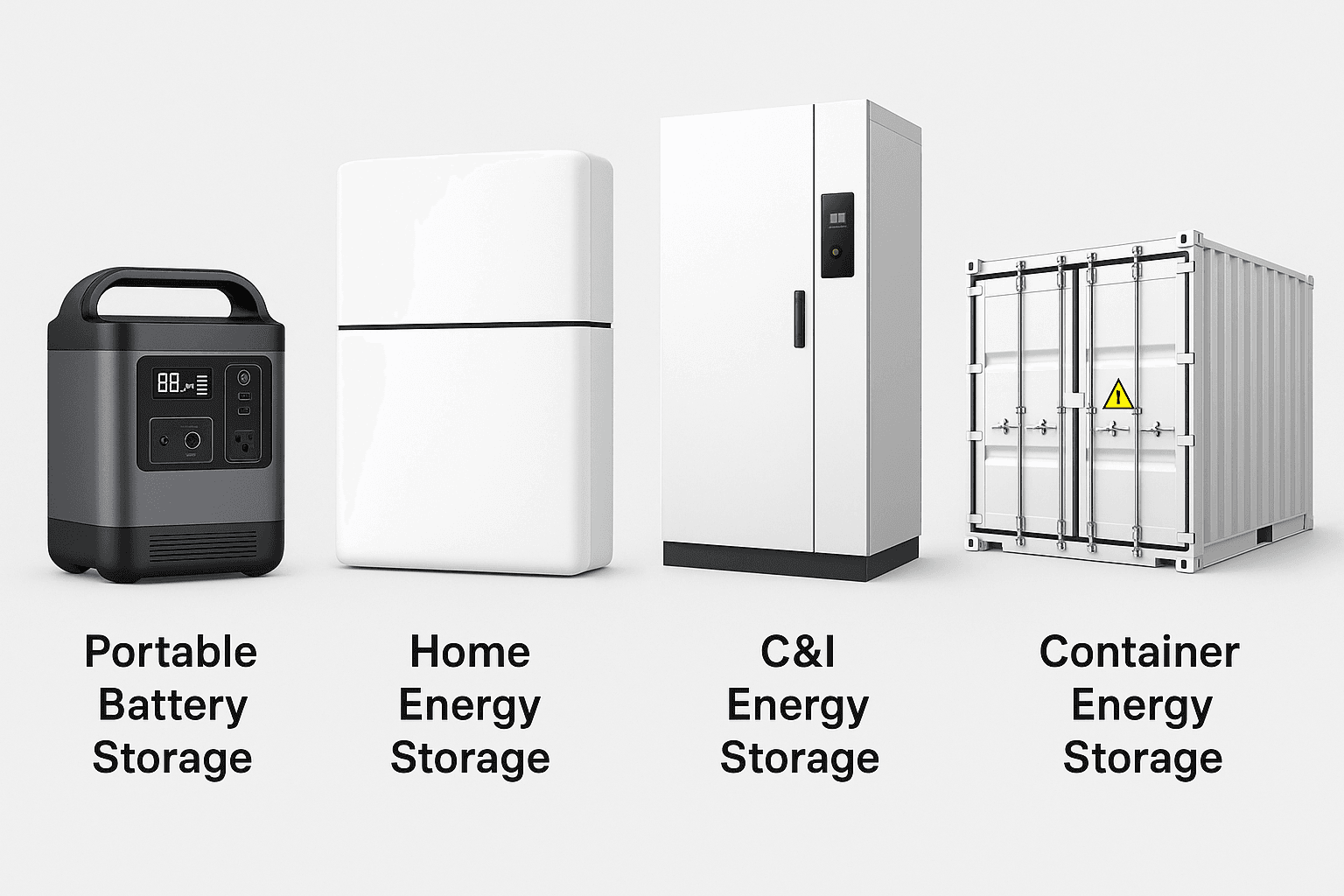
Types of Battery Energy Storage Systems & Their Uses

1. Portable Battery Storage

Examples: Power banks, solar generators, small lithium-ion packs
Uses:

  • Mobile phone and gadget charging
  • Outdoor and emergency power supply
  • Portable medical and communication devices
    Voltage: Low Voltage (12V–24V)

2. Home Energy Storage Systems

Examples: Tesla Powerwall, Huawei Luna2000, Pylontech, Growatt, etc.
Uses:

  • Storing solar energy from rooftop panels
  • Providing backup power during outages
  • Lowering grid electricity usage and costs
    Voltage:
  • Low Voltage (48V): Common for basic home needs
  • High Voltage (150V–600V): Suitable for larger homes with higher loads

3. Commercial & Industrial (C&I) Battery Energy Storage System

Examples: BYD B-Box Pro, Sungrow ST series, etc.
Uses:

  • Peak shaving (reducing demand charges)
  • Load shifting and power backup
  • Grid services and energy cost optimization
    Voltage: High Voltage (200V–1000V)
    Capacity: Typically 100 kWh – 1 MWh

4. Containerized Utility-Scale Battery Energy Storage System

Examples: CATL EnerOne, Tesla Megapack, BYD Cube T, etc.
Uses:

  • Grid stabilization and frequency regulation
  • Renewable energy smoothing (solar/wind farms)
  • Energy arbitrage and trading
  • Microgrids and remote area electrification
    Voltage: High Voltage (1000V and above)
    Capacity: 500 kWh – 5+ MWh per container

⚡ High Voltage vs Low Voltage Battery Energy Storage Systems

FeatureLow Voltage SystemsHigh Voltage Systems
Voltage Range12V – 100V150V – 1500V
Common UseHome, PortableC&I, Utility, High-power Homes
EfficiencyModerateHigh
Installation CostLower upfront costHigher, but more cost-effective long-term
SafetyHigh (safer for residential use)Requires advanced protection
Discharge RateSlowerFaster and more responsive
ScalabilityLimitedExcellent for large projects

Summary Table: Applications by System Type

TypePrimary UsesIdeal Users
PortableCharging electronics, emergency backupIndividuals, travelers
HomeSolar energy storage, power backupHomeowners, solar users
C&IDemand management, operational continuityFactories, commercial buildings
ContainerUtility grid support, large-scale renewable storageEnergy developers, utilities

✅ Final Thoughts

Battery Energy Storage Systems are revolutionizing how we store and use electricity. From tiny portable power banks to massive grid-scale container systems, BESS technology plays a crucial role in achieving energy resilience, reliability, and renewable integration. Choosing between high voltage and low voltage systems depends on your energy needs, budget, and scale of operation.

If you’re considering a BESS for your home, business, or project, understanding the system type and voltage level is essential for efficiency, safety, and cost-effectiveness.


Want help choosing the right energy storage solution for your project? Contact us for expert consulting and procurement services tailored to your specific energy needs.