Batteries

The Explosive Truth About UL Battery Certifications: What Smart Buyers Never Ignore

UL Battery Certifications

???? Introduction: Why UL Battery Certifications Aren’t Optional Anymore

In the electrifying world of batteries—especially in energy storage, EVs, and electronics—UL battery certifications are not just formalities. They are non-negotiable trust signals that separate safe, high-quality products from dangerous, compliance-risking time bombs.

But with names like UL 1642, UL 2054, UL 1973, UL 9540, UL 9540A, and UL 2580 floating around, it’s easy to feel overwhelmed.

Relax.
This ultimate breakdown will demystify these certifications and help you make bulletproof decisions—whether you’re a buyer, engineer, or project manager.


⚡️ What Are UL Certifications, Really?

UL (Underwriters Laboratories) is a global safety authority that rigorously tests and certifies products to ensure they meet specific safety, performance, and reliability standards. UL certification on a battery (or battery system) means:

  • It’s been tested under extreme conditions.
  • It complies with industry and legal safety standards.
  • It reduces the risk of fires, explosions, or failures.
  • It increases your chance of passing inspections and approvals.

Now let’s decode each UL certification—clearly and powerfully.


???? UL Battery Certifications and How They Differ

1. UL 1642 – Safety of Lithium Cells

  • What it Covers: Individual lithium-ion or lithium-metal cells only.
  • Where it’s Used: All sectors—consumer, industrial, automotive.
  • Tests:
    • Crush
    • Overcharge
    • Short Circuit
    • Impact
  • Why it Matters: It confirms that each cell won’t explode or ignite under stress.

???? Quick Take: UL 1642 is the foundation, but not enough alone. It doesn’t cover full battery packs or systems.


2. UL 2054 – Battery Packs for Household & Commercial Use

  • What it Covers: Complete battery packs with lithium, NiMH, NiCd, etc.
  • Where it’s Used: Power tools, electronics, appliances.
  • Tests:
    • Dielectric strength
    • Insulation resistance
    • Abnormal charging
    • Drop, vibration
  • Why it Matters: Proves your battery won’t fail under real-world abuse.

???? Key Insight: UL 2054 ensures pack-level safety for day-to-day usage—not for ESS or EVs.


3. UL 1973 – Batteries for Energy Storage & Motive Use

  • What it Covers: Battery modules or packs used in stationary or motive systems.
  • Where it’s Used:
  • Tests:
    • Thermal abuse
    • Short circuit
    • Environmental cycling
  • Why it Matters: Ensures the pack won’t trigger thermal runaway, degrade early, or catch fire.

⚙️ Pro Tip: UL 1973 is non-negotiable for ESS projects. Without it, you risk non-compliance and rejection.


4. UL 9540 – Complete Energy Storage Systems

  • What it Covers: The entire integrated ESS, including:
    • Battery pack
    • BMS (Battery Management System)
    • PCS (Power Conversion System)
    • Enclosure
  • Where it’s Used: Residential, commercial, utility-scale energy storage.
  • Why it Matters: Confirms the whole system is designed to prevent fire, electrical hazards, and performance failure.

????️ Game Changer: UL 9540 is your ticket to market in the US and many global regions. It’s the gold standard for system-level safety.


5. UL 9540A – Fire Propagation Testing (Thermal Runaway)

  • What it Is: A testing method, not a certification.
  • Purpose: Measures how thermal runaway spreads from cell → module → unit → installation.
  • Used By:
    • Fire departments
    • AHJs (Authorities Having Jurisdiction)
    • Building code officials
  • Why it Matters: Validates whether your system can contain fires safely and avoid catastrophic chain reactions.

???? Real Talk: A good UL 9540A test result is often mandatory for local permits and approvals.


6. UL 2580 – Batteries for Electric Vehicles

  • What it Covers: Battery packs used in electric vehicles (cars, buses, bikes).
  • Tests:
    • Mechanical shock
    • Crush
    • Overcharge
    • Thermal stress
  • Why it Matters: Confirms the battery is safe during crashes, charging, and real-world operation.

????️ Auto Alert: UL 2580 is the EV industry’s benchmark for battery safety.


???? At a Glance: Certification Comparison Table

UL StandardWhat It CoversUsed InKey Focus
UL 1642Individual cellsAll industriesCell safety
UL 2054Battery packsTools, gadgetsPack safety
UL 1973ESS/Motive packsSolar, telecom, EV infraStationary & motive systems
UL 9540Full ESS systemsHome, commercial ESSComplete system safety
UL 9540AFire propagationFire safety complianceThermal runaway risk
UL 2580EV battery packsElectric vehiclesCrash & abuse safety

???? Final Thoughts: The Smart Buyer’s Checklist

If you’re planning to buy, source, or install batteries for:

  • Home energy storage
  • Commercial & industrial (C&I) ESS
  • Electric vehicles
  • Backup power systems

Here’s what you need:

  • ✅ UL 1642 for cell integrity
  • ✅ UL 2054 for basic pack safety
  • ✅ UL 1973 for stationary ESS compliance
  • ✅ UL 9540 for full-system approval
  • ✅ UL 9540A to get local permits faster
  • ✅ UL 2580 if you’re going into EVs

Don’t cut corners.
Don’t just take a cell report.
Insist on full-system UL certifications.

Your investment, your safety, and your reputation depend on it.


???? Need Help with Battery Sourcing or Certification Checks?

If you’re sourcing batteries, energy storage systems, or EV components and want someone to verify certifications, factory test reports, or FAT, get in touch. I help global clients save time, reduce risk, and avoid costly mistakes. Sourcing experts

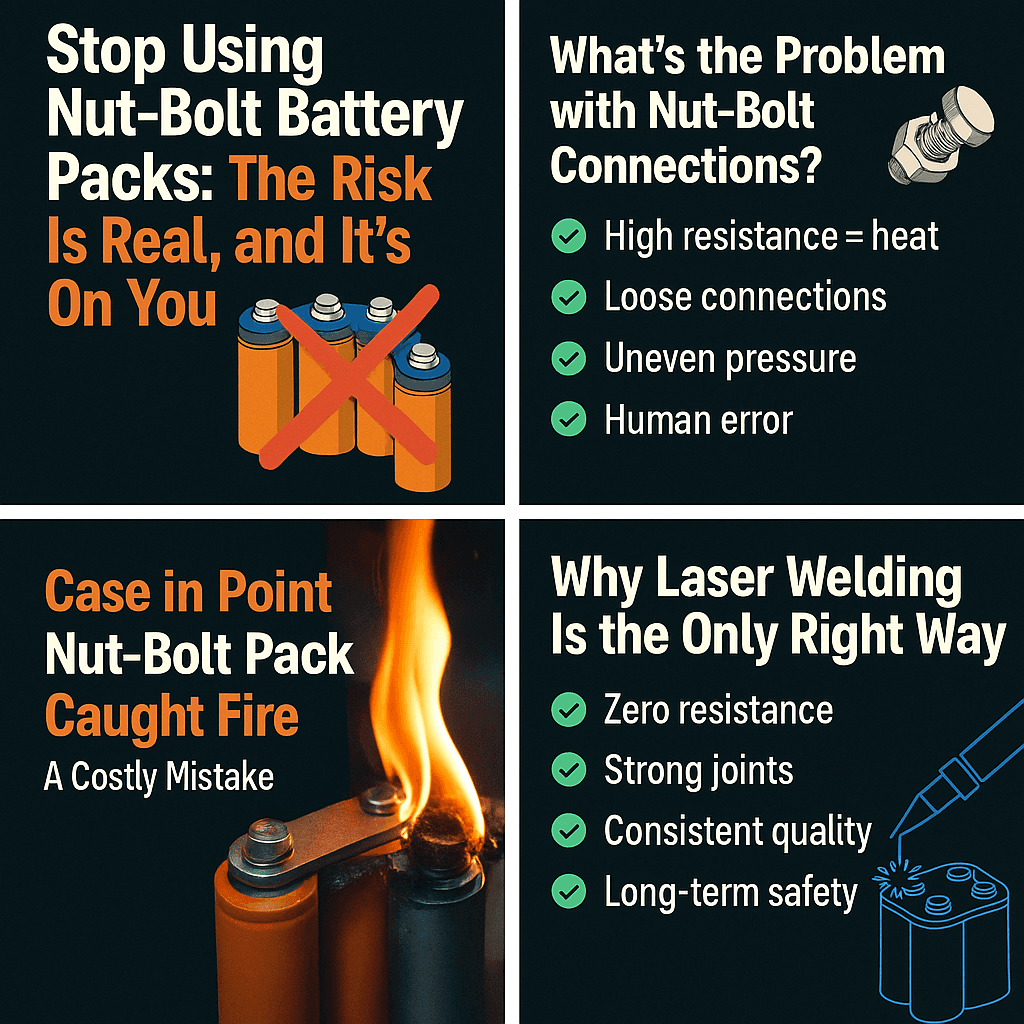
Nut-Bolt cell based Battery Packs = Hidden Danger. Don’t Risk It.

Nut-Bolt Cells Based Battery Packs

Nut-Bolt cell based Battery Packs: In the high-stakes world of battery energy storage systems (BESS) and electric vehicles (EVs), one careless shortcut can lead to catastrophic failure.

Yet, shockingly, some manufacturers still assemble battery packs using outdated nut-bolt connections—a crude method that belongs in the past. These so-called “battery builders” cut corners, risking not just performance—but your investment, your reputation, and even human lives.

Let’s pull back the curtain on this dangerous practice and explain why laser welding isn’t a luxury—it’s a lifesaver.


???? What Are Nut-Bolt Cells Based Battery Packs?

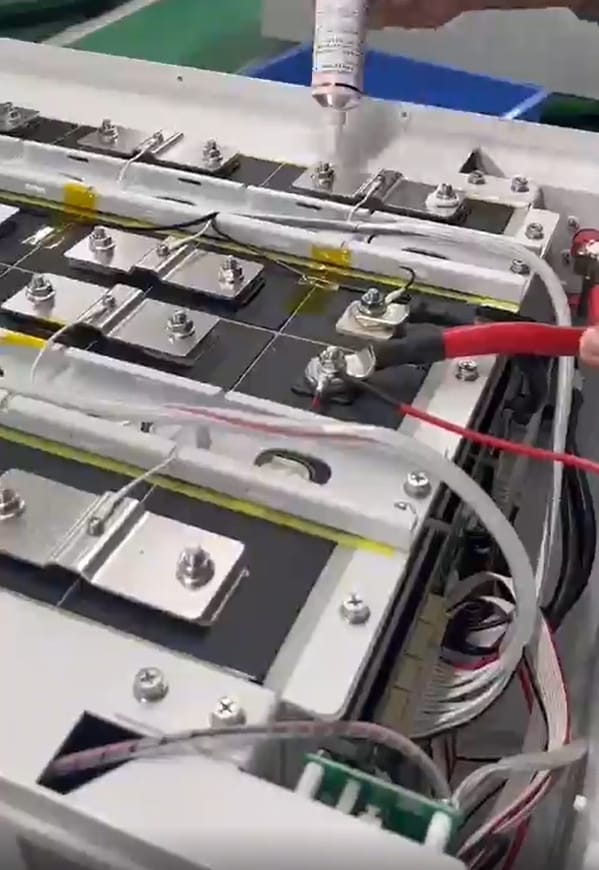
Nut-bolt battery packs involve fastening the terminals of cylindrical or prismatic cells with nuts, bolts, and metal busbars. It might sound simple and accessible—but simplicity comes at a steep, hidden cost.

Often used by small, inexperienced builders without the right equipment or training, this approach is prone to failure, heat build-up, and inconsistency. It’s a ticking time bomb hiding behind a low price tag.


Nut-Bolt Cells Based Battery Packs

???? The Ugly Truth: Why Nut-Bolt Cell Connections Must Be Avoided

❌ 1. Heat Monster: Resistance Builds Up and Ignites Risk

Nut-bolt joints have high contact resistance. As current flows, resistance generates localized heat, which worsens over time due to vibration, corrosion, or loosening bolts. This heat doesn’t just degrade performance—it can start fires or cause thermal runaway in high-capacity battery packs.

❌ 2. Uneven Pressure = Weak Connections

Tightening bolts manually can never guarantee uniform contact pressure across all cells. Some connections are too loose, others too tight. The result? Poor conductivity, voltage imbalances, and system inefficiencies.

❌ 3. Unstable Over Time

Batteries naturally expand and contract with temperature cycles. Nut-bolt joints loosen, introducing noise, imbalance, and risk. What worked on day one becomes dangerous on day 90.

❌ 4. Catastrophic in Vibrating Environments

In EVs or transportable storage systems, vibration is constant. Nut-bolt packs are notorious for coming loose under stress—leading to sudden disconnection, arcing, or complete system failure.

❌ 5. Slow, Messy, Human-Error Prone

Unlike automated laser welding, manual nut-bolt assembly is labor-intensive, slow, and inconsistent. Human torque errors, missing washers, or uneven tightening can all lead to invisible weaknesses.

❌ 6. Made by Untrained, Shortcut-Taking Assemblers

Let’s not sugarcoat it—most nut-bolt battery packs are made by people or small companies without proper experience, tools, or responsibility. They use these primitive methods to save on laser welding machine costs—a decision that endangers your project, your team, and the end user.

They’re playing with your trust, your money, and people’s safety just to make a quick profit.

They don’t invest in the proper setup. They don’t understand thermal dynamics. They don’t care about long-term performance. And worst of all—they gamble with your future, not theirs.


???? Real-Life Case Study: A Dangerous Shortcut Backfired

In Southeast Asia, a local contractor installed a nut-bolt based battery system for a solar farm. Within 9 months, the client began noticing:

  • Overheating terminals
  • Burn marks
  • Unbalanced modules
  • Sudden capacity drops

Inspection revealed loose bolts, inconsistent joints, and dangerous heat buildup. The entire system had to be torn out and replaced. The damage cost tens of thousands of dollars—not to mention lost uptime and reputation damage.


✅ The Safer, Smarter Alternative: Laser Welding

Laser welding isn’t just “better”—it’s a quantum leap in safety, precision, and performance.

???? 1. Zero Resistance Joints

Laser welding fuses metal surfaces with micron-level accuracy, creating a seamless, permanent connection. No bolts. No loosening. No heat build-up.

???? 2. Superior Mechanical Strength

Welded packs withstand vibrations, shocks, and harsh environments—ideal for mobile storage, EVs, or industrial energy systems.

???? 3. Automation = Perfection

Laser welding is done by automated, calibrated machines, not by guesswork. That means repeatable, high-quality joints with no surprises.

???? 4. Higher Energy Density, Compact Packs

Laser welding allows for tighter, cleaner pack designs—saving space, improving thermal performance, and enhancing product aesthetics.

???? 5. Fast, Scalable, and Cost-Effective Long-Term

While the initial setup cost is higher, the ROI is clear: fewer failures, lower maintenance, longer lifespan, and happier clients.


???? Pro Tip: Ask This One Question Before Buying a Battery Pack

“How are the cells joined—nut-bolt or laser welded?”

If they say nut-bolt, run. You’re dealing with an amateur, not an energy solution provider.


???? Need a Trustworthy Battery Pack Partner?

As a New Energy Sourcing & Quality Consultant, I help clients worldwide source professionally welded, certified battery systems that meet international safety and performance standards.

I perform:

  • In-depth factory audits
  • Vendor qualification and certification checks
  • QC inspections, system testing, and FAT
  • Technical due diligence for BESS and EV battery projects

???? Final Verdict: Never Settle for Nut-Bolt Cells Based Battery Packs. Ever.

If you care about:

  • Safety
  • Performance
  • Long-term reliability
  • Professional reputation

Then say NO to nut-bolt battery packs. They’re outdated, unreliable, and often built by people who have no business touching energy systems.

???? Laser welding isn’t optional—it’s essential.
???? Your project deserves better. Your clients demand better. So do it right, or don’t do it at all.


???? Ready to Source Smart? I Can Help.

Whether you’re building a C&I storage project, developing an EV, or launching a containerized ESS—reach out now for safe, smart, and professional sourcing support.

???? Message me here or connect on LinkedIn.

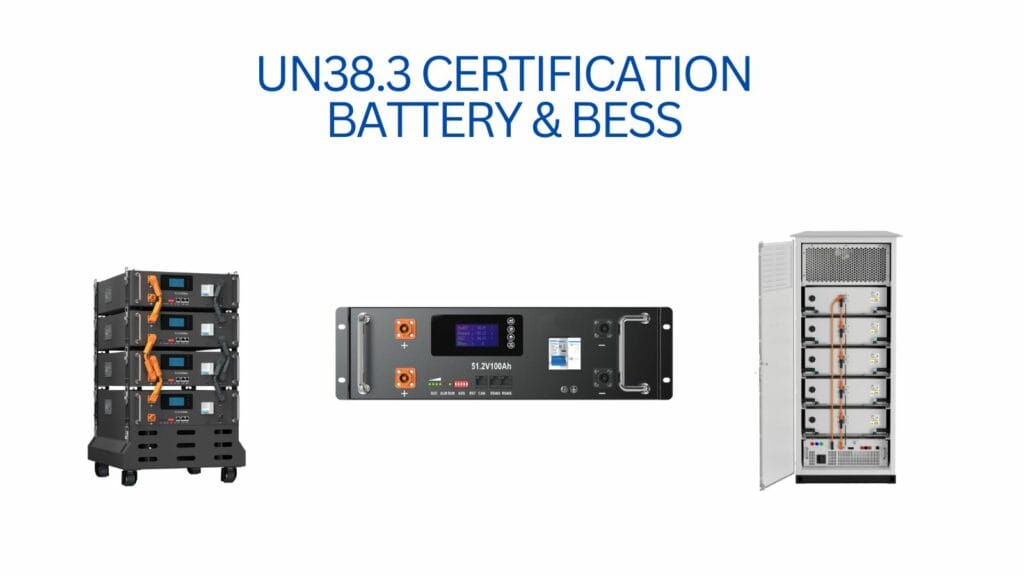
UN38.3 Certification: Your Gateway to Safe and Legal Battery Transport

UN38.3 Certification

In the fast-evolving world of lithium batteries, one certification stands between safe logistics and serious legal trouble: UN38.3. Whether you’re shipping batteries for electric vehicles, drones, energy storage systems, or portable electronics, compliance with UN38.3 Certification is non-negotiable.

In this guide, we break down everything you need to know about UN38.3 — what it is, why it matters, and how to ensure your battery products meet the global standard for safe transportation.


What Is UN38.3 Certification?

UN38.3 refers to Section 38.3 of the United Nations Manual of Tests and Criteria, Part III.
It mandates a series of rigorous safety tests that lithium-ion and lithium metal cells and batteries must pass before being transported by air, sea, rail, or road.

Purpose:
To ensure batteries can withstand transportation conditions such as pressure changes, vibrations, shocks, temperature fluctuations, and external short circuits — without risk of explosion, fire, or leakage.

In simple words, UN38.3 is your passport for batteries to legally and safely travel across borders.


Why UN38.3 Certification Is Critical

  • Legal Requirement:
    Without UN38.3, shipping lithium batteries is illegal in most countries, including the USA, EU, China, and others.
  • Safety Assurance:
    Lithium batteries can be dangerous if mishandled. UN38.3 ensures they are robust enough for real-world logistics.
  • Customs Compliance:
    Many customs authorities will seize or return battery shipments that lack a valid UN38.3 Test Summary.
  • Protect Brand Reputation:
    A single logistics incident involving a battery can damage your company’s reputation permanently.

What Products Require UN38.3 Certification?

You need UN38.3 testing for:

  • Lithium-ion batteries (rechargeable)
  • Lithium-metal batteries (non-rechargeable)
  • Battery packs
  • Batteries inside equipment (e.g., laptops, drones, EVs)
  • Batteries packed with equipment

Note: Even prototypes shipped for testing or development may require UN38.3 compliance under certain conditions.


The UN38.3 Test Items: What Batteries Must Survive

UN38.3 includes eight brutal tests designed to simulate real transport conditions:

Test NamePurpose
T.1 Altitude SimulationSimulates air transportation pressure (low pressure at 11,600 m).
T.2 Thermal TestExposure to extreme temperatures and cycling.
T.3 VibrationSimulates vibrations during transportation.
T.4 ShockSimulates mechanical shocks that may occur.
T.5 External Short CircuitSimulates a short during handling.
T.6 Impact / Crush TestTests battery strength under heavy compression.
T.7 OverchargeFor rechargeable cells/batteries only.
T.8 Forced DischargeFor cells, forces a discharge under worst-case conditions.

Passing all tests is mandatory for a UN38.3 certificate.


What Happens If You Skip UN38.3?

  • Fines: Heavy financial penalties for shipping non-compliant batteries.
  • Shipment Rejection: Airlines, shipping lines, and customs authorities will refuse non-compliant cargo.
  • Accidents: Risk of fire, explosion, injury, or property damage.
  • Legal Liability: You may be held responsible for accidents during transport.

How to Obtain UN38.3 Certification

  1. Product Preparation:
    Manufacture sample cells or batteries according to production specifications.
  2. Select Accredited Laboratories:
    Use certified third-party testing labs accredited for UN38.3 (e.g., SGS, TUV, Intertek, CTI, Pony Testing).
  3. Testing Process:
    Submit samples for the full series of UN38.3 tests.
  4. Obtain Test Report:
    A successful test produces a detailed test report.
  5. Issue UN38.3 Test Summary:
    Since 2020, regulations require a formal “Test Summary” to accompany every shipment.

Common Challenges During UN38.3 Testing

  • Inconsistent battery design or materials can cause test failures.
  • Lack of attention to packaging and markings after certification.
  • Mistakes in documenting the test summary can still block shipments.
  • Prototype versions often differ from final products and may require re-testing.

Pro Tip:
Work with experienced battery engineers and compliance consultants early in your product development to avoid expensive delays.


UN38.3 and the Energy Storage Industry

In New Energy sectors like:

  • EV Batteries
  • Home and Commercial Energy Storage
  • UAV Battery Packs
  • Portable ESS
  • Containerized Energy Storage Systems

UN38.3 is essential not just for cells but for complete battery packs and modules.

Even if your cells are certified, the final assembled pack needs its own UN38.3 testing if the design is significantly altered (different BMS, configuration, casing, etc.).


Final Thoughts

UN38.3 is not just a regulation — it’s a responsibility.

In an industry where trust is everything, showing your commitment to safety and compliance through proper UN38.3 certification sets you apart from your competitors.

Ship safe. Ship compliant. Ship smart.


Are you sourcing batteries for your next project?
Need help navigating UN38.3 compliance?

???? Contact me today for consulting, supplier audits, and battery sourcing support — ensuring your products are safe, compliant, and ready for global markets.