
Batteries

The Ultimate Guide to Energy Storage Battery Certifications

Battery Certifications

IEnergy Storage Battery Certifications :n the high-stakes world of energy storage, batteries are more than just a component — they are the lifeblood of your entire power system. Yet, one of the most dangerous assumptions in the industry is believing that certified cells automatically mean a certified, safe energy storage battery system.

This false sense of security has led to costly project failures, fire incidents, and in some cases, legal nightmares. If you’re investing in energy storage — whether for a home backup, commercial microgrid, or grid-scale ESS — you cannot afford this mistake.

In this power-packed guide, I’ll break down the essential certifications, expose the common myths, and show you why real safety and performance depend on more than just cell test reports.

???? Why Certifications Are Your First Line of Defense

Every energy storage battery represents a blend of chemistry, engineering, and risk. Certifications are your shield against catastrophic failure, covering:

  • Fire and explosion prevention.
  • Mechanical resilience and handling.
  • Electrical integrity and system safety.
  • Transportation compliance.
  • Environmental durability under real-world conditions.

A supplier’s promises are meaningless unless backed by recognized third-party certifications. Your investment deserves documented proof, not blind trust.

⚠️ The Costly Myth: “The Cells Are Certified, So the Pack Is Safe”

Here’s the reality: certified cells are only one piece of the safety puzzle.

Once cells are assembled into a battery system — with wiring, connectors, casings, thermal management, and a BMS — new risks emerge:

  • System-level short circuits
  • Thermal runaway propagation
  • BMS calibration errors
  • Inadequate housing protection

Even the most premium cells can become a hazard inside a poorly engineered pack. That’s why system-level certifications are non-negotiable.

???? Energy Storage Batteries Certifications

1️⃣ UL 1973 — The Gold Standard for Stationary Energy Storage

UL 1973 is the safety benchmark for batteries used in stationary applications like:

  • Solar energy storage.
  • Microgrids.
  • UPS and backup power.

This certification focuses on the complete battery system — not just the cells — covering electrical, mechanical, and fire safety.

???? Pro tip: Cell certifications do not substitute for UL 1973. If your pack isn’t UL 1973 tested, you’re flying blind.

2️⃣ UL 9540 & UL 9540A — Fire Safety for Energy Storage Systems

UL 9540 certifies entire energy storage systems, validating safe cooperation between batteries, inverters, and other components.

UL 9540A tests focus on thermal runaway risk and fire propagation — essential for installations near people or critical infrastructure.

???? Pro tip: Insist on UL 9540A Battery Certifications for projects in buildings or populated areas. Safety isn’t optional.

3️⃣ IEC 62619 Battery Certifications — Industrial Safety Beyond Borders

IEC 62619 Battery Certifications applies globally to industrial lithium batteries and covers the most brutal safety scenarios:

  • Crush resistance.
  • Overcharge behavior.
  • External short circuit tolerance.
  • Forced discharge responses.

This test ensures the pack survives real-world abuse without turning into a ticking time bomb.

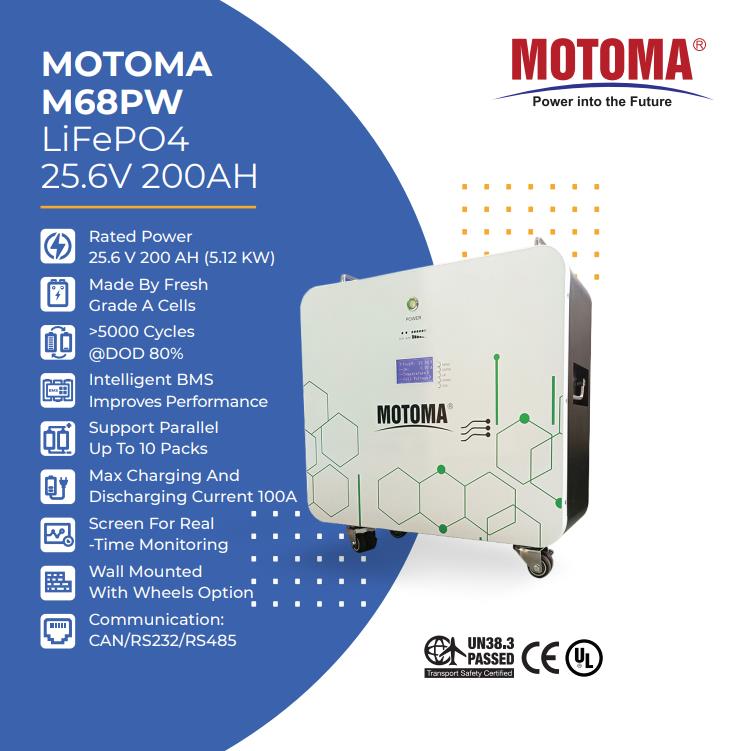
4️⃣ UN 38.3 — Battery Certifications for Shipping Safety

UN 38.3 Battery Certifications is your passport for global transport. No battery pack can legally cross borders without it.

Testing simulates:

  • High-altitude air cargo.
  • Thermal extremes.
  • Shock and vibration.
  • Crush and impact scenarios.

???? Warning: If your supplier can’t produce a valid UN 38.3 report, your shipment is grounded.

5️⃣ CE Marking — EU Market Access Battery Certifications

CE marking confirms compliance with essential European regulations for:

  • Electrical safety.
  • Electromagnetic compatibility.
  • Hazardous substance restrictions.

???? Pro tip: Always verify the Declaration of Conformity and the certifying lab’s credentials.

6️⃣ ISO 9001 / 14001 / 45001 — Manufacturing Excellence Matters

Even certified designs can fail if the factory lacks discipline. These ISO standards ensure:

  • Quality consistency (ISO 9001).
  • Environmental responsibility (ISO 14001).
  • Workplace safety (ISO 45001).

???? Pro tip: Factory audits should confirm these certifications are active and enforced.

???? Battery Certifications ≠ Foolproof Safety

Even with all the paperwork in place, real-world reliability demands more. A system can pass a lab test but fail in the field due to:

  • Production shortcuts.
  • Component substitutions.
  • Assembly errors.
  • Storage and transport damage.

That’s why professional buyers pair certification with:

  • Factory audits.
  • FAT (Factory Acceptance Tests).
  • Third-party inspections.
  • Pre-shipment quality control.

???? Real Safety = Certified Design + Verified Production Quality.

???? Final Thoughts: Buy Smart, Not Blind

In the world of energy storage, what you don’t know can hurt you. Certifications are your baseline protection — but don’t stop there.

When a supplier waves around cell-level reports and skips system-level tests, your project, your reputation, and your finances are all exposed.

Invest in the full picture:

✅ System-level certifications. ✅ Factory audits and quality control. ✅ Documentation verification.

Because safety, reliability, and performance are engineered — not assumed.

???? Need Expert Support?

I help global clients navigate the complexities of battery sourcing by:

If your next energy storage project demands flawless safety and compliance — let’s connect.

Conquering the Battery Bottleneck in UAV Technology

UAV

The hum of a drone, once a novelty, is now a ubiquitous sound echoing across industries. From delivering life-saving medical supplies to surveying vast agricultural landscapes, Unmanned Aerial Vehicles (UAV) are revolutionizing how we interact with the world. But behind the soaring promise of these aerial marvels lies a critical challenge: the battery. The quest for longer flight times, greater payload capacity, and reliable performance is perpetually tethered to the limitations of current battery technology. This blog post delves deep into the heart of this challenge, exploring the obstacles and the innovative solutions poised to redefine the future of UAVs.

The Silent Achilles’ Heel: Energy Density and Weight

Imagine a marathon runner burdened with lead weights. This is the reality for UAVs struggling with the energy density versus weight dilemma. Lithium-ion batteries, the current workhorse of the industry, offer a decent energy density, but the demand for longer, more robust flights necessitates ever-greater power storage. However, packing more energy into a battery inevitably increases its weight, creating a vicious cycle. Every extra gram translates to precious minutes shaved off flight time or a reduced payload capacity. For applications like long-range surveillance or heavy-lift cargo transport, this limitation is a significant bottleneck.

The need for a breakthrough is palpable. Researchers are exploring novel materials and chemistries, such as silicon anodes and solid-state electrolytes, to dramatically increase energy density without compromising weight. These advancements promise to liberate UAVs from their current constraints, enabling them to reach new heights and tackle more demanding tasks.

The Slow Fade: Battery Life and Performance Degradation

Like any electronic device, UAV batteries are subject to the inevitable process of degradation. Repeated charge and discharge cycles gradually diminish their capacity, leading to shorter flight times and reduced performance. This issue is particularly acute in high-demand applications where drones are subjected to frequent and intense usage.

The degradation is not merely a matter of inconvenience; it translates to increased operational costs and potential safety hazards. As batteries age, their internal resistance increases, leading to higher operating temperatures and a greater risk of thermal runaway. Predicting and mitigating this degradation is crucial for ensuring the long-term reliability and safety of UAV operations.

Advanced battery management systems (BMS) are playing a pivotal role in addressing this challenge. These systems monitor battery health in real-time, optimizing charging and discharging cycles to extend lifespan and prevent catastrophic failures. Machine learning algorithms are being employed to predict battery degradation patterns, allowing for proactive maintenance and replacement.

Weathering the Storm: Environmental Factors and Battery Performance

UAVs are increasingly deployed in diverse and challenging environments, from the frigid Arctic to the scorching deserts. Extreme temperatures, humidity, and altitude can significantly impact battery performance, posing a formidable obstacle to reliable operation.

Cold temperatures, for instance, slow down electrochemical reactions within the battery, reducing its capacity and discharge rate. In contrast, high temperatures can lead to overheating and thermal runaway, posing a significant safety risk. Humidity can accelerate corrosion and degradation, while altitude can affect battery cooling and performance.

Developing batteries that can withstand these environmental extremes is crucial for expanding the operational envelope of UAVs. Thermal management systems, advanced cooling techniques, and robust packaging are essential for ensuring reliable performance in harsh conditions.

Safety First: Mitigating the Risks of Lithium-Ion Batteries

The inherent risks associated with lithium-ion batteries, particularly overheating, fires, and explosions, are a major concern for the UAV industry. While these batteries offer high energy density, their volatile nature necessitates stringent safety measures.

Thermal runaway, a chain reaction that can lead to catastrophic failure, is a primary concern. This risk is exacerbated by factors such as overcharging, short circuits, and physical damage. Implementing robust safety features, such as thermal fuses, venting mechanisms, and flame retardant materials, is crucial for mitigating these risks.

Furthermore, stringent regulations and safety standards are essential for ensuring the safe operation of UAVs. The industry is actively working to develop and implement best practices for battery handling, charging, and disposal.

Charging the Future: Addressing Logistics and Efficiency

The logistical challenges of charging UAV batteries, particularly in remote or challenging environments, are often overlooked. Efficient charging infrastructure is crucial for maximizing operational uptime and minimizing downtime.

Traditional charging methods can be time-consuming, requiring lengthy periods of inactivity. This is particularly problematic for applications like emergency response or military operations, where rapid deployment is essential.

Innovative charging solutions are emerging to address this challenge. Wireless charging, fast charging technologies, and battery swapping systems are being explored to minimize downtime and enhance operational efficiency. Mobile charging stations and solar-powered charging systems are also being developed for deployment in remote locations.

The Balancing Act: Capacity and Discharge Rate

The delicate balance between battery capacity and discharge rate is another critical consideration for UAV designers. Capacity dictates the flight time, while discharge rate determines the power available for the drone’s motors. Finding the optimal balance is essential for achieving optimal performance.

A battery with high capacity but a low discharge rate may limit the drone’s ability to perform demanding maneuvers or carry heavy payloads. Conversely, a battery with a high discharge rate but low capacity may result in short flight times.

Advanced battery management systems are crucial for optimizing this balance, ensuring that the drone has sufficient power for its intended mission without compromising flight time.

The Dawn of Innovation: Alternative Battery Technologies

The limitations of lithium-ion batteries have spurred a search for alternative energy storage solutions. Solid-state batteries, hydrogen fuel cells, and metal-air batteries are among the promising technologies being explored.

Solid-state batteries, which replace the liquid electrolyte with a solid material, offer higher energy density, improved safety, and longer lifespan. 1 Hydrogen fuel cells, which generate electricity through a chemical reaction between hydrogen and oxygen, offer high energy density and zero emissions. Metal-air batteries, which use atmospheric oxygen as a reactant, offer extremely high energy density.  

While these technologies are still in their early stages of development, they hold immense potential for revolutionizing UAV battery technology.

The Future of Flight: A Collaborative Effort

Conquering the battery bottleneck in UAV technology requires a collaborative effort from researchers, engineers, and industry stakeholders. Investment in research and development, the establishment of industry standards, and the implementation of robust safety regulations are essential for unlocking the full potential of UAVs.

The quest for longer flight times, greater payload capacity, and reliable performance is not merely a technical challenge; it is a catalyst for innovation. As we push the boundaries of battery technology, we are not only enabling the next generation of UAVs but also shaping the future of aerial mobility. The sky is no longer the limit; it is the beginning of a new era.

The Dawn of a New Era: Unveiling the Power of Semi-Solid Lithium Batteries

Semi-Solid Lithium Batteries

The relentless pursuit of energy storage solutions has propelled us into a fascinating era of innovation. As we grapple with the limitations of traditional lithium-ion batteries, a groundbreaking technology is emerging: the semi-solid lithium batteries. This revolutionary advancement promises to redefine the landscape of energy storage, offering enhanced safety, increased energy density, and a pathway to a more sustainable future.

But what exactly is a semi-solid lithium battery? How does it differ from its liquid-electrolyte predecessors? And what are the implications of this technology for our energy-hungry world? Let’s delve into the intricacies of this fascinating innovation.

What is a Semi-Solid Lithium Battery?

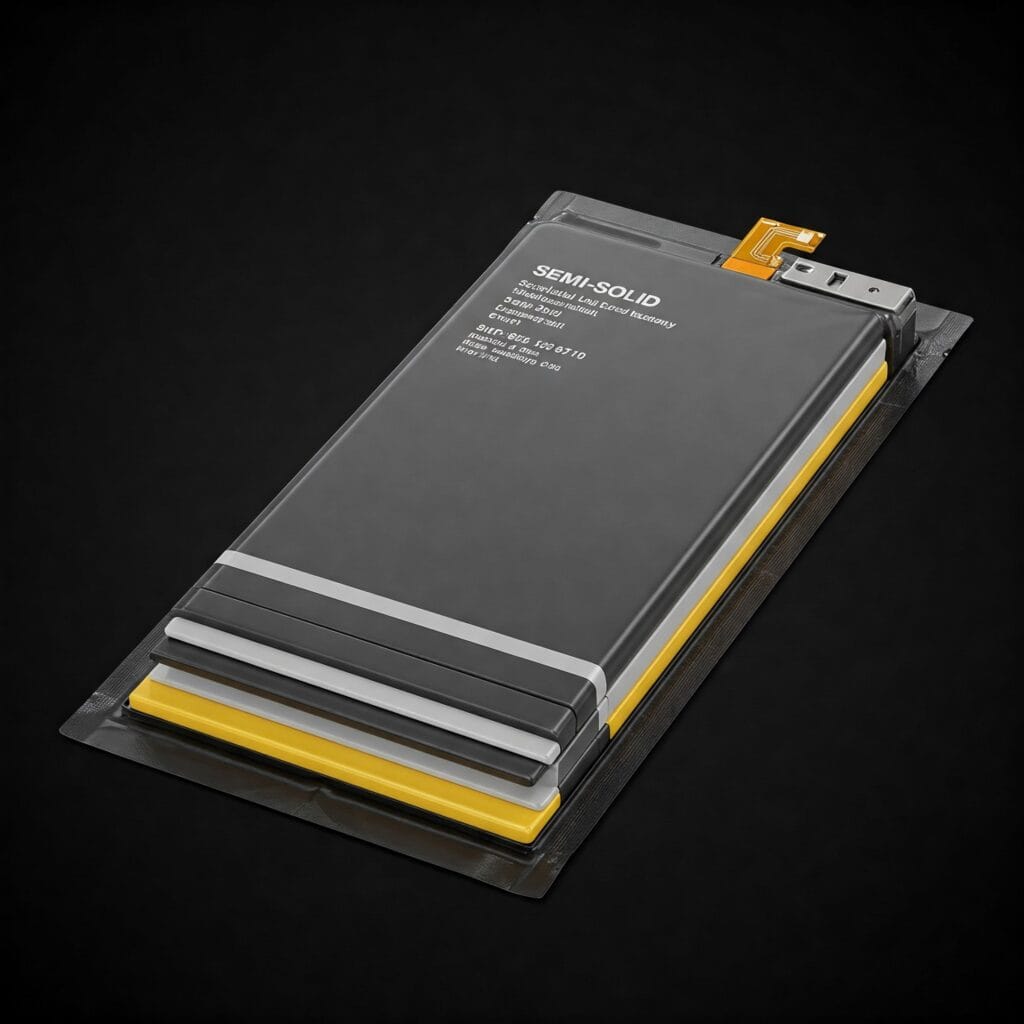
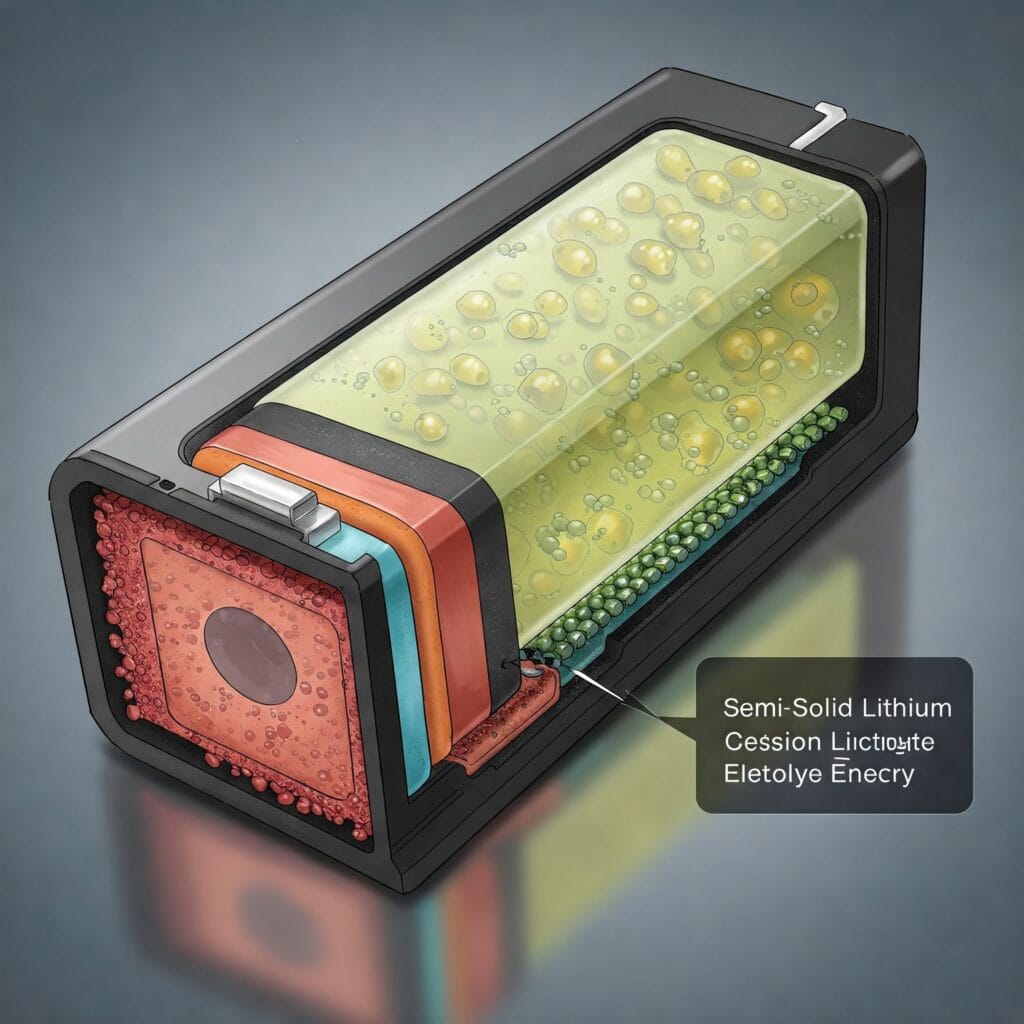
nstead of the familiar liquids or gels, semi-solid state batteries utilize a unique semi-solid electrolyte. This innovative approach, combining solid conductive materials with a liquid electrolyte, delivers tangible improvements over conventional lithium-ion designs, offering enhanced performance and reliability.

Understanding the Core: Bridging Liquid and Solid

To grasp the essence of semi-solid batteries, we must first understand the fundamental components of a traditional lithium-ion battery. These batteries rely on a liquid electrolyte, a conductive medium that facilitates the movement of lithium ions between the anode and cathode. However, this liquid electrolyte is also a source of vulnerability, prone to leakage and flammability, which can lead to catastrophic thermal runaway.

Semi-solid batteries, as the name suggests, bridge the gap between liquid and solid-state batteries. They replace a significant portion of the liquid electrolyte with a gel polymer electrolyte, a semi-solid material that possesses the ionic conductivity of a liquid but the structural stability of a solid. This gel electrolyte acts as a robust scaffold, enhancing safety and enabling the use of high-capacity electrode materials.

Semi-Solid Lithium Batteries

Key Advantages: A Leap Forward in Performance and Safety

The integration of a semi-solid electrolyte unlocks a plethora of advantages:

  • Enhanced Safety: The gel electrolyte significantly reduces the risk of leakage and thermal runaway. Its inherent stability mitigates the formation of dendrites, microscopic lithium structures that can pierce the separator and cause short circuits. This enhanced safety profile is paramount for applications where safety is non-negotiable, such as electric vehicles and aerospace.
  • Increased Energy Density: Semi-solid batteries enable the use of high-capacity electrode materials, such as silicon anodes and lithium metal, which offer significantly higher energy densities than traditional graphite anodes. This translates to longer driving ranges for electric vehicles, extended operating times for portable devices, and greater energy storage capacity for grid-scale applications.
  • Improved Cycle Life: The robust structure of the gel electrolyte minimizes electrode degradation and enhances the overall cycle life of the battery. This translates to a longer lifespan and reduced replacement costs.
  • Wider Operating Temperature Range: Semi-solid electrolytes exhibit greater stability across a wider temperature range, making them suitable for extreme environments.
  • Flexibility in Design: The semi-solid nature of the electrolyte allows for more flexible battery designs, enabling the creation of thinner, lighter, and more adaptable energy storage solutions.

Addressing Key Questions: Demystifying the Technology

Let’s address some common questions surrounding semi-solid lithium batteries:

Can semi-solid batteries achieve the same energy density as solid-state batteries?

While solid-state batteries hold the theoretical promise of even higher energy densities, semi-solid batteries offer a more immediate and practical pathway to significant improvements. They bridge the gap between current liquid-electrolyte batteries and future solid-state technologies, providing a substantial boost in energy density while maintaining manufacturability.

How does a semi-solid electrolyte enhance safety compared to a liquid electrolyte?

The gel polymer electrolyte acts as a physical barrier, preventing the rapid flow of liquid in case of damage. It also suppresses the formation of lithium dendrites, which are a major cause of short circuits. Moreover, the gel electrolyte is less flammable than liquid electrolytes, reducing the risk of thermal runaway.

What are the primary applications of semi-solid lithium batteries?

  • Electric Vehicles (EVs): Longer driving ranges, faster charging times, and enhanced safety are crucial for the widespread adoption of EVs. Semi-solid batteries are poised to revolutionize the EV industry.
  • Consumer Electronics: Smartphones, laptops, and other portable devices can benefit from increased battery life and improved safety.
  • Grid-Scale Energy Storage: Semi-solid batteries can play a vital role in storing renewable energy, ensuring a stable and reliable power grid.
  • Aerospace and Defense: The high energy density and safety of semi-solid batteries make them ideal for demanding applications in UAV (Drones), aerospace and defense.
  • Medical Devices: Implantable medical devices require safe and reliable power sources, making semi-solid batteries a promising solution.

The Power of Semi-Solid Lithium Batteries Usage: Transforming Industries and Lives

The impact of semi-solid lithium batteries will reverberate across numerous industries, transforming the way we power our world.

  • Electric Vehicles: Imagine electric vehicles with driving ranges comparable to gasoline-powered cars, eliminating range anxiety and accelerating the transition to sustainable transportation.
  • Renewable Energy Integration: Semi-solid batteries will enable the efficient storage of solar and wind energy, ensuring a stable and reliable supply of clean power.
  • Portable Electronics: Our smartphones, laptops, and other devices will enjoy extended battery life, freeing us from the constant need to recharge.
  • Medical Advancements: Implantable medical devices will become more reliable and long-lasting, improving the quality of life for patients.

The Importanceof Semi-Solid Lithium Batteries: A Catalyst for a Sustainable Future

The development of semi-solid lithium batteries is not merely a technological advancement; it’s a crucial step towards a sustainable future.

  • Reducing Carbon Emissions: By enabling the widespread adoption of electric vehicles and renewable energy, semi-solid batteries will play a pivotal role in reducing greenhouse gas emissions and mitigating climate change.
  • Enhancing Energy Independence: By diversifying our energy storage options, we can reduce our reliance on fossil fuels and enhance energy independence.
  • Driving Economic Growth: The development and manufacturing of semi-solid batteries will create new jobs and stimulate economic growth.
  • Improving Safety and Reliability: Enhanced safety and reliability will make energy storage solutions more accessible and trustworthy.

The Road Ahead: Overcoming Challenges and Embracing Innovation

While the potential of semi-solid lithium batteries is immense, challenges remain. Cost reduction, scalability, and long-term stability are key areas of focus for ongoing research and development.

However, the rapid pace of innovation in battery technology suggests that these challenges will be overcome in the near future. As we continue to push the boundaries of materials science and engineering, semi-solid lithium batteries are poised to become a cornerstone of our energy landscape.

In conclusion, semi-solid lithium batteries represent a significant leap forward in energy storage technology. Their enhanced safety, increased energy density, and improved cycle life make them a compelling solution for a wide range of applications. As we embrace this transformative technology, we are paving the way for a cleaner, more sustainable, and more powerful future. The age of semi-solid batteries is dawning, and its potential is nothing short of revolutionary.