
Travel

Learn 7 Crucial Tips and Be a master Traveler


Planning for a trip is important, but just as important as planning is being prepared when you’re actually on the trip. Mmhmm! So first let’s start with planning your trip. There are a couple of things you can do in advance of your travel to make things much smoother. 

Tip 1: Get familiar with your route options.

This is a web and mobile tip, and it’s a great one for planning a road trip. From maps.google.com, after pulling your directions, tap on options underneath the destination. Here, you can choose to avoid highways, toll roads, and ferries.


This is really helpful if you don’t want to rack up a huge bill on the toll roads! Now, something else cool about these web features is that you can also adjust the distance units too – so if you’re already on your trip and that country uses km, you can switch to that mode for better accuracy.


There are lots of sites like Ask Reader That can help you learn and ask questions with travel experts. And like I said, some of these route options can be done from your maps app on a mobile device as well. This time, you’d tap the menu icon and select your route options.

Tip 2: When it comes to planning a trip is to create shared Google Maps.

This is not sharing your location – which I’ll get to later, but rather sharing entire Maps. For this, you’ll use Google My Maps. It’s really easy – here’s how to do it. The first thing you’ll do is head to google.com/mymaps and if you’re not logged into your Google account already, you’ll be prompted to do so.


Now you can see I already have a couple of shared maps created here, but it’s really easy to create your own custom shared Google Map. So click on ‘create a new map’, and from here, make sure you title your map. So, if you’re planning your trip to Florence, Italy, you could make that your title.


Then, add a little description if you like and click save. Now, in the search bar at the top, type in the name of the city you’re going to go to and hit enter to bring that map up. Now here’s where things get fun! We still have this untitled layer here – which is the map as we see it right now, so you could name the layer the city name or points of interest, or however, you want to organize it.


With this layer selected, using the hand tool, we’ll move around and zoom in, and when we find a place we want to drop a pin on, we’ll switch to the ‘add marker’ option and click to drop the pin.


Rename your marker to keep things organized. You can do this for any place of interest by the way, a restaurant, museum, whatever. To keep things super organized, I recommend clicking the paint bucket and selecting an icon that best describes the location you’re pinning.


You can also change the color of the marker here too. So, once you have an entire map full of all your points of interest, it’s time to share it. This is why this is so important for planning a trip. QnA Sites is a good option for finding travel-related answers.

Also Read: Delta Airlines Telephone Number


You could share this custom map with those you’re traveling with, you could share it with family back home so they know where you’ll be traveling to and your rough itinerary, and you can even create maps like this and share it with friends who are traveling to your favorite city – what a great way to share the best things to do in any given city in an interactive way.


So, once your map has all the points of interest your heart could desire, simply click the share icon, and in this popup, you’ll have the option to email it directly to your contacts or share it via a link. It’s really that simple!


So now that the planning is done, it’s time to actually take the trip, and luckily there are so many great Google Maps features to help your planned travel go smoothly.


Tip 3: Search for needs, not addresses.

Did you know you don’t just have to search addresses in Google Maps? You can search for a need. It’s true!


So if you’re visiting somewhere and want to see all the grocery stores or restaurants or coffee shops, or gift shops, you can either select the icon from the left-hand side of the map, or you can just type that in the search bar, and hit the search icon and look at that, you’ve got dropped pins on all the coffee shops near you, as well as a list on the left-hand side.


If you click on one, the panel on the left will change to display the business info for that dropped pin. Now, these next few tips are for mobile app pleasure.

Tip 4: Save your parking location.

Yes, please. A handy Google Maps feature indeed. To save your parking spot, just tap your blue location icon on the map. Then select, set as parking location. Now look, Google Maps displays that you are parked near here.


Never forget your parking spot again! So what if you’re not driving and you need to hail a ride instead? 


Tip 5: hail a ride directly from your Google maps app.

When you input a destination, scroll the transit options underneath and select the icon that looks like a figure hailing a ride. Google will tell you the different ride-sharing services supported and how long of a wait for each one, as well as the price.

Tip 6: is to share your location with someone else.

Tap your location dot on the map and select ‘share your location.


You’ll have the option to share for a set amount of time, or until you manually turn it off. Your location is then stored in a viewable link you can share in multiple different ways – like w contacts, via a messenger service, or email. If you share with a friend that you’re meeting, they’ll be able to see your location and then share theirs as well, so you both can see where each other are on the map.


Not only will you share your location, but it’s going to show your battery percentage as well. You can also drop a pin somewhere on a map that you want to meet someone, or let someone know you’ll be at that spot later. Just tap and hold on the map and you will see a red pin.

Then at the bottom, select the Share option to share the position of the dropped pin with someone.


Tip 7: Download your Google Maps for offline navigation.

That’s right, no wifi or data, no problem. This is the number one most handy feature for when I’m traveling. So, from the city, you’re in, or you will be traveling to next, select the menu icon, then just tap ‘download offline map’.


If you want the full tutorial on downloading offline maps you can click here or watch the video linked below. Remember, this is just the first installment of a whole series of Google Travel tips I’ll be putting together for you.


If you have any specific google travel tip questions, don’t hesitate to ask in the comments below. So what are your favorite Google Maps tips for travel? Let me know in the comments below. As always, thanks so much for watching, if you liked this video, I want to know so give it a like, a share, or leave that comment below.


You can click right about here to subscribe to my channel and right here and here for more Google Maps videos.

Leaning tower of Pisa Facts

The leaning tower of Pisa is placed in the Pisa city of the Tuscany region in western Italy. This tower is the last element of the ceremonial complex in the Piazza Dei Miracoli. In addition, this medieval architectural project, which celebrates Italy culture, features a Cathedral complex housing four more monuments – The Cathedral of Pisa, the Bell Tower of Pisa, the Monumental Cemetery, and the Baptistry. We bring some amazing facts about the Leaning Tower of Pisa that you would not have encountered before. So don’t forget to get your Italy visa online to enjoy this fascinating tour to browse these amazing structures in Pisa city.

Unique architectural style & design

A medieval architecture masterpiece built in the Romanesque style. The architects who were involved in designing and building this tower are Bonanno Pisano, Gherardo di Gherardo, Giovanni Pisano, and Giovanni di Simone with the first phase attributed to Bonanno Pisano and Gherardo di Gherardo, and the second phase attributed to Giovanni Pisano and Giovanni di Simone.

The leaning tower was part of a bigger project.

Don’t be surprised here. The leaning tower was not a standalone, independent project but a part of a bigger project that was conceptualized to represent the bell tower of the Cathedral of Santa Maria Assunta. The architectural complex involves four other structures: the Cathedral, its Bell Tower, the cemetery, and the Baptistry. This leaning tower was the last structure built on the site.

It took 2 centuries to construct this tower.

It took an incredible 199 years approximately to complete the entire construction of the leaning tower of Pisa. The construction kicked off in 1173 and winded up in 1372. The tower has witnessed several critical battles in the region, so the construction was halted intermittently. The construction of this tower was split into three phases, with the first phase lasting till 1272. During phase 2, the battle of Meloria took place, halting the construction again. From 1284 to 1319, the last floor was added to the tower completing the final phase of the construction. The bell chamber officially marked the construction as completed several years later, in 1372.

The original reason behind the construction

The last element in the monumental architectural complex in the Squares of Miracles was initially created to envy Pisa city among the tourist population. However, the 11th century saw the successful sacking of the Sicilian Palermo, and the governor of Pisa released an order to start the construction of the Cathedral complex.

The initial structure was not meant to be lean.

This tower’s initial structure and design were to build a straight vertical tower. However, the titling or leaning of this tower when the second floor was completed and the bad soil underneath it made it tilt or lean towards the north. The area’s terrain is majorly made of clay, making it not solid enough to hold on to such a tall building. In addition, the tower foundations were created only 3 meters deep. Many researchers have also concluded that if the construction of the leaning tower of Pisa was not done in phases, we might not have a vertical leaning structure today. In fact, the three phases allowed the soil to settle down below else; this structure would have cured itself much earlier.

The inclination of the Tower of Pisa

You may not agree, but the Leaning Tower of Pisa was initially inclined only by 0.2 degrees when the second-floor construction was completed. When the bell chamber was completed in 1372, the tilt reached a total tilt of 1.6 degrees. Towards the 1990s, the lean further increased to 5.5 degrees. Due to several restoration efforts, the tower’s tilt has been reduced to only 3.97 degrees.

Multiple leaning towers in Pisa

There are several leaning towers in Pisa, but none has caught the attention of the tourist world as much as the leaning tower of Pisa, mainly due to its clay soil. The unstable nature of the clay soil has led to several leaning structures in the area built during the same period. As a result, there are close to 10 leaning structures in Pisa city, with the bell towers of the Church of St. Michele Dei Scalzi and the Church of San Nicola being the notable ones.

A UNESCO-certified World Heritage Site

In 1987, UNESCO certified this complex site as a World Heritage Site. This leaning tower, along with the four buildings part of the overall complex at the Square of Miracle, are excellent examples of medieval architectural design and was instrumental in inspiring and influencing the Italian monument art between the 3 centuries when it was built (1173 – 1399)

The tower is curved and leaning.

The tower is not only lean but also curved across several points within its structure. The engineers went on to fix the first tilting of the tower went and built the upper floors taller than the rest leading the structure to be curved at certain points of its structure.

You will have to climb 3-century steps to reach the top

Enjoy picturesque views of the entire Pisa city when you climb to the top of the Pisa tower. But to enjoy the spectacular view, you must climb 296 steps with no lift or escalator available. Climbing up 300 steps will not be an easy task. However, with the effort you take to climb these steps, the result is totally worth it.

Huge bells decorate the landscape of the tower’s top.

The leaning tower has seven huge bells on its top, conceptualized to represent the nearby Cathedral of Santa Maria Assunta bell tower. Each bell on top represents and corresponds to the seven musical notes. However, the bells have not rung since the last century. In fact, many engineers have concluded that the vibrations caused by the bell may comprise the structure and make the structure leaner than before.

Length of the Leaning tower of Pisa

The completed tower was 60 meters and approximately 14,500 tonnes. The height is 56.67m on the highest and 55.86m on the lower sides. The outer diameter of the tower base is 15.484 m, with the width of the base walls being 2.4384m.

We all know the existence of this unique tower. The tilting of this tower has made it even more popular in the tourist world than in some Italian cities. Discover unique facets of the gorgeous square of Piazza Dei Miracoli (Square of Miracles) on getting your Italy visa online. You can connect with a reliable travel agent who can partner with you through the entire Italy visa online journey.

Kasol camping must visit destination

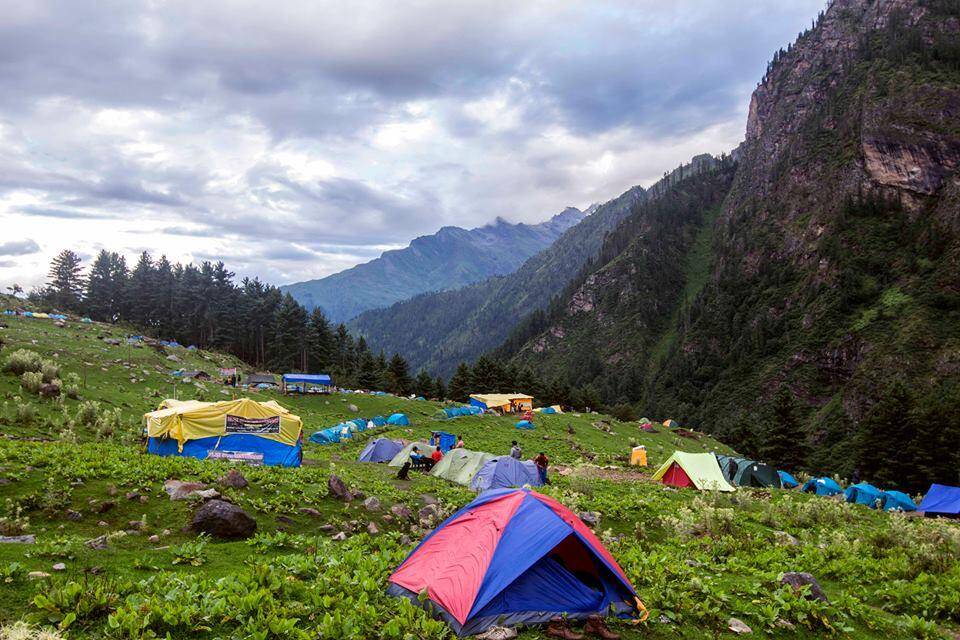
Camping is one of the favourite recreational activities of elites and youth. It involves overnight stay away from the rush of modern cities into a natural one in pursuit of activities providing you enjoyment. During camping, tourists love to enjoy other short-term recreational activities like trekking and sightseeing. When you spend a few days in nature you get a lot to learn about yourself and mother nature. The experience that you get during camping is both physically and intellectually stimulating and has the greatest effect on your body. One of the well-known hotspots is Kasol for camping in Himachal Pradesh. It is also referred to as mini Israel due to a high percentage of Israeli tourists here. Kasol is a Hamlet at an altitude of 1580 m,in the district Kullu of Himachal Pradesh on the banks of Parvati river, in the Parvati Valley. Kasol has been developed and every type of accommodation is available as the village has gained popularity among tourists, but to enjoy the destination in a true sense, camping remains the best option for you.

Kasol camps are the go-to weekend destination for the people of the national capital, Delhi as it is located only at a distance of 570 km. The camps allows you to try some adventure activities like Manala trek and Kasol Kheerganga trek and soak yourself in the beauty of this small Himalayan Hamlet. During camping in Kasol you enjoy the pleasing Parvati river, explore the local areas and their exotic cultures, and stay at camps with the amazing views of the Parvati Valley. There is a huge range of camping options in Kasol from basic camps to tents with all amenities and facilities, you just have to select the one that suits your budget and preferences. There is no-where else you could find such experience of staying in the appealing natural and scenic setting of the Parvati Valley. Here is a list of some good camps in Kasol :

Kabila camps :

It is one of the well-known Kasol camps famous for their hospitality and adventure. They offer a variety of camps like luxury Swiss tents with all amenities and also alpine and domes camps which are on the economical side, with a huge on-site cafe offering some delicious food. The campsite is located 4 km from Kasol town and 7 km from Gurudwara Manikaran Sahib. There are packages like Luxury camping escape (5days), exploring Kasol(7days), Kasol adventure (2days) and with varying amenities availed, and the number of days of stay the cost per person also varies.

Mahadev Riverview camps:

Situated in Chhalal, 1.3 km from the centre of Kasol, in the Mahadev Riverview camps you can find luxury tents with all modern amenities and stunning views of the mountains. For people who seek economical camping options,there are options for them as well. This campsite also offers some lip-smacking local and international cuisines. It will take you just 20 min of walk from the city centre( 1.1km) to reach this beautiful campsite, and the most proximate Kullu Manali Airport is situated at a distance of 20.6 km.

The cost of tents at Mahadev review cams depends on the date, rate, number of guests, etc.

Parvati Woods camp :

Another amazing campsite in Kasol all surrounded by dense pine trees and mighty Himalayas l is the Parvati Woods camp. They have Swiss tents with attached washrooms, room service, extra-long beds, private sit-out areas and a huge cafe with accommodation of a maximum of 50 people at a time. The bonfire, music and delicious food at the camps are sure to make your time at Parvati Woods camp a memorable one. Room types range from mountain view type 2 family rooms and suites. This campsite is situated at a distance of 3.5 km before the main Kasol market and just 50 metres from the Parvati Valley. so offer local villages to use apart from various recreational activities like trekking, fishing mountaineering and cycling.

Orchard camps:

Located at a distance of just 5 minutes from Kasol market area there is this another great camping option at Orchard camps. During your stay at this campsite, you can enjoy activities like hiking and sightseeing. The amenities that you will get at Orchard camps include hot spring bath, garden, and mountain view. The Kasol Orchard camps are located from Manikaran Gurudwara and 10 minutes drive away from Naina Bhagwati Mandir.

As the name suggests, the tents at Orchard camps offer the garden view and are well equipped with modern facilities. It’s a perfect place for both adventurers and solace seekers. Due to its location, you can explore a lot of Kasol during your stay at this campsite.

Jalpa camps :

Located in Choj, 2 km from centre, the Jalpa campsite offers a peaceful escape into the lap of peaceful nature. This campsite is pet friendly and offers some amazing vegetarian foods for its visitors. It is among the famous campsites of Kasol with the mesmerizing views of the hilly mountain range and hippie vibes of Kasol. You can enjoy a terrace, outdoor dining area, and a hot spring bath at Jalpa camps. Apart from these activities like bike tools walking to cycling hiking fishing are also available.

Other campsites are Aman camps, Parvati view riverside camps and so on.

Best time for camping Kasol

Kasol is beautiful throughout the year and the best time differs with different travellers. Some travellers like to visit Kasol in winters as at this time the entire Parvati Valley is covered with a thick layer of snow and the experience of camping becomes more exotic in the evening with music and bonfire on the chilly nights. During the months from March to June i.e. during summers, tourists from all around the world visit Kasol. As summers are considered to be the best time for trekking, hiking, and camping. Avoid going to Kasol during monsoons as it may get dangerous due to road blockages and floors in different parts of Kasol.

Cost of Camping in Kasol

The cost of camping in Kasol depends on various factors like duration of camping, campsite chosen, season, adventure activities and amenities availed. Every campsite in Kasol has their own pricing depending on the above factors it may start from INR and go up to INR 7 to 8 thousand per person but Kasol never fails anyone. It has something for every type of traveller.

How to reach Kasol

Kasol is connected by almost every mode of transportation. The nearest airport is Kullu Manali Airport, also known as Bhuntar airport it is located at a distance of 30 km from Kasol and you can hire a cab or taxi to take you from the airport to your campsite. The nearest railhead is Joginder Nagar railway station located 144 km from Kasol. one of the best ways to travel to Kasol is by roadways, how to reach Kasol by road you have to get on to NH3 which is the main route that will take you to Kasol on its way to Manali. However if you are travelling from Delhi, you just have to catch a Volvo bus from Delhi’s Kashmiri gate ISBT, these buses run on a daily basis and it takes 11-12 hours to reach Kasol.