
Buddies Buzz Blog

In the Buddies Buzz blog, you'll find the latest news about the community, tutorials, helpful resources, and much more! React to the news with the emotion stickers and have fun!

🔍 Why Good Salespeople Don’t Just Say “Try My Product”

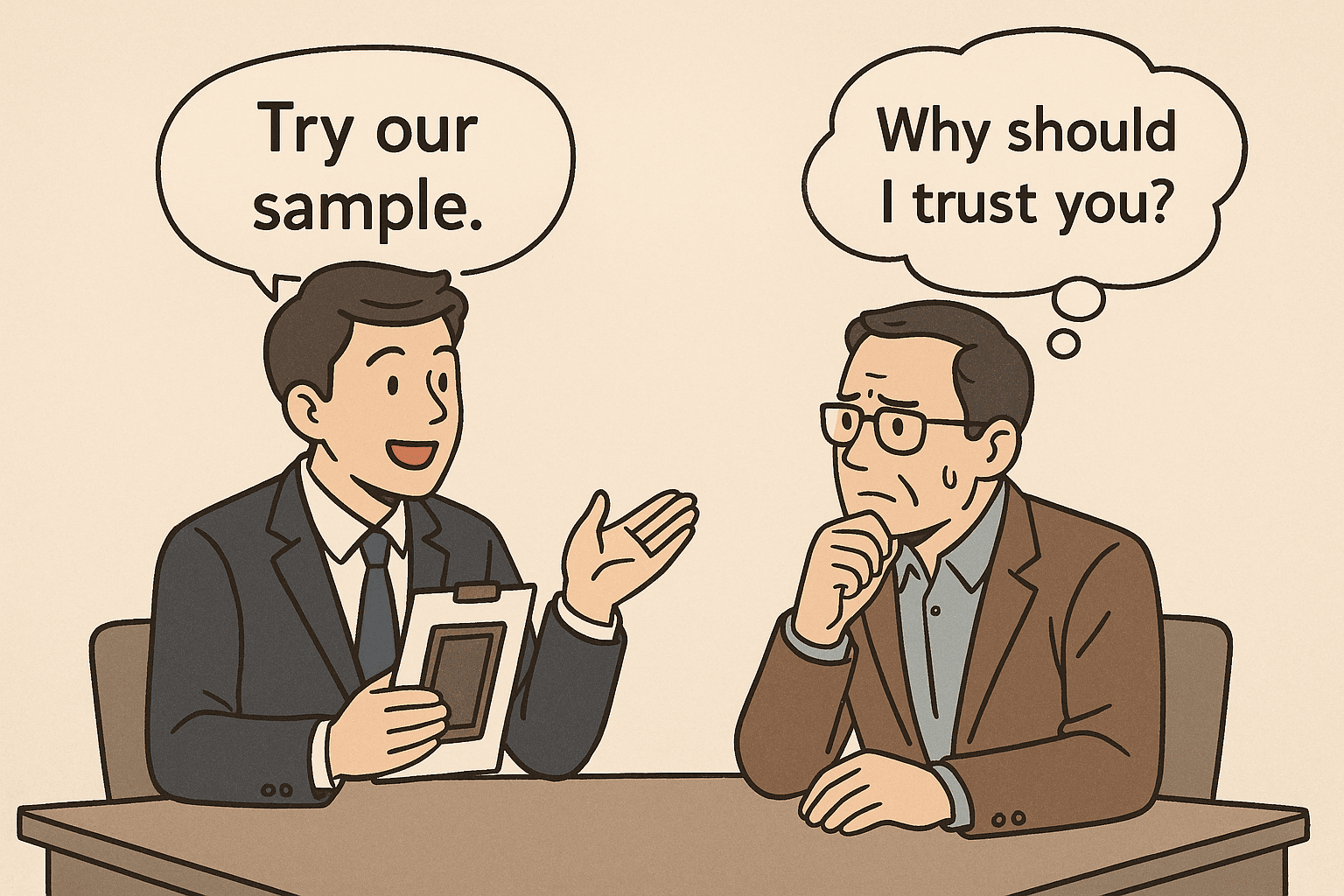
Try our Product

Stop Saying “Just Try our Product” – It Doesn’t Work Anymore

Every week, I get messages from salespeople who’ve seen the products I deal with. Their first line?

“We also have the same model. Buy a sample and test it.”

Or they say:

“Try our product. Our quality is good.”

That’s it. That’s their pitch.

But here’s the truth: buyers don’t change suppliers just because someone else claims to have a similar product.


Changing a Supplier Is a Big Decision

Let me make this clear:
No business owner or sourcing manager wakes up thinking, “Let me try a new supplier today.”
It doesn’t happen.

Here’s when we even think about changing a supplier:

  • The current supplier is delivering bad quality
  • There are frequent complaints from end customers
  • The supplier has a rude or careless attitude
  • Orders are always delayed
  • The price is too high with no added value
  • The supplier’s issues are hurting our business or reputation

Otherwise, why would we risk changing a smooth-running system? Peace of mind in business is priceless.


Salespeople Are Missing the Point

Most sales reps don’t try to understand what the client really needs.
They don’t bother to ask:

  • What is working well with your current supplier?
  • What are the problems you’re facing?
  • What are your goals with this product?
  • How do you define “good quality”?

They jump straight to selling without listening.

And when they don’t even know the buyer’s pain points…
How can they offer a real solution?


“Good Quality” Is Not a Sales Strategy

Every supplier says the same thing:

“Our quality is good.”

But here’s the problem:

Saying “my product is good” is like saying “I’m a good person.”
It means nothing without proof.


If You Want to Win the Client, Do This Instead:

1. Understand Their Business Deeply

Before you pitch anything, do your homework.

  • What industry is the client in?
  • What type of clients do they serve?
  • What is their product positioning—premium, mid-range, or budget?

If you don’t know this, your pitch will always sound generic and weak.


2. Learn About Their Current Supplier

Ask smart questions:

  • What’s going well with your current supplier?
  • What challenges are you facing lately?
  • Are there areas where you want better performance?

This opens the door for meaningful conversation.


3. Present Specific Advantages of Your Product

Not general claims. Be clear and sharp.

Say things like:

  • “Our model offers 10% higher energy efficiency, which reduces heating.”
  • “We can guarantee 20-day lead times, even in peak season.”
  • “We offer real-time production tracking with photo/video updates.”

Now you’re showing value. Now you’re giving the client a reason to think.


4. Give Logical Reasons to Try You

Saying “Try a sample” isn’t enough.
Say why they should try your sample.

Example:

“Your current model has a 15% complaint rate in the field. Our model uses a different cell technology which cuts that in half. I can show you test data.”

This makes the offer relevant, not random.


5. Make It Low Risk for the Buyer

Help them feel safe:

  • Offer small trial orders
  • Provide warranty support
  • Show case studies
  • Be available and responsive

When a client knows they won’t be left hanging, they’re more willing to listen.


6. Samples Cost Time, Money, and Trust

Salespeople often say:

“Just try our product’s sample.”

But they forget one thing:
It’s not free for the buyer.

When a client agrees to test a sample, they must:

  • Pay for the product
  • Pay for international shipping
  • Pay customs duty and tax
  • Spend time testing
  • Take attention away from current work
  • Risk internal conflict if the trial goes wrong

All this, just because someone says “our quality is good”?

Why should they trust you that easily?

Clients are careful because they’ve been burned before—fake specs, over-promising, poor follow-up, no after-sales support.

So if you’re not giving a strong reason, a real advantage, and clear value, they won’t waste time and money.


Relationships Drive Business – Not Just Products

In this industry, people work with people.
If the client and their current supplier have a good relationship, you must respect that.

Don’t try to break it. Instead, position yourself as a better choice if things ever go wrong.
Be professional. Be patient. Be ready.


Final Thoughts

📌 A client will never change suppliers just because your sample “looks similar.”
📌 They’ll only change when they feel something is missing—and you can clearly show how you’ll fill that gap.
📌 The key is: Learn. Listen. Understand. Solve. Then Sell.


Let’s Redefine Sales

Don’t be another “me too” supplier.
Be the partner who studies the client’s business like it’s your own.
That’s how you win real, long-term, profitable deals.

DC-Coupled Battery Storage: The Game-Changer in Modern Energy Systems

DC-coupled battery storage

As the world transitions towards renewable energy, the need for smarter, more efficient energy storage solutions has never been greater. One innovation rapidly gaining attention is DC-coupled battery storage systems—a powerful configuration that optimizes energy capture and storage while reducing costs and complexity.

Whether you’re a project developer, EPC contractor, or a commercial energy user, understanding how DC-coupled systems work and their benefits can significantly impact your project ROI and system performance.


What is DC-Coupled Battery Storage?

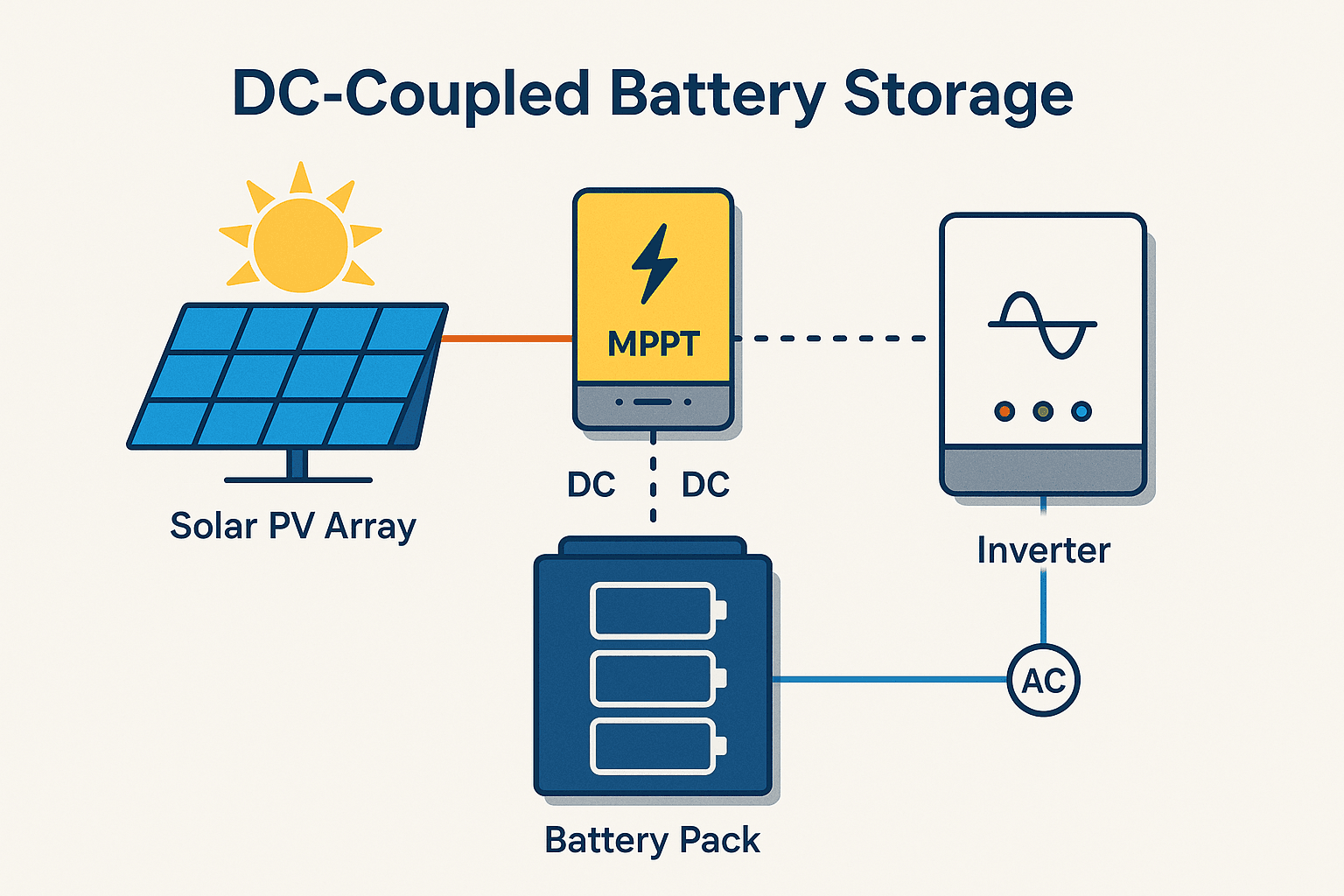
In simple terms, DC-coupling means that both the solar PV system and the battery storage system are connected on the same direct current (DC) bus before conversion to alternating current (AC) for end-use or grid export.

The Core Components:

  • Solar PV Array
  • MPPT (Maximum Power Point Tracker)
  • DC-DC Converter
  • Battery Pack
  • Inverter (DC to AC conversion)

Unlike AC-coupled systems where solar and battery systems have their own inverters, DC-coupled systems share one inverter, allowing more streamlined energy management.


Why DC-Coupled Battery Storage is Gaining Momentum

1. Higher Efficiency

DC-coupled systems avoid multiple DC-to-AC and AC-to-DC conversions, which means:

  • Less energy loss during charging/discharging
  • Improved round-trip efficiency (often 5–10% higher than AC-coupled systems)

2. Lower System Costs

  • Fewer inverters and balance of system (BoS) components
  • Reduced wiring and installation complexity
  • Lower maintenance needs

3. Better Solar Energy Harvesting

Excess solar energy that might otherwise be lost during curtailment is efficiently directed to the battery in real-time, especially in net-zero or off-grid systems.

4. Seamless Energy Management

  • Integrated control logic handles solar generation, load demand, and storage needs automatically
  • Easier integration with energy management systems (EMS)

5. Ideal for Hybrid and Off-Grid Projects

DC-coupled setups shine in areas with unstable grids or no grid access at all—perfect for:

  • Microgrids
  • Remote telecom stations
  • Rural electrification
  • EV charging stations

DC-Coupled vs AC-Coupled: A Quick Comparison

FeatureDC-CoupledAC-Coupled
InverterSharedSeparate
Conversion LossLowerHigher
CostGenerally LowerHigher
ComplexityLowerHigher
Battery ChargingDirect from DCVia AC
Best ForNew InstallationsRetrofits

Bottom Line:
DC-coupling is better suited for new builds and optimized hybrid systems, while AC-coupling may still have relevance in retrofit applications.


Design Considerations for DC-Coupled Systems

âś… Battery Type Compatibility

  • LFP (Lithium Iron Phosphate) is most commonly used for safety and stability
  • Ensure your battery supports high-voltage DC connections and works well with your MPPT

âś… Charge Controllers and DC/DC Converters

  • Must be appropriately sized and matched to your PV capacity and battery bank
  • Efficient MPPT tracking is critical for optimizing solar input

âś… Sizing and Load Analysis

  • Assess load profile, peak demand, and required autonomy
  • Consider oversizing solar to maximize battery charging even in cloudy conditions

âś… Inverter Selection

  • Should support hybrid operation modes: grid-tied, off-grid, or both
  • Look for high efficiency ratings (above 96%) and smart communication capabilities

âś… System Monitoring

  • Invest in robust monitoring software with real-time alerts and remote troubleshooting
  • Ensure compatibility with smart meters, EMS, and BMS

Challenges and Limitations

Even though DC-coupled systems offer strong advantages, they also come with specific limitations:

❌ Complexity in Retrofitting

Upgrading an existing solar system to DC-coupled storage can be technically difficult and often not cost-effective.

❌ Limited Flexibility for Modular Expansion

Adding more capacity later may require system redesign or inverter upgrades.

❌ Battery Chemistry Sensitivity

Some DC-coupled setups may only work with specific battery chemistries, unlike AC systems which are more plug-and-play.


Real-World Applications of DC-Coupled Systems

Commercial & Industrial (C&I) Installations

Companies using rooftop solar benefit from reduced peak demand charges, better load shifting, and improved energy self-consumption.

Agricultural Microgrids

Farms with irrigation pumps, cold storage, and other heavy machinery benefit from reliable DC-coupled energy solutions.

Remote Areas and Islands

Communities without grid access rely on DC-coupled systems for round-the-clock power, often paired with diesel as a last-resort backup.

EV Charging Stations

DC-coupled storage enables ultra-fast charging, reduces grid dependence, and lowers energy costs during peak hours.


Regulations and Safety Standards

When deploying a DC-coupled battery system, always consider:

Compliance Standards:

  • IEC 62933 for safety and performance
  • UL 9540 and UL 1973 for battery systems
  • NEC 690.10 for PV + Storage installations

Fire and Thermal Safety

  • Implement multi-layered BMS and fire suppression
  • Design proper ventilation and temperature controls

Cybersecurity

If remotely accessible, your EMS and BMS should be cyber-hardened against potential threats.


Who Should Choose DC-Coupled Systems?

You should consider a DC-coupled system if:

  • You are designing a new renewable energy project
  • You want maximum solar utilization
  • Your project is in a remote or off-grid area
  • You seek higher system efficiency and fewer hardware redundancies
  • You’re deploying commercial-scale or utility-grade solutions with advanced EMS/BMS

Final Thoughts: A Smarter Way to Store Power

DC-coupled battery storage is more than just a technological shift—it’s a strategy for the future. With energy costs rising and grid instability increasing, businesses and communities that invest in efficient, intelligent systems today are positioning themselves for resilience and energy independence tomorrow.

It’s not just about storage. It’s about control, savings, and sustainability. And in that race, DC-coupled systems are winning.


Need Help Choosing the Right System?

As a New Energy Consultant with over 13 years of experience in China’s energy sector, I help clients:

  • Source high-quality DC-coupled batteries
  • Verify factory certifications
  • Design efficient hybrid systems
  • Ensure safety compliance and project ROI

???? Let’s connect on LinkedIn or reach out for a free consultation!


Why Dealing With a Company That Neglects Its Sales Team Is a Risk to You

Sales Team

Behind Every Bad Client Experience Is a Poorly Trained Sales Team: Imagine this: you approach a company expecting professional advice, timely communication, and clear solutions. Instead, you get confusion, vague responses, and poor follow-through.

That’s not just bad luck—it’s often the result of a company that doesn’t invest in training its sales team.

And the consequences aren’t limited to the company itself. As a client, you’re the one who ends up paying the price—sometimes quite literally.


Salespeople Represent the Company’s Soul

Sales teams are the bridge between a company and its customers. They carry the brand’s message, solve problems, and guide clients toward the right solutions. If this bridge is weak, everything else crumbles.

When a company refuses to invest in training its sales team, it’s not just neglecting employees—it’s failing its customers.

Untrained or undertrained salespeople can:

  • Give inaccurate product information
  • Misunderstand client needs
  • Fail to manage expectations
  • Overpromise and underdeliver
  • Miss crucial follow-ups

This results in frustration, wasted time, and poor ROI for clients who came in good faith expecting professionalism.


It’s Too Risky to Deal With Such Companies

Let’s be blunt: working with a company that ignores sales training is risky business.

Clients often end up:

  • Making wrong purchases
  • Suffering implementation delays
  • Receiving inadequate post-sale support
  • Being passed around between confused staff

The stakes are especially high in industries like energy, technology, engineering, and international trade, where every decision involves serious investment.

A single poor interaction with an untrained salesperson can cause financial loss, project delays, and deep regret.
When sales teams aren’t educated, confident, or empowered, they can unintentionally burn the very hands that feed the company—the clients.


The Real Problem: A Lack of Trust and Vision

You might wonder why some companies would avoid investing in their most critical team.

Here’s the harsh truth: they’re afraid.
Afraid that if they train their salespeople, they’ll leave.

This reveals a deeper issue:

  • A culture of fear, not empowerment
  • A mindset focused on costs, not growth
  • No strategy for employee retention
  • Lack of confidence in their own leadership

A company that doesn’t trust its people enough to develop them simply doesn’t trust itself. That kind of leadership is short-term, reactive, and harmful.


A Cost-Cutting Mindset That Backfires

It always starts with budget cuts:

  • “We can’t afford training right now.”
  • “They’ll figure it out on the job.”
  • “What if they leave after getting trained?”

What happens next?

  • Miscommunication with clients
  • Loss of credibility
  • Reduced repeat business
  • Internal blame games
  • Stagnant or declining sales

This mindset doesn’t save money. It costs more in the long run by damaging brand reputation and client relationships.


Clients Want Experts, Not Guesswork

As a client, you should expect expert guidance, not guesswork.

Would you trust a surgeon who never updated their skills?
Then why trust a company whose salespeople aren’t trained to understand your needs, products, or goals?

Clients deserve:

  • Clear, accurate information
  • Timely and professional communication
  • Transparent sales processes
  • Honest recommendations
  • Post-sale accountability

Only companies that invest in their people can offer these consistently.


What Smart Companies Do Differently

Forward-thinking companies understand that investing in people drives client satisfaction and revenue. They:

  • Train their teams regularly
  • Equip staff with the right tools and product knowledge
  • Celebrate learning and improvement
  • Build loyalty through respect and development
  • Create consistency across every touchpoint

This culture shows. Clients feel it from the very first interaction.


Final Thoughts: Be Cautious Who You Work With

In today’s fast-paced and competitive world, clients must be more selective than ever.

Don’t be blinded by fancy presentations or discounted prices.
Ask yourself:

  • Does this company seem to invest in its people?
  • Do the salespeople know what they’re talking about?
  • Do I feel supported and understood?

If not, walk away. You’re not just buying a product—you’re entering a relationship.

And trust is built on training, communication, and leadership.