

Buddies Buzz Blog

In the Buddies Buzz blog, you'll find the latest news about the community, tutorials, helpful resources, and much more! React to the news with the emotion stickers and have fun!

What is an AC Coupled Energy Storage System?

AC coupled energy storage system

AC Coupled Energy Storage System: As the world rapidly shifts toward renewable energy, managing power generation, storage, and consumption efficiently is critical. Solar and wind power are clean but intermittent. That’s where energy storage systems (ESS) play a key role. Among the most practical configurations for integrating storage into existing systems is the AC coupled Energy storage system.

This blog explores AC coupled Energy storage systems in detail—what they are, how they work, their advantages, disadvantages, and where they fit best in modern energy infrastructure.


What is an AC Coupled Energy Storage System?

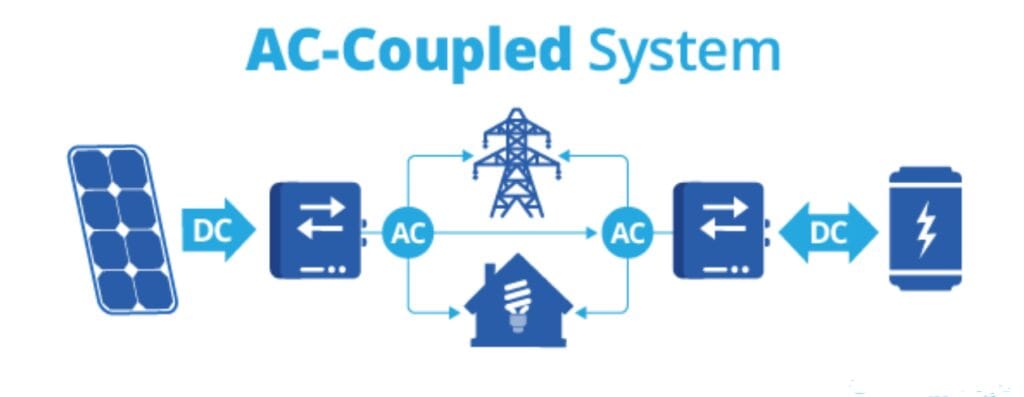
An AC coupled Energy storage system connects batteries to the grid or a solar PV system via an inverter on the AC side—as opposed to DC coupling, where batteries share a common inverter with the PV system.

In AC coupling, both the solar inverter and the battery inverter operate independently but feed into the same alternating current (AC) bus. This makes it easier to retrofit batteries into an existing grid-tied solar system or to operate in hybrid or microgrid environments.


How Does AC Coupling Work?

Here’s a simplified workflow of an AC coupled system:

  1. Solar panels produce DC power, which is converted to AC by a solar inverter.
  2. This AC power either goes to the grid or is consumed by local loads.
  3. A separate battery inverter (bi-directional) connects the battery system to the AC bus.
  4. The battery inverter handles charging (from grid or solar) and discharging (to supply power when needed).

The Energy Management System (EMS) coordinates energy flow, prioritizing self-consumption, peak shaving, or backup supply.


Key Components of an AC Coupled Energy Storage System

  • Solar PV System
  • String Inverter (or Microinverters)
  • Battery Storage Unit
  • Battery Inverter / Hybrid Inverter
  • Energy Management System (EMS)
  • Smart Meter / CTs
  • Grid Connection (optional in off-grid mode)

Advantages of AC Coupled Energy Storage Systems

Easy Retrofitting

AC coupling is perfect for adding storage to existing grid-tied PV systems. There’s no need to replace or modify the original solar inverter.

Modular & Scalable

Battery capacity and power rating can be scaled independently of the solar system. This flexibility is crucial for growing energy needs.

Higher Efficiency in Off-Grid Mode

In AC microgrids, AC coupling is more efficient because loads, generation, and storage all operate on the AC side—avoiding multiple DC-AC conversions.

Seamless Backup Power

With proper control systems, AC coupled setups can provide uninterruptible power supply (UPS) functionality during grid outages.

Technology-Agnostic

You can use different brands for solar and battery inverters, giving project owners freedom of choice.


Challenges and Limitations for AC Coupled Energy Storage System

⚠️ Multiple Conversions Lead to Losses

DC → AC (solar inverter) → DC (battery charge) → AC (load/grid) involves extra conversion steps, resulting in lower round-trip efficiency compared to DC coupling.

⚠️ More Complex Control & Synchronization

Two inverters must work in harmony. This requires advanced EMS and precise control algorithms, especially for grid-forming or islanding applications.

⚠️ Higher Upfront Cost

More hardware (separate inverters) and control systems can mean higher CapEx, though the ease of installation might offset some of these costs.

⚠️ Limited DC-Only Charging

You can’t charge batteries directly from the PV’s DC power. This could be a problem when grid power is down and solar output is high.


Use Cases of AC Coupled Energy Storage Systems

Residential Retrofits

Homeowners with existing solar PV systems can add storage without modifying their inverter setup.

Commercial Buildings

Businesses seeking peak shaving, demand charge reduction, or backup power benefit from the modularity of AC coupled systems.

Microgrids & Off-Grid Projects

Rural or island microgrids often use AC coupled configurations to manage multiple energy sources and loads.

Utility-Scale Hybrid Plants

Some utility-scale ESS installations use AC coupling to enable independent control of solar and storage assets.


AC Coupling vs. DC Coupling: Quick Comparison Table

FeatureAC CoupledDC Coupled
Inverter SetupSeparate solar & battery invertersShared hybrid inverter
EfficiencyLower due to more conversionsHigher due to fewer conversions
Retrofit FriendlinessExcellentPoor
ComplexityHigher (multiple devices)Lower (single device)
ScalabilityHighModerate
Charging from PV During OutageNo (unless advanced EMS)Yes
Battery Sizing FlexibilityHigherLimited to inverter capacity

Recent Technological Trends

  • Grid-forming inverters are now being integrated into AC coupled systems, allowing them to maintain grid frequency in island mode.
  • Smart EMS algorithms are improving system efficiency and coordination between inverters.
  • Hybrid inverters with AC-coupled inputs are emerging, combining the best of both worlds.
  • Battery vendors are offering plug-and-play AC coupled kits, making installations faster and more standardized.

Conclusion: Is AC Coupling Right for You?

AC coupled Energy storage systems offer unmatched flexibility, especially when integrating with existing solar setups or in microgrid environments. While the efficiency is slightly lower due to extra conversion steps, the ease of retrofitting, modular design, and robust backup power capabilities make AC coupling a strong contender in the energy storage space.

As the renewable energy landscape evolves, AC coupled systems will continue to play a crucial role—especially in applications where flexibility, scalability, and compatibility matter more than absolute efficiency.


Call to Action: Let’s Design the Right System for Your Needs

Are you looking to upgrade your solar system with energy storage? Or planning a microgrid project? I help clients in the new energy sector source, design, and implement optimal storage systems tailored to their goals—be it residential, commercial, or utility-scale.

???? Contact me today to explore whether AC coupling is the right choice for your project!

🔥 11 Common Sales Mistakes New Salespeople Make — And How to Avoid Them

Common Sales Mistakes

Why do most new salespeople fail? It’s usually not because of a lack of opportunities—but because of basic, preventable sales mistakes.

Whether you’re just starting your sales journey or leading a team, avoiding these common sales mistakes is crucial. In this post, we’ll explore the biggest reasons why many new or unprofessional salespeople fail, and how to turn those errors into winning habits that boost sales performance.

1. Poor Client Greetings – A Bad Start

A weak or cold greeting is one of the first mistakes new salespeople make.

What’s the Sales Mistake?

Jumping into a sales pitch without a proper greeting or polite introduction. It shows a lack of people skills and professionalism.

How to Sell Effectively:

Always greet the client warmly, use their name, thank them for their time, and make the opening positive. This simple move sets the tone for trust.

2. Not Asking About the Client’s Business

One of the worst bad sales techniques is not understanding who you’re selling to.

Common Sales Mistake:

Failing to ask the client about their company, products, problems, or goals.

Sales Tip:

Ask thoughtful questions like:

  • What products do you currently use?
  • What’s your biggest sourcing challenge?
  • Who are your main customers?

Salespeople who ask smart questions close smarter deals.

3. No Research Before the Meeting

This is one of the most damaging sales mistakes to avoid.

Mistake:

Walking into a sales call or sending emails without researching the client’s company, website, or product range.

Fix:

Spend 15–30 minutes researching. Use tools like LinkedIn, the company website, or even Google Translate if there’s a language barrier. Knowing your client = earning their trust.

4. Can’t Promote Their Own Company

Just saying “We are factory, good price” is not a sales strategy. It’s a red flag.

Unprofessional Salesperson Habit:

They don’t know how to express their company’s unique value proposition.

Solution:

Learn to explain:

  • What makes your company reliable?
  • What certifications do you hold?
  • How are your products different?

This is a key part of sales training for new salespeople.

5. Never Highlight Product Advantages

Common Sales Mistake:

New reps forget to compare their products to competitors or show how they’re better than what the client is already using.

Fix:

Highlight benefits like:

  • Better quality
  • Faster delivery
  • Lower return rates
  • Customization options

This helps clients clearly understand why switching to your product is worth it.

6. Don’t Understand Their Own Product

Yes, it still happens. One of the most damaging unprofessional salesperson habits is not knowing the products they’re trying to sell.

Mistake:

They can’t explain the product’s features, benefits, or technical specifications.

Sales Tip:

Master your product. Know the advantages and limitations. Be ready to teach the client and answer questions confidently.

7. Know Nothing About Competitors

If the client knows your competitor better than you do—you’re already losing.

Common Sales Mistake:

Ignoring the competition or pretending they don’t exist.

How to Improve Sales Performance:

Study your top competitors. Know their pricing, quality, delivery times, and key selling points. Use that knowledge to position your offer more effectively.

8. Lazy Selling – Just Sending a Catalogue

Common Sales Mistake:

Sending a PDF and saying “Please check, let me know if you need anything.”

This is the definition of bad sales technique.

Fix:

Send the catalogue with personalized suggestions.

For example:
“Based on your market, I suggest looking at Model A, C, and D on pages 3–5. I can also send samples and pricing if you’re interested.”

This builds relevance and trust.

9. Weak or Negative Language

“If you need anything, contact us.”

These words show lack of confidence and motivation.

Common Sales Mistake:

Using soft, unsure phrases in sales conversations or emails.

Sales Tip:

Use confident, action-based language:

This change alone can double your response rate.

10. No Follow-Up = No Deal

The most deadly mistake: not following up.

Common Sales Mistake:

Many salespeople send one email and disappear. No updates. No reminders. No relationship.

Fix:

Follow up with value. Not just “Any update?”

Follow-up is where real sales happen.

11. Disappearing Mid-Chat Without Apology

Imagine you’re having a conversation with a supplier—asking questions, discussing details—and suddenly… they disappear. No warning. No “brb.” Just gone. Hours later, they’re back like nothing happened. No apology. No follow-up.

Mistake:

Unprofessional salespeople vanish during chats without explanation—and when they return, they never say sorry.

Why It’s a Problem:

This kind of attitude shows one thing clearly:
They don’t care about the client or the client’s business.

It breaks trust instantly. No client wants to work with someone who treats their time as unimportant.

How to Fix It:

Respect the conversation. If you need to step away, communicate:

“I need 10 minutes to check this info—will get back to you shortly.”

And if something urgent came up and you were pulled away, say:

“Apologies for the gap in our chat. Thank you for waiting.”

Sales is about relationships—and respect builds relationships.

Conclusion: Avoid These Mistakes, Sell Smarter

These 11 common sales mistakes can cost you deals, damage your brand, and destroy client relationships. The good news? Every one of them is easy to fix.

Start today by improving your greetings, client research, product knowledge, and follow-up habits. Make these changes, and you’ll not just improve your closing rate—you’ll earn long-term trust, loyalty, and referrals.

Beijing: A Majestic Journey Through China’s Imperial and Modern Heart

Beijing

Welcome to Beijing—the beating heart of China’s past, present, and future. As one of the world’s oldest capital cities, Beijing seamlessly blends the grandeur of imperial dynasties with the thrill of modern progress. From walking the Great Wall to sipping tea in ancient hutongs, Beijing is a living museum and a modern metropolis rolled into one.

Whether you’re a history lover, culture seeker, architecture enthusiast, or culinary adventurer, Beijing offers something unforgettable. In this comprehensive guide, we’ll explore why Beijing is world-famous, where to go, what to do, how to reach it, and how to make the most of your trip.


Why Is Beijing Famous?

1. Capital of China for Over 800 Years

Beijing has been the political and cultural capital of China since the Yuan Dynasty. It has hosted emperors, revolutions, and now, global conferences and world leaders.

2. Home to Seven UNESCO World Heritage Sites

Beijing boasts an extraordinary concentration of heritage sites including the Forbidden City, Temple of Heaven, and parts of the Great Wall.

3. The Gateway to the Great Wall

Sections of the Great Wall such as Badaling and Mutianyu are easily accessible from the city.

4. Cultural and Culinary Epicenter

From Peking Duck to opera, calligraphy to kung fu, Beijing is where traditional Chinese culture thrives.

5. Modern Metropolis

Beyond history, Beijing is home to cutting-edge architecture like the Bird’s Nest Stadium, high-speed rail hubs, and one of the world’s busiest airports.


How to Reach Beijing

1. By Air

  • Beijing Capital International Airport (PEK) is the main gateway and the second busiest airport in the world.
  • Beijing Daxing International Airport (PKX) serves as the newer hub with futuristic architecture and high-speed rail links.

2. By Train

  • Bullet trains connect Beijing to cities like Shanghai, Xi’an, Guangzhou, Harbin, and Hong Kong.
  • Main stations: Beijing South, Beijing West, Beijing Railway Station, and Beijing Chaoyang.

3. By Road

  • Well-connected highways allow road access from nearby cities and provinces.
  • Intercity buses are available but not recommended for long-distance travel compared to high-speed trains.

4. By Metro

  • Beijing’s subway system is vast, affordable, and efficient—perfect for navigating the sprawling city.

Top Places to Visit in Beijing

1. The Great Wall of China

The symbol of China’s might, the Wall snakes across mountaintops and deserts. Popular sections near Beijing:

  • Badaling: Tourist-friendly, accessible by train.
  • Mutianyu: Less crowded, lush scenery, great for hiking.
  • Jinshanling: Wild and rugged, ideal for adventurous treks.

2. Forbidden City

This massive imperial palace complex was home to 24 emperors during the Ming and Qing dynasties. It’s now the Palace Museum, housing ancient artifacts, paintings, and royal secrets.

3. Tiananmen Square

One of the world’s largest public squares, it’s a place of historical significance and home to the Monument to the People’s Heroes, Mausoleum of Mao Zedong, and National Museum of China.

4. Temple of Heaven

Built in 1420, this Taoist complex is where emperors prayed for good harvests. The round Hall of Prayer for Good Harvests is an architectural masterpiece.

5. Summer Palace

A sprawling imperial garden with pavilions, lakes, and temples, perfect for a relaxing afternoon. Kunming Lake and the Long Corridor are standout features.

6. Beihai Park

One of China’s oldest and best-preserved imperial gardens. Rent a boat, enjoy the view, or visit the White Dagoba.

7. 798 Art Zone

A hip, contemporary art district filled with galleries, cafes, and street art—showcasing modern Beijing creativity.

8. Hutongs

Traditional narrow alleys that reflect old Beijing life. Visit Nanluoguxiang, Yandai Xiejie, and Shichahai for a taste of old charm.


Top Things to Do in Beijing

1. Climb the Great Wall at Sunrise

Avoid the crowds and catch the first light over the majestic stone wall—a once-in-a-lifetime experience.

2. Watch a Traditional Peking Opera

The Liyuan Theatre is the best place to witness this art form with costumes, singing, and martial arts.

3. Try Beijing Duck

A visit isn’t complete without crispy-skinned Peking Duck at Quanjude or Da Dong restaurants.

4. Join a Tai Chi Session

Early mornings in parks like Jingshan Park are perfect for observing or participating in local tai chi, fan dancing, or calligraphy.

5. Cycle the City Walls or Hutongs

Rent a bike and explore Beijing’s lesser-seen side at your own pace.

6. Shop at Silk Market or Panjiayuan

For souvenirs, antiques, and crafts, these markets offer everything from jade jewelry to painted fans.


Best Time to Visit Beijing

Spring (March–May)

  • Pleasant temperatures and blooming flowers.
  • Best time for outdoor activities like visiting gardens and temples.

Autumn (September–November)

  • Ideal weather and fall foliage.
  • Less smog and more blue skies.

Summer (June–August)

  • Peak tourist season with high heat and occasional rains.
  • Expect crowds at major attractions.

Winter (December–February)

  • Cold but less crowded.
  • Great for skiing in nearby resorts or enjoying hot pot.

Local Cuisine You Must Try

Beijing’s cuisine reflects northern Chinese flavors—hearty, savory, and diverse.

Must-Try Dishes:

  • Peking Duck – Served with pancakes, scallions, and hoisin sauce.
  • Zhajiangmian – Noodles with soybean paste and vegetables.
  • Hot Pot – Especially popular in winter with spicy or herbal broths.
  • Luzhu Huoshao – A traditional dish made with pork offal and bread.

Snacks to Explore:

  • Tanghulu (sugar-coated hawthorn)
  • Jianbing (Chinese crepes)
  • Baozi (steamed buns)

Where to Stay in Beijing

Luxury:

  • The Peninsula Beijing
  • Waldorf Astoria Beijing
  • Rosewood Beijing

Mid-Range:

  • Hotel Kapok (near Forbidden City)
  • Prime Hotel Beijing Wangfujing

Budget:

  • Happy Dragon Alley Hotel
  • Peking Youth Hostel (Hutong area)

Travel Tips for Beijing

  • Download a translation app like Pleco or use WeChat Translate for communication.
  • VPN: Needed to access Google, WhatsApp, and Instagram. Get it before entering China.
  • Subway over taxis: Avoid traffic and get around easily using the metro.
  • Cashless society: Learn to use Alipay or WeChat Pay. Some areas still accept cash.
  • Cultural etiquette: Dress modestly when visiting temples; be respectful when discussing history.

Off-the-Beaten-Path Destinations in Beijing

1. Gubei Water Town & Simatai Great Wall

A charming replica of an ancient town near a wild section of the Wall—stunning at night with lanterns and river reflections.

2. Fragrant Hills Park

Perfect during autumn for leaf viewing and panoramic hikes.

3. Beijing Ancient Observatory

Built in the Ming dynasty, it showcases ancient Chinese astronomy.

4. Caochangdi Art Village

An alternative to 798, less commercial, and home to avant-garde artists.

5. Ming Tombs

Explore the resting places of 13 emperors with grand architecture and the Spirit Way lined with stone statues.


Suggested 3-Day Itinerary

Day 1

  • Tiananmen Square
  • Forbidden City
  • Jingshan Park
  • Wangfujing Street for dinner

Day 2

  • Great Wall (Mutianyu or Jinshanling)
  • Hot Pot dinner in Sanlitun
  • Optional: Night view from Olympic Park

Day 3

  • Temple of Heaven
  • Summer Palace
  • 798 Art District
  • Peking Duck dinner

Final Thoughts: Beijing Is Timeless

To visit Beijing is to travel through dynasties and into the future. It’s a place where emperors ruled, philosophers pondered, artists flourished, and revolutions brewed. Yet it’s also where high-speed trains zip past, skyscrapers glitter, and a global youth culture pulses through its veins.

Beijing is not just the political capital of China—it’s the emotional core of a nation with 5,000 years of history. It will challenge, surprise, and inspire you.