

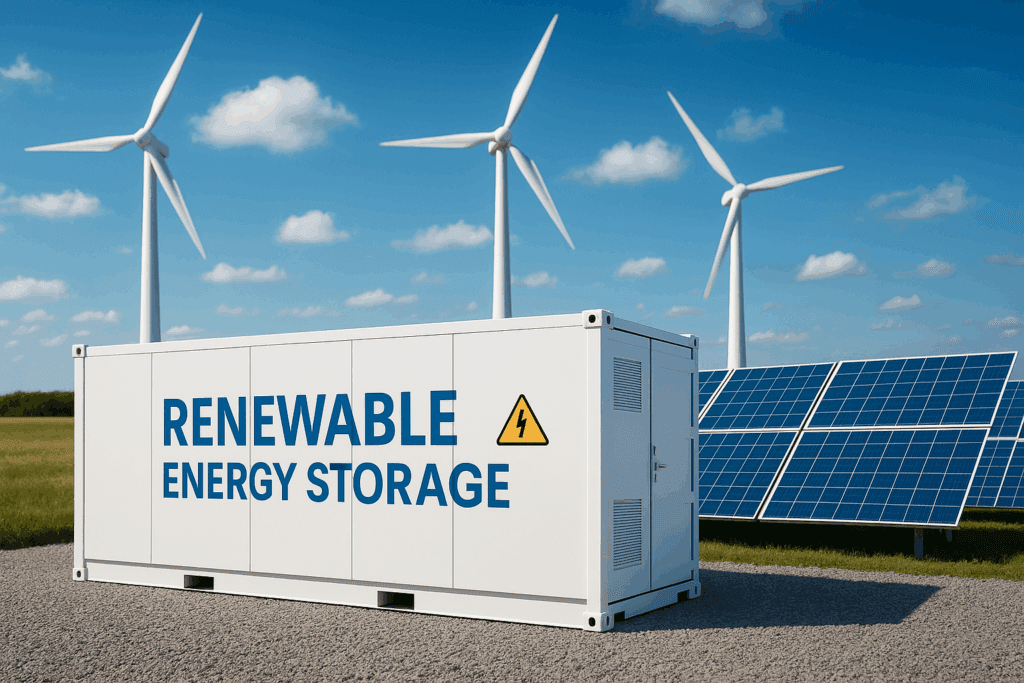
The future of energy isn’t just green—it’s smart, flexible, and resilient. While renewable sources like solar and wind dominate headlines, their true power is only unlocked when paired with effective renewable energy storage systems. Without storage, renewable energy remains an inconsistent and underutilized asset. With it, we gain control, reliability, and true sustainability.
Let’s explore how renewable energy storage is reshaping the global energy landscape and driving us toward a carbon-neutral world.
Why Energy Storage Matters
Renewable energy is inherently intermittent. The sun doesn’t shine at night, and wind patterns are unpredictable. This variability creates a significant challenge: how do we store excess energy for use when production dips?
That’s where energy storage becomes vital.
Energy storage systems (ESS) absorb surplus energy during peak production and release it when demand spikes or production drops. This balance is critical for maintaining grid stability, reducing dependence on fossil fuels, and ensuring continuous power availability—even during outages.
Types of Renewable Energy Storage Technologies
Modern renewable storage solutions span several technologies. Each plays a unique role in supporting the grid and renewable power systems:
1. Battery Energy Storage Systems (BESS)
BESS are the most popular and rapidly evolving storage technology. They store electrical energy in chemical form and are ideal for both small- and large-scale applications.
- Lithium-ion batteries dominate due to their high energy density and fast response times.
- LFP (Lithium Iron Phosphate) and NMC (Nickel Manganese Cobalt) batteries are commonly used in solar and wind power storage.
- Semi-solid and solid-state batteries are emerging with improved safety and energy density.
2. Pumped Hydro Storage
This is the oldest and most established storage method. Water is pumped uphill during low demand and released through turbines during high demand.
- Offers long-duration storage
- Best for utility-scale applications
- Requires suitable geographic conditions
3. Thermal Energy Storage
This stores energy in the form of heat, often using molten salts or other materials. It’s commonly used with concentrated solar power (CSP) systems.
- High efficiency
- Ideal for industrial and utility sectors
4. Compressed Air Energy Storage (CAES)
Energy is stored by compressing air in underground caverns. During peak demand, air is released to generate electricity via turbines.
- Long life cycles
- Suitable for grid-level storage
Benefits of Renewable Energy Storage
When paired with renewables, storage solutions offer unparalleled advantages for individuals, businesses, and governments:
✅ Energy Independence
Store your own solar or wind energy and reduce reliance on the grid.
✅ Grid Stability
BESS smooths out fluctuations, stabilizing voltage and frequency in real time.
✅ Peak Shaving & Load Shifting
Avoid high energy charges by using stored energy during peak hours.
✅ Backup Power
Energy storage provides uninterrupted power during blackouts or grid failures.
✅ Lower Carbon Emissions
Stored renewable energy displaces fossil-fuel-based backup generators, reducing carbon footprints.
Key Applications of Renewable Energy Storage
????️ Residential Systems
Homeowners with rooftop solar often pair it with a small battery system for energy security and savings.
???? Commercial & Industrial (C&I)
Factories and businesses use storage to manage demand charges and protect critical operations.
⚡ Grid-Scale Storage
Governments and utilities deploy massive BESS installations to balance the grid, integrate renewables, and defer costly infrastructure upgrades.
???? Remote & Island Communities
Energy storage eliminates diesel dependency and enables 100% renewable microgrids in remote locations.
The Future of Renewable Storage: What’s Coming Next?
As storage technology advances, we are witnessing rapid cost reductions, improved battery chemistries, and smarter energy management systems.
- AI-driven EMS (Energy Management Systems) are optimizing when and how stored energy is used.
- Second-life EV batteries are being repurposed for stationary storage, reducing waste and costs.
- Hydrogen storage and flow batteries are being explored for ultra-long-duration storage.
Governments are also recognizing the value. From the U.S. to China to the EU, policies now include incentives, mandates, and funding for energy storage deployment.
Challenges to Overcome
Despite the promise, a few challenges remain:
- High upfront costs of some storage solutions
- Recycling and disposal of batteries
- Supply chain concerns around lithium, cobalt, and other materials
- Need for standardized regulations and safety protocols
The good news? Industry innovation is addressing all these issues head-on.
Conclusion: Storage Unlocks the Full Potential of Renewables
Energy generation alone cannot solve the climate crisis. To truly transition to a clean energy future, we must store renewable energy intelligently and efficiently. Renewable energy storage is no longer optional—it’s the cornerstone of modern power systems.
Whether you’re a homeowner looking for energy security or a business aiming to cut costs and emissions, renewable energy storage is the solution you’ve been waiting for.
Invest in storage. Power the future.