

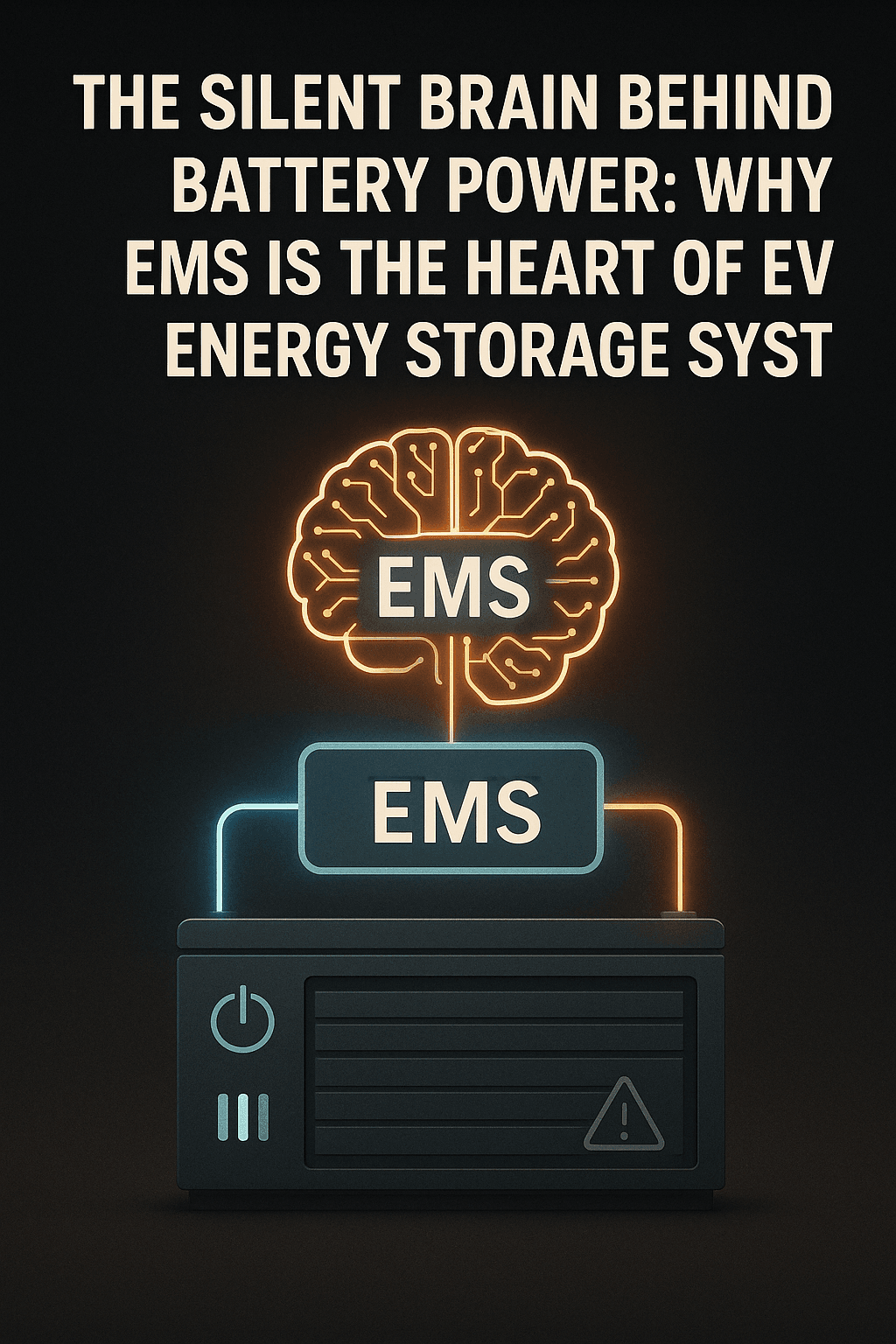
In the world of energy, we often admire the power, but rarely acknowledge the brain behind it. While battery cells, BMS, and PCS receive most of the attention in an energy storage system, there exists an unsung hero—the Energy Management System (EMS). Quiet, invisible, yet incredibly powerful—Energy Management System is the central nervous system of every energy storage solution.
In a rapidly electrifying world, where outages cost millions, renewable sources fluctuate, and grid stability is paramount—Energy Management System plays a decisive, life-saving role.
If you’re investing in battery systems, building an ESS, or managing a smart grid—understanding Energy Management System isn’t optional. It’s essential.
What is EMS (Energy Management System)?
At its core, an EMS is a sophisticated control system that monitors, manages, and optimizes the energy flow in a battery energy storage system (BESS).
Think of it like this:
- The Battery is the Heart
- The BMS (Battery Management System) is the Nerve
- The Energy Management System is the Brain
It connects everything—solar panels, inverters, batteries, grid, and loads—orchestrating power flows with intelligence and precision.
Key Functions of an Energy Management System:
- Real-time energy monitoring and analytics
- Load forecasting and energy optimization
- Charge/discharge scheduling
- Peak shaving and load shifting
- Integration with solar, wind, grid, and diesel
- Demand-side management
- Grid interaction & revenue optimization
Why EMS Matters in Energy Storage Systems
1. Because Power Without Control is Chaos
A high-capacity battery without Energy Management System is like a sports car without a driver.
Yes, it can go fast—but it can also crash. Hard.
Energy Management System controls when to store energy, when to release it, and how to do it safely. It decides:
- When to charge from solar
- When to sell power back to the grid
- When to avoid grid usage during peak prices
Without Energy Management System, energy decisions are blind and reactive, leading to inefficiencies, losses, or even system failure.
2. The Key to Profitability
Energy is money. EMS is how you make more of it.
For commercial and industrial setups, Energy Management System can save thousands to millions by:
- Reducing peak demand charges
- Enabling participation in grid services
- Selling energy when prices are high
- Minimizing energy waste and downtime
Energy Management System helps energy Storage systems become revenue-generating assets, not just storage units.
3. Your Guardian Against Failures
Every battery system carries risks—thermal runaway, overcharging, deep discharge, communication failures.
While BMS protects the battery at the cell level, EMS protects the entire ecosystem.
It ensures that:
- Charging/discharging cycles are safe
- Energy flow remains balanced
- Alarms and corrective actions are triggered
- PCS, inverters, and grid settings are synchronized
Energy Management System is your safety commander, reducing the risk of fire, blackout, and equipment failure.
4. Enables Smart Integration with Renewables
Renewables are the future. But they’re also unpredictable.
The sun doesn’t always shine. The wind doesn’t always blow.
Energy Management System allows you to:
- Predict renewable output using AI & weather data
- Prioritize solar or wind over grid use
- Smooth out power fluctuations
- Store surplus energy for night-time or low-supply periods
In short, Energy Management System makes clean energy dependable.
5. It’s the Brain of Smart Grids
We’re moving toward decentralized, intelligent energy systems—smart homes, smart grids, and VPPs (Virtual Power Plants).
In this world, Energy Management System is your passport.
It communicates with:
- Grid operators
- Aggregators
- Utility APIs
- Building Battery Management Systems (BMS)
- Internet of Things (IoT) platforms
It enables autonomous decision-making—a future where your system acts in real-time, based on external signals and internal logic.
Real-Life Use Case: EMS in Action
Industrial Park in Southeast Asia
An industrial complex installed a 5MWh battery system with solar panels. Initially, without Energy Management System, they saw:
- Frequent overcharging
- High peak demand penalties
- Poor system performance
After Energy Management System integration:
- Peak demand reduced by 40%
- Monthly savings: over $25,000
- ROI achieved in 18 months
The Energy Management System monitored real-time prices, weather, and load data—automatically deciding when to store, sell, or shift energy usage.
That’s not just smart—that’s transformational.
Types of EMS Platforms
- On-Premise Energy Management System
- Installed locally
- Low latency
- Used in data-sensitive environments
- Cloud-Based Energy Management System
- Accessible remotely
- Uses AI & big data
- Easy to update & scale
- Hybrid Energy Management System
- Combines both local and cloud intelligence
- Ideal for mission-critical sites
Choosing the Right Energy Management System: What to Look For
When evaluating an EMS, don’t just check the brochure. Look for:
✅ Open communication protocols (Modbus, OPC UA, MQTT)
✅ Compatibility with BMS, PCS, Inverters
✅ Real-time dashboard and mobile access
✅ Predictive analytics and machine learning
✅ Alarm systems and redundancy
✅ Customizable logic rules
✅ Cybersecurity features
Ask the hard questions. Your energy future depends on it.
EMS vs BMS: Know the Difference
| Feature | EMS | BMS |
|---|---|---|
| Scope | Entire system (battery + grid + solar) | Individual battery cells |
| Focus | Energy optimization & management | Battery safety and health |
| Intelligence | AI-powered decision-making | Real-time cell monitoring |
| Integration Level | High (with inverters, grid, SCADA) | Low (battery-focused only) |
| Strategic Value | Revenue generation & cost savings | Safety and performance of battery |
BMS and EMS Both are critical. But Energy Management System is what turns your storage into a business tool.
The Future is EMS-Driven
As we transition into an electrified, AI-powered, and decentralized energy world, EMS will be the central command system.
Imagine:
- Homes that buy energy only during low rates
- Factories that run on solar + storage with zero carbon
- Cities that never suffer blackouts thanks to BESS
- Fleets of EV chargers powered by solar + Energy Management System
This is no longer a dream. EMS is the technology that makes it real.
Conclusion: Let Energy Management System Be Your Edge
Energy is no longer just about storage—it’s about strategy.
And EMS is your strategic brain.
Whether you’re managing a home ESS, a commercial solar plant, or a utility-scale BESS—EMS gives you control, safety, and profit.
In a world where energy prices rise, policies shift, and grid stability becomes fragile—your Energy Management System isn’t just software.
It’s your edge, your intelligence, and your future-proofing tool.
Ready to Build Smarter Battery Energy Storage Systems?
If you’re sourcing energy storage systems or looking for turnkey ESS solutions, make sure your Energy Management Systemis powerful, scalable, and battle-tested.
Need help finding the right EMS-integrated solution?
?Let’s connect.
As a sourcing expert in the new energy space, I help global clients find Energy Management System-equipped, cost-effective, and certified battery systems that deliver results.